What new means
When a headline announces a new species, it rarely means a creature has just appeared on Earth. It means scientists have formally described an organism that had not previously been recognised as distinct. Local people may have known the animal or plant for generations, and it may even have been sitting in a museum collection for decades. Around two million species have been formally described so far. Estimates of how many exist vary widely; a frequently cited 2011 study suggested about 8.7 million species of plants, animals and fungi, while counts that include bacteria run far higher. Thousands of species are added to the scientific list every year.
How a species is named
Every formally described species receives a two-part Latin name, a system popularised by the Swedish naturalist Carl Linnaeus in the eighteenth century. The first part is the genus and the second the species, as in Oryx leucoryx, the Arabian oryx. Naming follows strict codes: the International Code of Zoological Nomenclature for animals, and a separate code for plants, algae and fungi. To be valid, a name must be published in a recognised outlet, together with a description explaining how the species differs from its relatives. Names can honour people or places or describe features, but each must be unique within its group.
The type specimen
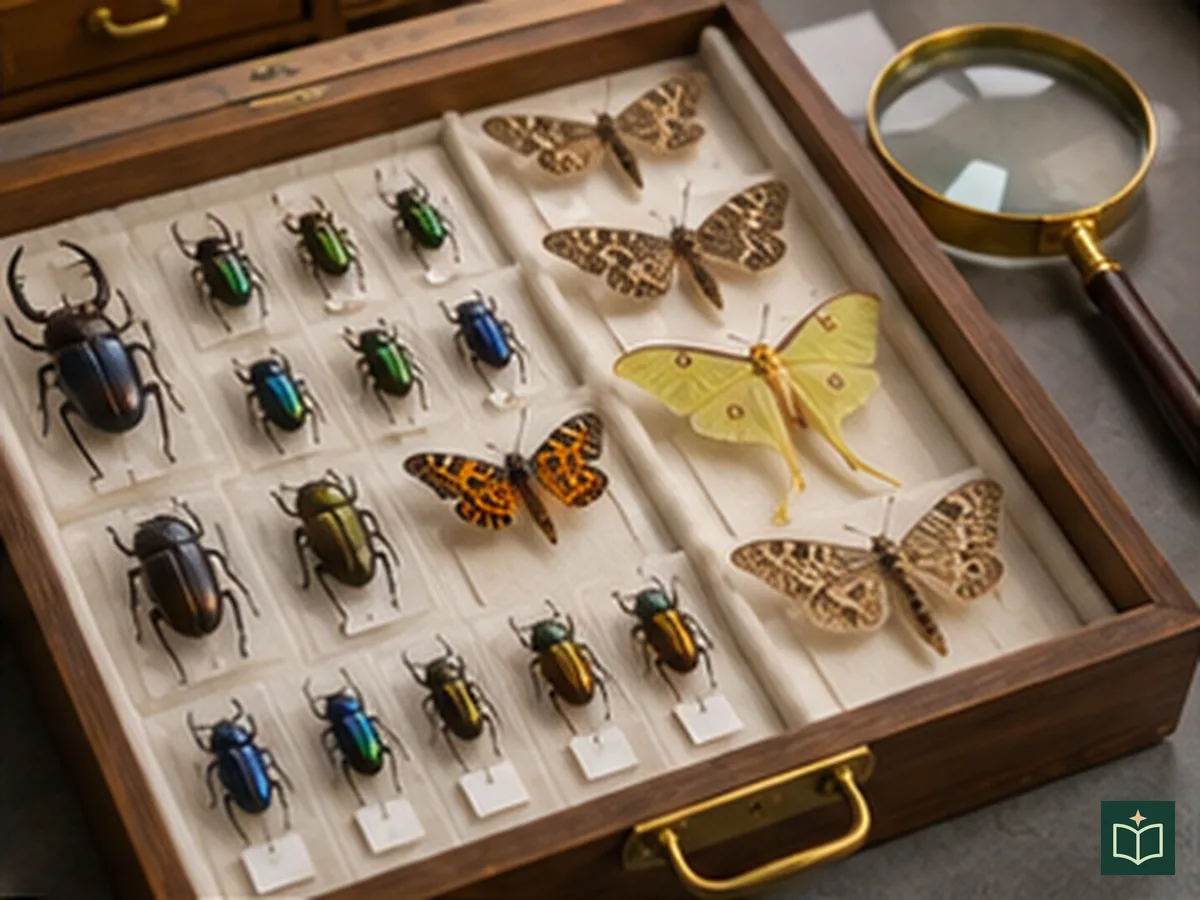
Central to a description is the type specimen, usually called the holotype. This is the physical reference, often a preserved animal, a pressed plant or a fossil, that anchors the name. It is deposited in a museum, herbarium or university collection where other researchers can examine it. If scientists later disagree about what the species includes, they return to the type. This system means that natural history collections are not dusty archives but working scientific infrastructure. Large museums hold many millions of specimens, and some of the most important are types that have defined species names for more than two centuries.
Discoveries in the drawer
Many new species are discovered not in jungles but in collections. A specimen may be collected on an expedition and stored, unexamined in detail, for years until a specialist studies it. Research has found that the average gap between a specimen being collected and the species being described is about two decades. There are far more specimens than experts able to study them, especially for insects, worms and other small creatures. Headlines that celebrate a remote discovery may therefore describe work done mainly at a microscope, comparing preserved material, rather than an encounter in the field, though fieldwork remains essential for finding fresh material.
The role of DNA
Genetic analysis has transformed the task. DNA sequencing can show that animals that look identical are in fact separate species that have not interbred for a very long time. These are called cryptic species, and they turn up even among familiar animals. Short standard stretches of DNA, known as barcodes, help researchers sort large samples quickly and flag possible new species for closer study. Environmental DNA, collected from water or soil, can reveal organisms that are never seen. However, DNA alone is not usually enough for a formal description; scientists still describe physical features, compare them with relatives and designate a type specimen.
Why it matters
Describing a species is the first step towards protecting it. A plant or animal without a name cannot be assessed for extinction risk, listed in law or included in conservation plans. Many species are being described from habitats that are already shrinking, so some may become extinct soon after, or even before, they are named. Descriptions also matter for medicine, agriculture and understanding ecosystems. When reading a discovery headline, look for where the specimens came from, whether DNA was used, and where the type specimen is held. The real news is often how much remains unknown, even in well-studied regions such as Europe or the Gulf.
Sources & further reading
- International Commission on Zoological Nomenclature ↗
- Britannica · Binomial nomenclature ↗
- Smithsonian National Museum of Natural History ↗
Figures are rounded and widely published; check the linked organisations for the latest editions. These organisations do not endorse this website.