Weather from the Sun
The Sun constantly releases a stream of charged particles called the solar wind. At times it also produces much larger eruptions. Solar flares are sudden bursts of radiation that reach Earth in minutes. Coronal mass ejections, or CMEs, are vast clouds of magnetised plasma that may take one to four days to arrive. When a CME strikes Earth's magnetic field, it can trigger a geomagnetic storm, a major disturbance that drives electric currents in the upper atmosphere and on the ground. Forecasters at agencies such as the US National Oceanic and Atmospheric Administration's Space Weather Prediction Center issue watches, warnings and alerts.
The G scale
NOAA rates geomagnetic storms on a five-level scale. G1 is minor, G2 moderate, G3 strong, G4 severe and G5 extreme. Levels are tied mainly to the Kp index, which measures disturbance of Earth's magnetic field on a range from 0 to 9; G1 corresponds to Kp 5 and G5 to Kp 9. Minor storms occur frequently, often hundreds of times over a solar cycle, while extreme storms happen only a few times per cycle on average. NOAA also uses an S scale for solar radiation storms and an R scale for radio blackouts, so headlines may mention any of the three.
Effects on technology
Strong geomagnetic storms can induce currents in long electrical conductors, such as power lines and pipelines. In March 1989 a severe storm caused a blackout across the Canadian province of Quebec within seconds. Storms can disrupt high-frequency radio used by aircraft and ships, degrade the accuracy of satellite navigation such as GPS, and increase drag on satellites in low orbit by heating and expanding the upper atmosphere. In 2022 a minor storm contributed to the loss of dozens of newly launched internet satellites. Airlines may reroute polar flights during radiation storms, and grid operators can take precautions when warnings are issued.
The Carrington Event
The most famous geomagnetic storm on record occurred in 1859, when astronomer Richard Carrington observed a brilliant solar flare. Within a day, auroras were seen far from the poles, reportedly as far south as the Caribbean, and telegraph systems in Europe and North America suffered failures, sparks and fires. An event of similar strength today could cause widespread disruption to power grids and satellites, which is why governments include severe space weather in national risk assessments. Scientists also study tree rings and ice cores, which reveal evidence of even larger solar particle events in the more distant past. The event remains a benchmark for planners.
Auroras far from the poles
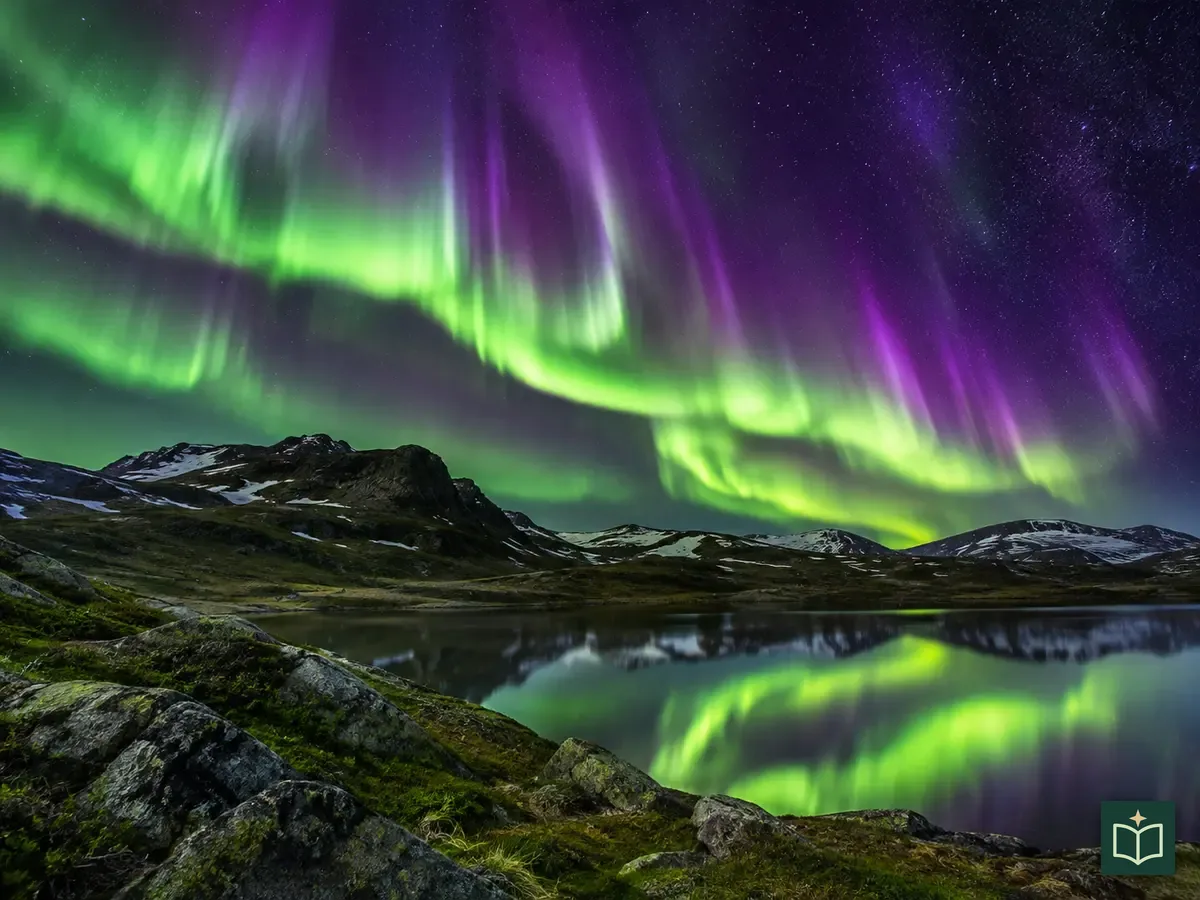
For most people, the visible sign of a geomagnetic storm is the aurora, the glowing light produced when charged particles excite oxygen and nitrogen high in the atmosphere. During normal conditions, auroras are confined to high latitudes. During strong storms, they can be seen much farther towards the equator. In May 2024, an extreme G5 storm, the first in about two decades, produced auroras visible across much of Europe and North America, and faint displays were photographed at unusually low latitudes. In the Gulf, auroras remain extremely rare, but powerful storms are still monitored for their effects on aviation and communications.
Reading the headline
When a solar storm makes the news, check the level on the G scale and whether it is a forecast watch or an observed storm, since predicted arrival times and strengths of CMEs remain uncertain by many hours. Look at which effects are expected and where. Note whether the story concerns a geomagnetic storm, a radiation storm or a radio blackout, as each has different impacts. For the public, most storms pose no direct health risk on the ground, because the atmosphere and magnetic field provide protection. Official space weather agencies remain the best sources for accurate, up-to-date information. Skywatchers may simply enjoy the show.
Sources & further reading
- NOAA Space Weather Prediction Center · NOAA space weather scales ↗
- European Space Agency · Space weather ↗
Figures are rounded and widely published; check the linked organisations for the latest editions. These organisations do not endorse this website.