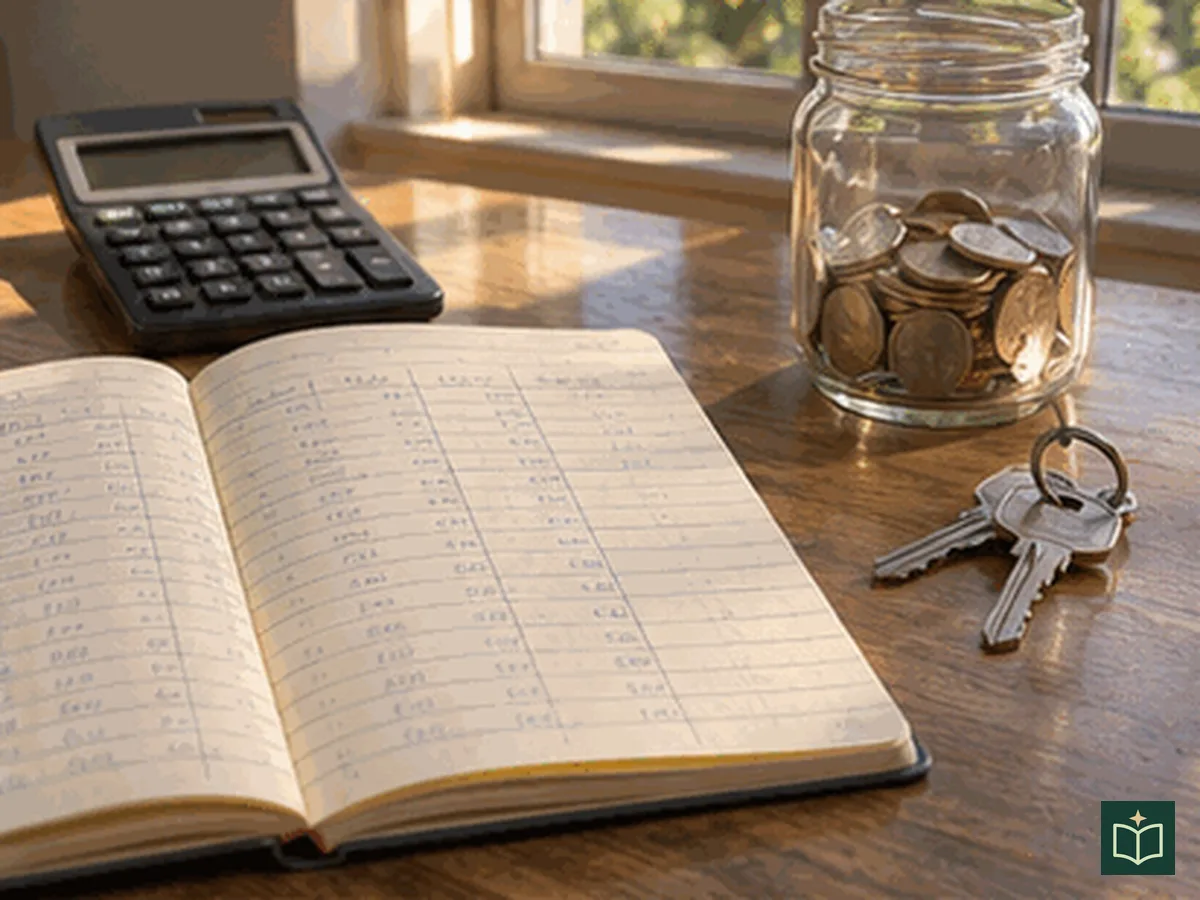
A stock and a flow
Economists distinguish between stocks, measured at a point in time, and flows, measured over a period. Income is a flow: a monthly salary, quarterly dividends or annual rent. Wealth is a stock: the value today of savings, investments, property and businesses, minus debts such as mortgages, car loans and credit cards. The result is often called net worth. A reservoir is a useful image. Income is the river flowing in, spending is the water drawn off, and wealth is the level of the reservoir. A strong river does not guarantee a full reservoir if outflows are just as large. This article is educational and is not financial advice.
The high earner who is poor
Consider a hypothetical professional in Dubai earning AED 60,000 a month, or AED 720,000 a year. That is a high income. Suppose they spend almost all of it on rent, school fees, cars and travel, and carry AED 400,000 of car and credit card debt against AED 150,000 of savings. Their net worth is minus AED 250,000. If their job ended, they would have little to fall back on. Economists sometimes describe such households as high-income but asset-poor. Their lifestyle depends entirely on the next pay cheque. Many people in well-paid careers find themselves in this position, especially when spending rises every time income does.
The modest earner who is rich
Now consider a retired couple whose income is a modest AED 8,000 a month from savings and a small pension, or AED 96,000 a year. On income alone they look far less well off. Yet they own a paid-off villa worth AED 2,000,000 and hold AED 500,000 in savings, giving a net worth of AED 2.5 million. They are asset-rich but income-light. The same pattern describes many farmers, small business owners and families whose wealth sits in land or property. Wealth also provides security that income cannot: it can be drawn on in emergencies, borrowed against or passed to the next generation, while income usually stops when work does.
How each feeds the other
The two are linked in both directions. Income becomes wealth only through saving: whatever is not spent can accumulate. Saving AED 2,000 a month for 25 years puts AED 600,000 aside; if it earned an illustrative 5% a year, compounded monthly, the pot would grow to roughly AED 1.19 million. Wealth, in turn, produces income through rent, dividends and interest, called investment or capital income. Over long periods this feedback can widen gaps, because those with more wealth earn more from it and can save more. Debt works in reverse, as interest payments drain income and slow the building of wealth. Time and consistency matter as much as the size of a salary.
Wealth is more unequal
Across the world, wealth is distributed far more unequally than income. According to the World Inequality Report 2022, the richest 10% of people receive about 52% of global income but own about 76% of global wealth, while the poorest half earn around 8% of income and own about 2% of wealth. The reasons include inheritance, the compounding of investment returns and the fact that many households have little or no savings at all. Tax systems also treat the two differently. Most countries tax income directly; fewer tax wealth itself, relying instead on property, inheritance or capital gains taxes. The UAE levies no personal income tax on salaries.
Why the distinction matters
Confusing the two leads to poor judgements. A large salary can create a false sense of security, while a low income can hide considerable resources. Lenders look at both: income shows the ability to repay, assets show what can be pledged. Governments consider both when designing benefits and taxes. For individuals, tracking net worth once or twice a year, by listing assets and debts, often reveals more about financial health than a payslip does. The key questions are how much of each month's income becomes lasting wealth, and how much is consumed. Personal circumstances differ widely, and anyone making major decisions may benefit from licensed, independent financial advice.
Sources & further reading
Figures are rounded and widely published; check the linked organisations for the latest editions. These organisations do not endorse this website.