Two strategies, one problem
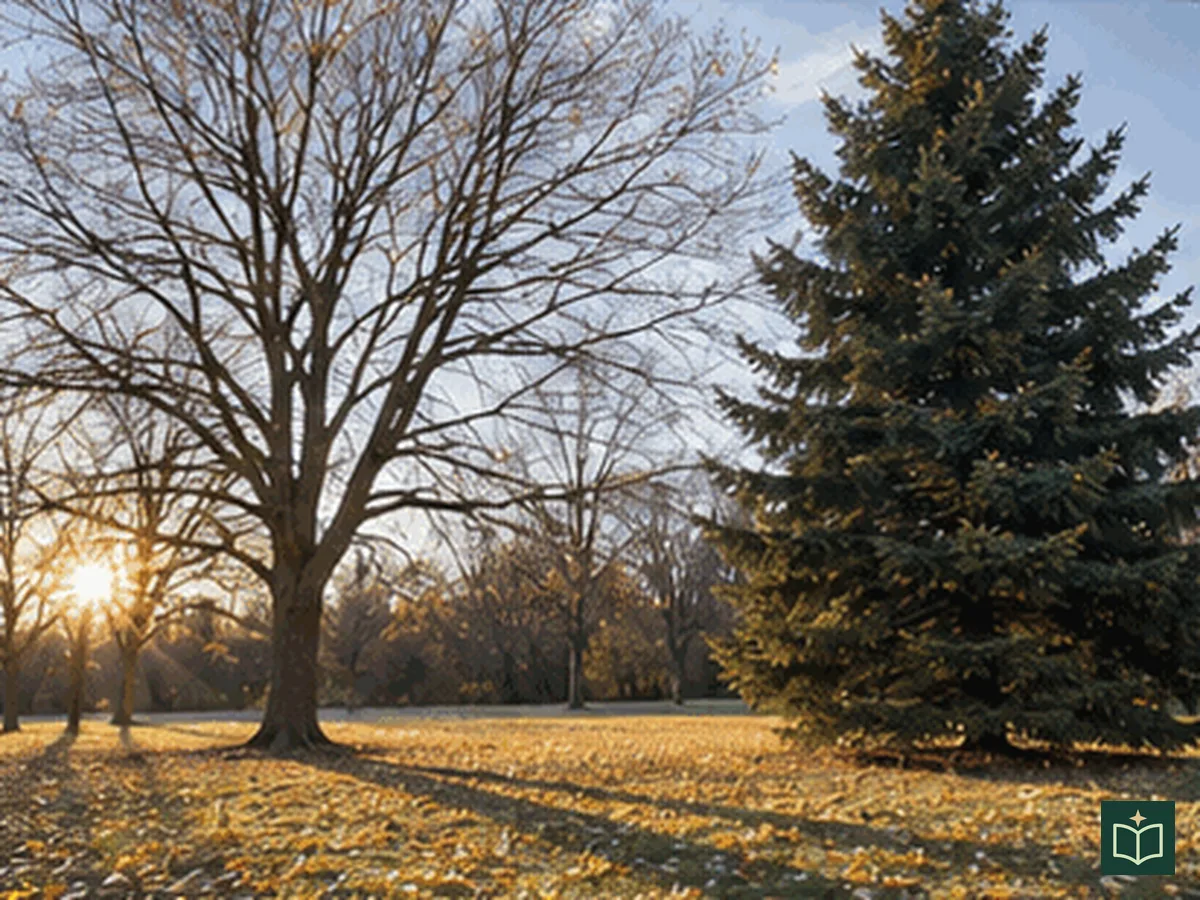
Leaves are a tree's solar panels, but they are also its main source of water loss and a target for frost, wind and insects. Every tree faces a trade-off between the benefit of keeping leaves working and the cost of maintaining them through hard times. Deciduous trees solve this by dropping all their leaves for part of the year and regrowing them when conditions improve. Oaks, maples, beeches and many fruit trees are familiar examples. Evergreen trees keep leaves through every season. Pines, spruces, holly, olive trees and date palms all stay green. Neither strategy is more advanced; each works best in particular climates and soils.
How leaf fall works
Leaf fall is a planned process, not damage. As days shorten or water becomes scarce, a deciduous tree breaks down the green pigment chlorophyll and moves valuable nutrients, especially nitrogen, back into its branches and roots. Yellow and orange pigments, present all along, become visible, and some species produce red pigments. At the base of each leaf stalk, a layer of specialised cells called the abscission zone forms, weakening the connection until the leaf drops cleanly and the wound seals. The tree then enters dormancy, with buds already formed and protected for the next season. In spring, or when rain returns, those buds open and a fresh set of leaves emerges.
The evergreen approach
Evergreens invest in leaves built to last. Conifer needles are narrow and coated in wax, with sunken pores that limit water loss and a shape that sheds snow. Broadleaf evergreens such as holly and olive have thick, leathery leaves. These cost more to build, but each one works for several years, so the tree does not pay to rebuild its entire canopy annually. This suits places with poor soils, where nutrients are hard to replace, and very short growing seasons, where there is no time to grow new leaves before photosynthesis can start. Evergreens still shed leaves continually, a few at a time. A pine typically keeps its needles for two to several years.
Drought, not just cold
In temperate countries leaf fall is linked with autumn and winter, but drought is an equally important trigger. In tropical dry forests, from India to East Africa, many trees are drought-deciduous, dropping their leaves in the dry season and flushing green when the monsoon rains arrive, regardless of temperature. Some desert plants go further: the ocotillo of the American Southwest can drop and regrow its leaves several times a year after rain. In the UAE, the native ghaf tree stays green through the summer heat, thanks to roots that reach deep groundwater, which is one reason it is valued for shade and as the national tree. Other desert shrubs shed leaves to survive dry periods.
Exceptions and surprises
The categories cut across familiar groupings. Most conifers are evergreen, but larches and the dawn redwood are deciduous conifers that turn gold and drop their needles. Some oaks, such as the holm oak and the live oak, are evergreen. Certain trees are semi-evergreen, keeping leaves in mild winters and losing them in harsh ones, or replacing their old leaves within a few weeks in spring. Date palms are evergreen, and strictly speaking palms are not true trees in the botanical sense, since they lack the woody growth rings of oaks and pines. The bristlecone pine shows how far the evergreen strategy can go, keeping single needles for decades.
Why it matters
The difference shapes landscapes and everyday decisions. Deciduous trees let winter sunlight through to buildings and gardens while giving summer shade, which designers in temperate climates use to save energy. Evergreens provide year-round screening, windbreaks and shade, which is why they dominate planting in hot, dry cities such as those of the Gulf. Leaf litter from deciduous forests builds rich soils, while conifer needles create more acidic ground. Changes in the timing of leaf-out and leaf fall are also closely watched by scientists, because warmer temperatures and shifting rainfall are altering growing seasons. A tree's leaves, or their absence, are a visible record of the climate it is adapted to.
Sources & further reading
Figures are rounded and widely published; check the linked organisations for the latest editions. These organisations do not endorse this website.