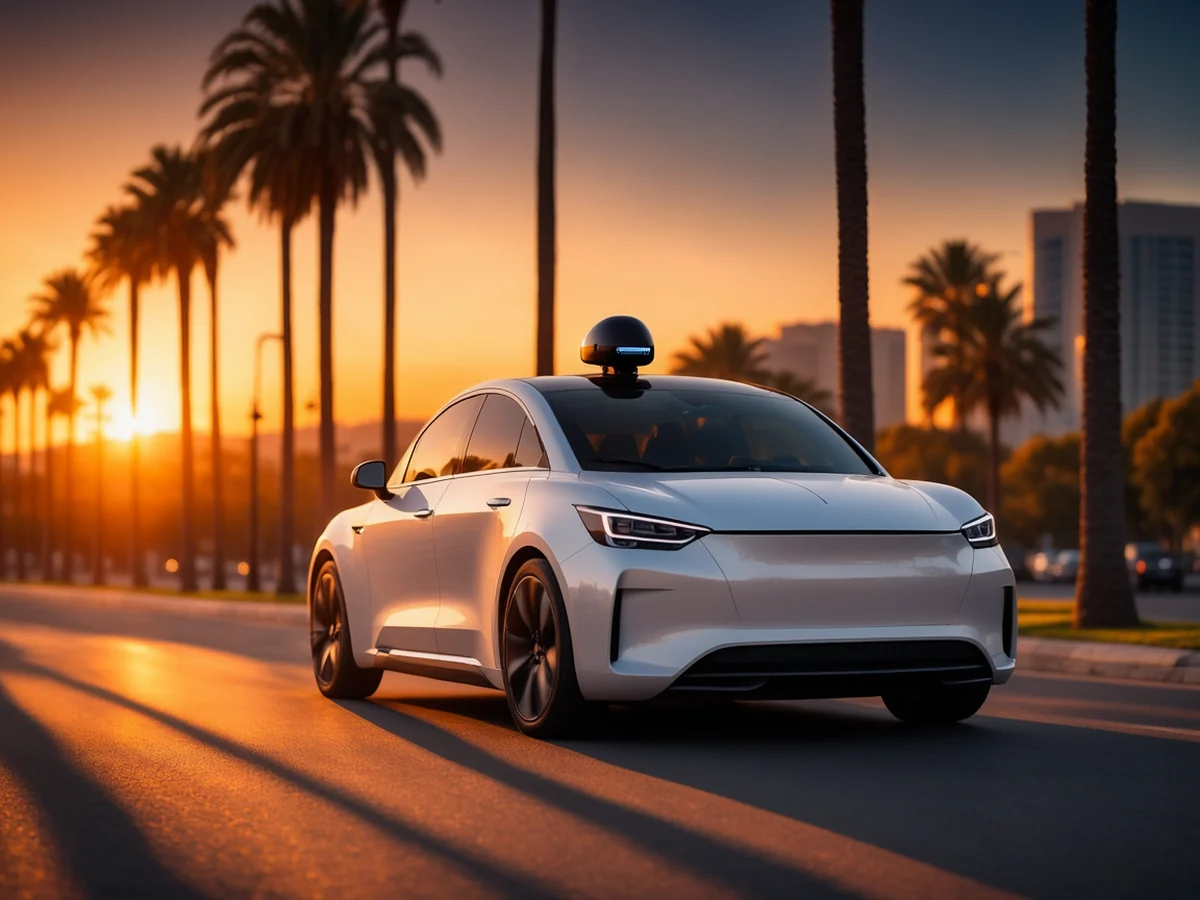
From a Google project
Waymo began in 2009 as a secret Google project to build self-driving cars, led by engineers who had competed in the DARPA robot car challenges. In 2016 it became a separate company called Waymo, owned by Alphabet. In 2018 it launched Waymo One, a ride-hailing service in the Phoenix area, and in 2020 it began offering rides to members of the public with no safety driver behind the wheel.
How a Waymo sees
Each Waymo vehicle carries lidar sensors, which use laser pulses to measure distances, along with radar and many cameras. Together they build a detailed three-dimensional picture of the surroundings, day and night. AI software identifies cars, pedestrians, cyclists, traffic lights and road works, predicts how others will move, and plans the car's path many times a second. Detailed maps of each city provide extra information.
Rapid growth
For years Waymo grew slowly and carefully. Then growth accelerated sharply. According to figures shared by Waymo and Alphabet, paid rides rose from about 10,000 a week in 2023 to about 50,000 in May 2024, 100,000 by August 2024 and 250,000 by April 2025. In early 2026, Waymo said it was providing about 500,000 paid rides every week. By then its vehicles had driven more than 200 million fully autonomous miles.
More cities
Waymo's first markets were Phoenix, San Francisco and Los Angeles, followed by Austin and Atlanta, where it partners with Uber. In February 2026, it added Dallas, Houston, San Antonio and Orlando, bringing its total to ten cities, alongside Miami. It announced plans to launch in more American cities during 2026, and said international service would follow in London and then Tokyo.
Big money
Building and operating a robotaxi fleet is extremely expensive. In early 2026, Waymo raised 16 billion dollars from investors at a valuation of about 126 billion dollars. Its co-chief executive Tekedra Mawakana described reaching one million paid rides a week, a target set for the end of 2026, as an inflection point for the business. Waymo has also worked with carmakers to add new vehicle types to its fleet.
Is it safe?
Safety is the most important question. Waymo has published studies, comparing its vehicles with human drivers over millions of miles in the same cities, suggesting its cars are involved in significantly fewer crashes causing injury. Independent experts note that such comparisons are complex. Waymo vehicles have still been involved in incidents, and in early 2026 US safety regulators opened an investigation after a robotaxi struck a child at low speed near a school.
Learning from mistakes
Waymo has issued software recalls to fix problems, such as how its cars responded to certain obstacles or to school buses. Its vehicles have sometimes blocked traffic, caused confusion at emergency scenes or behaved unpredictably. The company says each incident is studied so that every car in the fleet benefits from the lessons learned, something human drivers cannot do. Regulators continue to monitor its performance closely.
Competition
Waymo is the clear leader in the United States, but it is not alone. Tesla, Amazon's Zoox and others have begun carrying paying passengers in some American cities. In China, Baidu's Apollo Go operates a large robotaxi service and has expanded abroad, including to the Gulf. In Dubai, the government is working with several companies, including Baidu, WeRide and Uber, to introduce driverless taxis as part of its smart mobility plans.
Effects on jobs and cities
Robotaxis raise questions about jobs, since millions of people worldwide earn a living driving taxis and ride-hailing cars. Research has suggested that in cities with driverless cars, human drivers may get fewer rides per hour. Supporters argue robotaxis could make roads safer, offer mobility to people who cannot drive and reduce the need for parking, while critics worry about congestion and the concentration of power in a few companies.
Why it matters
Waymo shows that one of the hardest problems in AI, driving safely in busy, unpredictable cities, can be solved well enough to run a large commercial service. Its progress offers lessons for cities such as Dubai and Abu Dhabi that are preparing for driverless transport. How safely and fairly robotaxis expand will shape the future of transport for millions of people.
Sources & further reading
- TechCrunch · Waymo's skyrocketing ridership in one chart (2026) ↗
- TechCrunch · Waymo robotaxis are now operating in 10 US cities (2026) ↗
- Wikipedia · Waymo ↗
Ride figures are as reported by the company. Photograph: original AI-generated illustration (Adobe Firefly). Reference organisations do not endorse this website.