Misleading everyday words
Warm-blooded and cold-blooded are familiar terms, but biologists prefer more precise ones. The important question is not how warm an animal's blood is but where its body heat comes from. Endotherms, meaning heat from within, generate most of their warmth through metabolism, the chemical reactions in their cells. Mammals and birds are the main examples. Ectotherms, meaning heat from outside, depend mainly on their environment, through sunlight, warm rocks or water. Reptiles, amphibians, most fish and most invertebrates fall into this group. A second pair of terms describes stability: homeotherms keep a steady internal temperature, poikilotherms let it vary. The two pairs often but not always overlap.
How endotherms stay warm
Endotherms run their metabolism at a high rate, partly to produce heat. Humans hold their core temperature close to 37°C, and birds often run warmer, around 40°C. To keep heat in, endotherms use insulation such as fur, feathers and fat, and they can shiver or burn special brown fat when cold. To lose heat they sweat, pant or increase blood flow to the skin. This allows them to stay active at night, in winter and in cold climates, and to sustain long bursts of activity. The advantage is independence from the weather. The cost is fuel. A mammal needs several times more food than a reptile of similar size.
How ectotherms manage
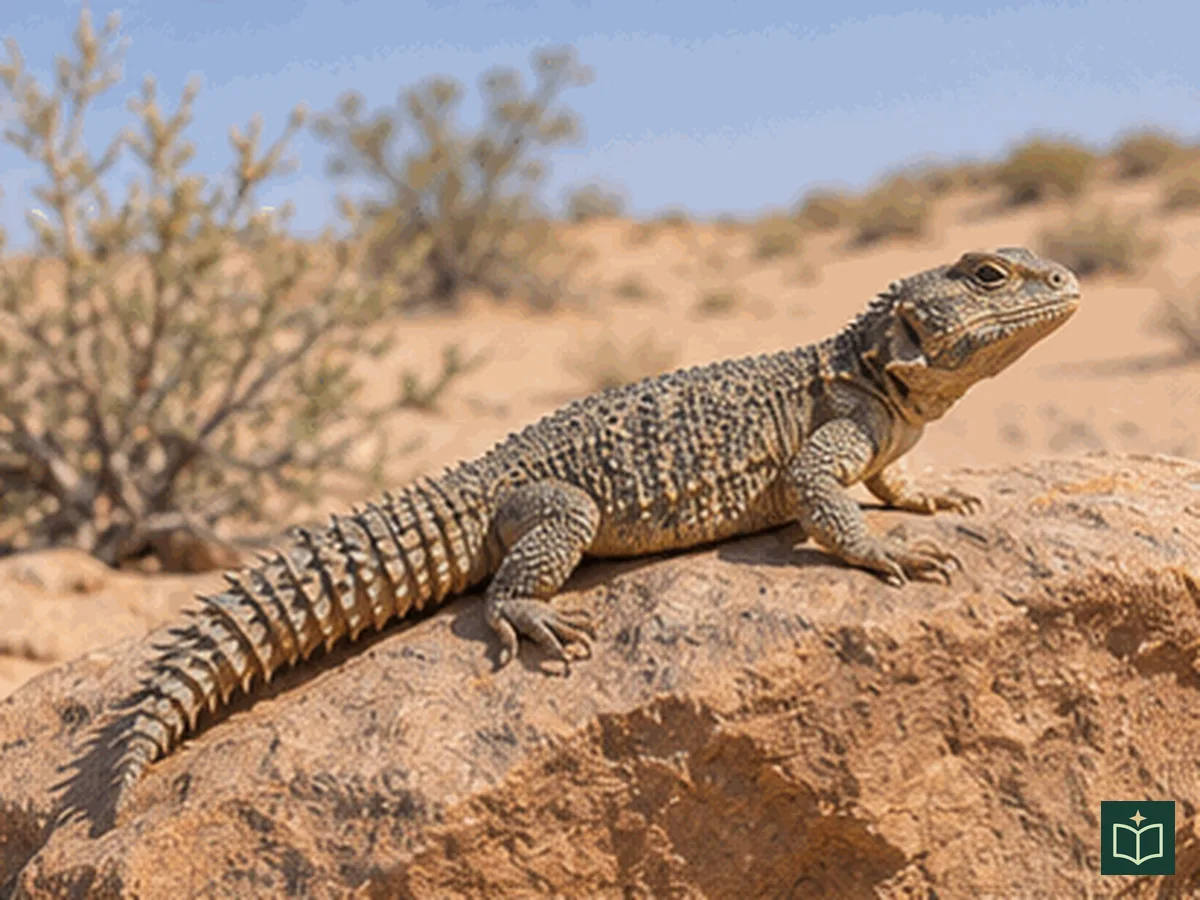
Ectotherms are not simply at the mercy of the weather. They regulate their temperature through behaviour. A desert lizard basks in the morning sun to warm up, turns its body to catch or avoid rays, and retreats to burrows or shade at midday. Spiny-tailed lizards, or dhab, in the UAE's deserts do exactly this. Many reptiles keep their body close to a preferred temperature for much of the day, sometimes well above 35°C. Because they do not burn energy to make heat, ectotherms can survive on a fraction of the food an endotherm needs, and some snakes eat only a few large meals a year. The trade-off is sluggishness when it turns cold.
Where the labels blur
Nature resists tidy categories. Tuna and some sharks, such as the great white, keep their swimming muscles, eyes or brains warmer than the surrounding water using heat-exchanging blood vessels. The opah, a deep-bodied ocean fish, was found in 2015 to warm its whole body. Bumblebees and many moths shiver their flight muscles to warm up before flying. A brooding python can shiver to warm its eggs. Meanwhile, some endotherms let their temperature fall: hummingbirds enter a deep torpor at night, and hibernating mammals drop close to the temperature of their surroundings. Camels allow their body temperature to rise by several degrees during hot days, saving water otherwise lost through sweating.
The cost in food
The energy gap explains much about animal lives. Because endotherms spend most of their energy on keeping warm and active, they must eat frequently; a small bird or shrew can starve in a day or two without food. Ectotherms convert a larger share of what they eat into growth and reproduction. This is why a lion requires vast hunting grounds while a crocodile can wait weeks between meals. Size matters too. Small endotherms lose heat quickly through their large surface area relative to volume, so they must eat proportionally more. This limits how small a warm-blooded animal can be, and tiny mammals and birds have some of the highest metabolic rates known.
Why both strategies survive
Neither approach is superior; each suits different conditions. Endothermy pays off where activity, speed and endurance matter, or where it is cold, which is why mammals and birds dominate polar regions. Ectothermy pays off where food is scarce but warmth is plentiful, which is why reptiles thrive in deserts and the tropics. Climate change affects the two groups differently, since ectotherms depend directly on environmental temperatures and can overheat when shade and burrows are limited. Scientists still debate how and when endothermy evolved, including whether some dinosaurs were warm-blooded. The labels remain useful shorthand, provided we remember that body heat is a spectrum of strategies rather than a simple switch.
Sources & further reading
Figures are rounded and widely published; check the linked organisations for the latest editions. These organisations do not endorse this website.