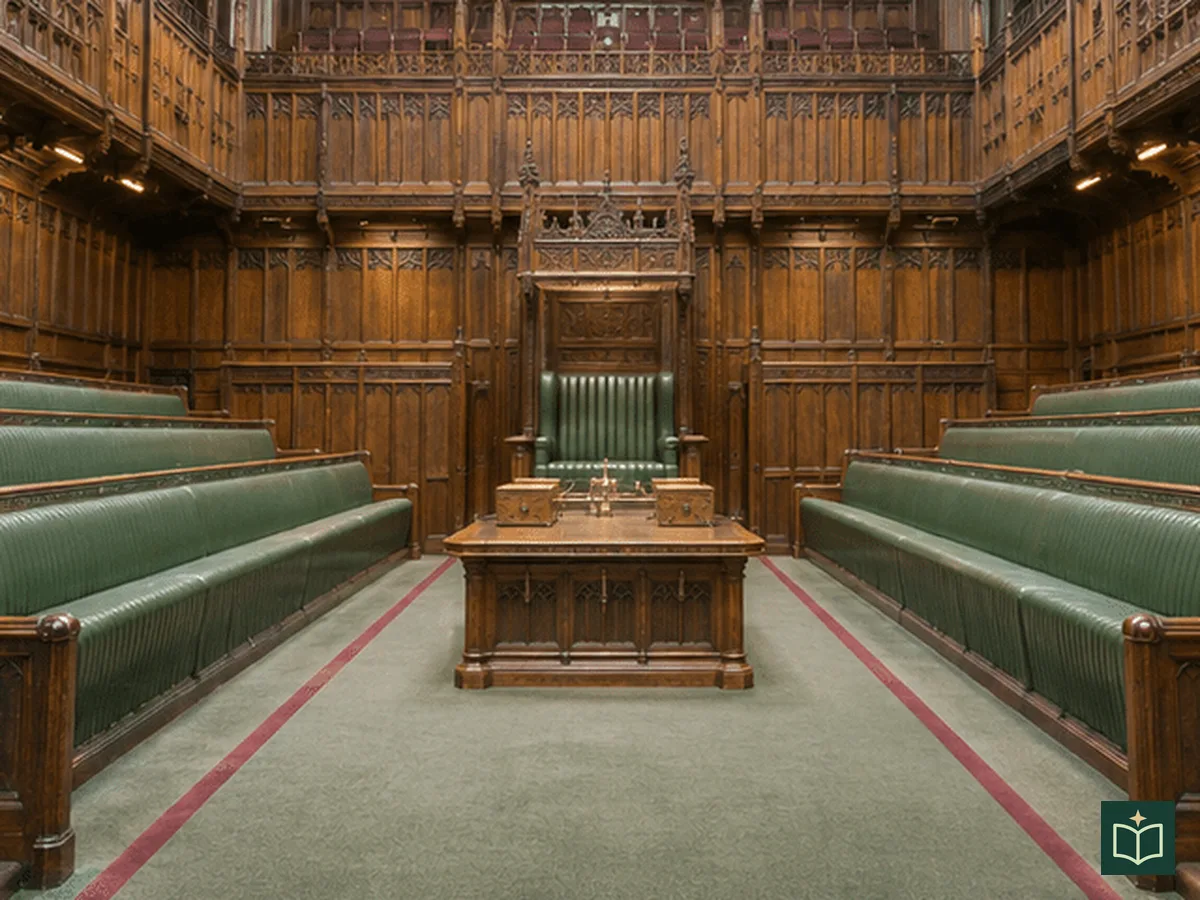
The principle of confidence
In parliamentary systems, the government is not elected separately from the legislature. The prime minister and cabinet hold office because they command the support, or confidence, of a majority in the elected chamber. If that support is lost, the government cannot pass its budget or laws and is expected to make way. A motion of no confidence is the formal test. It is usually proposed by the opposition and states that the house has no confidence in the government, or sometimes in an individual minister. The vote is one of the most powerful tools a parliament holds, though successful motions against a government are relatively rare.
How a motion works
Procedures differ, but the pattern is similar. A motion is tabled, often requiring a minimum number of supporting members, and is debated within a set period, usually a few days. In the United Kingdom, a no-confidence motion tabled by the official opposition is by convention given time for debate, and its outcome depends on a simple majority of those voting. In France, a motion of censure needs the signatures of one-tenth of the members of the National Assembly and succeeds only if supported by an absolute majority of all members, not just those present. Governments can also call confidence votes themselves, tying their survival to a key bill.
The constructive version
Some countries require a no-confidence vote to name a replacement at the same time. Under Article 67 of Germany's Basic Law, the Bundestag can remove the chancellor only by electing a successor with an absolute majority of its members. The rule was designed after the unstable Weimar years, when parliaments brought down governments without agreeing on alternatives. It has succeeded only once, in 1982, when Helmut Kohl replaced Helmut Schmidt. Spain uses a similar constructive motion, which succeeded in 2018 when Pedro Sánchez replaced Mariano Rajoy. Belgium, Hungary and Israel also use versions of the constructive model, which makes removing a government without a successor much harder.
A famous single vote
Close votes illustrate the stakes. In March 1979, the British Labour government of James Callaghan lost a no-confidence motion by 311 votes to 310, the first government defeated in such a vote since 1924. Parliament was dissolved and the general election that followed in May produced a change of government. In other countries, governments defeated by confidence votes have been replaced without an election, because another coalition was able to form in the same parliament. In December 2024, a French government lost a censure motion, the first to succeed in France since 1962, and a new prime minister was appointed from the same National Assembly.
What happens next
Losing a confidence vote usually triggers one of two outcomes. The government resigns and another leader or coalition tries to win the chamber's support, or parliament is dissolved and voters choose a new one. Which route applies depends on the constitution and political practice. In some systems the head of state can refuse a dissolution if an alternative government is available. A defeated government often stays on in a caretaker role until a successor is appointed, handling routine business but avoiding major new decisions. Presidential systems such as the United States have no equivalent vote, because the president's mandate comes from a separate election; removal there requires impeachment for misconduct.
Reading the signals
A no-confidence motion can serve purposes other than removing a government. Opposition parties may table one to force coalition partners or rebels to show their hand, knowing it will probably fail. Governments sometimes welcome a vote they expect to win, since surviving can reinforce their authority. The threat of a confidence vote also shapes everyday politics, encouraging governments to keep partners on side and negotiate on difficult bills. When a motion is announced, the key questions are how many votes it needs, whether a successor must be named and what the constitution says should happen next. Those rules often matter as much as the arithmetic.
Sources & further reading
Figures are rounded and widely published; check the linked organisations for the latest editions. These organisations do not endorse this website.