What the council is
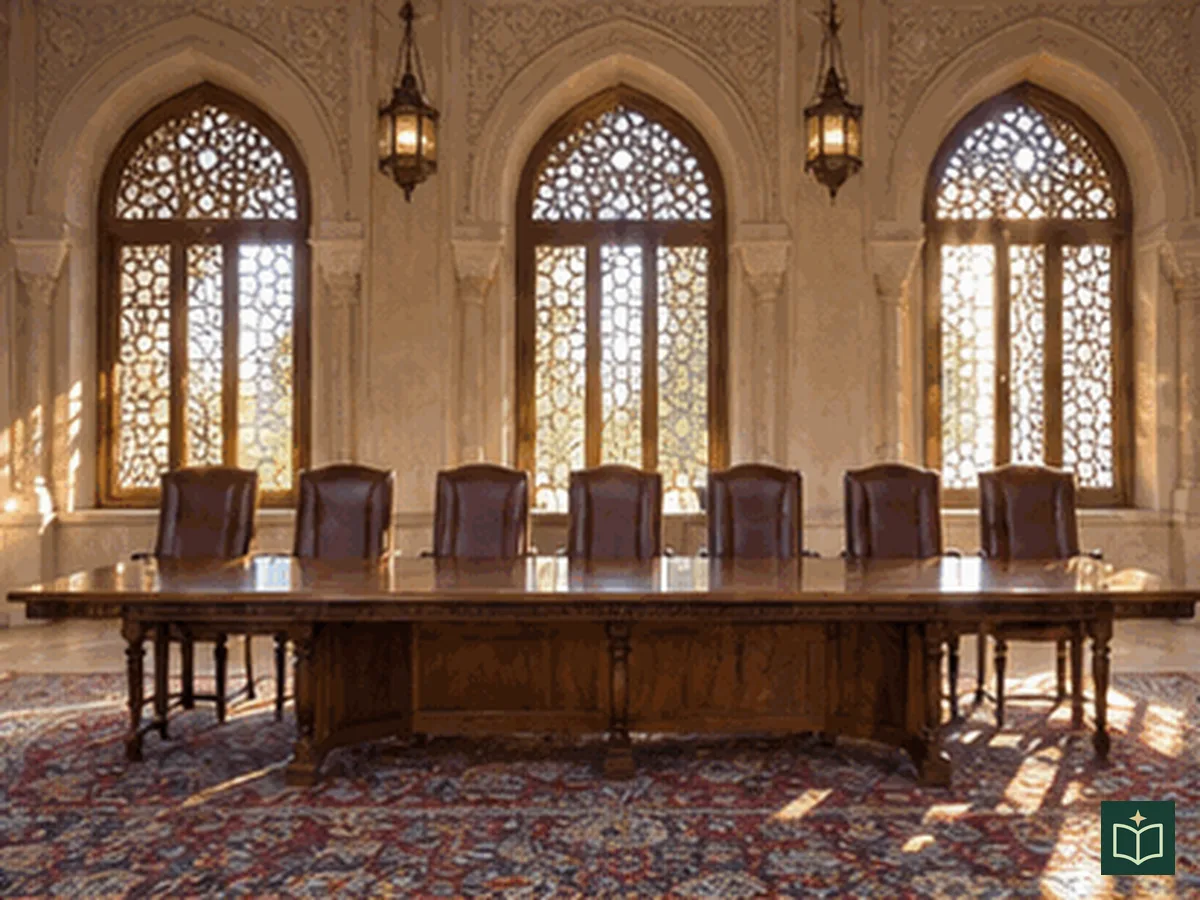
The Federal Supreme Council is the highest constitutional authority in the United Arab Emirates. It brings together the rulers of the seven emirates: Abu Dhabi, Dubai, Sharjah, Ajman, Umm Al Quwain, Ras Al Khaimah and Fujairah. Each ruler holds one seat, and if a ruler cannot attend, a designated deputy may take his place. The council sits at the top of the federal system set out in the constitution, above the President, the Cabinet, the Federal National Council and the federal judiciary. It combines legislative and executive authority at the highest level, setting the general policy of the federation and giving final approval to the laws and decisions that bind all seven emirates.
Born with the federation
The council dates from the founding of the UAE on 2 December 1971, when six emirates united under a provisional constitution. Ras Al Khaimah joined in February 1972, bringing the membership to seven. The structure reflected a deliberate balance: the emirates kept their own rulers, governments and many local powers, while handing defined responsibilities such as foreign affairs, defence and currency to the federation. The Supreme Council was the forum that tied these together. The provisional constitution was renewed several times before being made permanent in 1996, and the council's central role has remained in place throughout, as the meeting point between the federal level and the individual emirates.
Electing the President
One of the council's best-known tasks is electing the President and Vice-President of the UAE. They are chosen from among the council's own members, by secret ballot, for terms of five years, and they may be re-elected. Sheikh Zayed bin Sultan Al Nahyan, ruler of Abu Dhabi, served as the first President from 1971 until his death in 2004. Sheikh Khalifa bin Zayed Al Nahyan was then elected and served until 2022, when the council elected Sheikh Mohamed bin Zayed Al Nahyan. By long-standing practice the ruler of Dubai has served as Vice-President, and also as Prime Minister, heading the federal Cabinet.
How the council votes
The constitution sets out two kinds of decision. Procedural matters are settled by a simple majority of the members. Substantive matters, which include ratifying federal laws, approving major policy and admitting new members, need a majority of five out of seven votes, and that majority must include the votes of Abu Dhabi and Dubai. In practice this gives both of the two largest emirates the ability to block a substantive decision. The rule reflects their weight in the federation's population, economy and budget, while still requiring the support of at least three other emirates. Much of the council's work is resolved through consultation before formal voting takes place.
What it approves
Beyond electing the country's leaders, the council approves the appointment of the Prime Minister, whose Cabinet then runs federal ministries day to day. It ratifies federal laws after they have been drafted by the Cabinet and reviewed by the Federal National Council, and it approves decrees issued between its sessions. It can also ratify international treaties and agreements, approve the appointment of the President and judges of the Federal Supreme Court, and decide whether to admit new emirates to the union. The council's decisions are usually published as federal laws or decrees in the Official Gazette, which is how residents and businesses come to feel their effect.
Why it matters
For residents and businesses in the UAE, the Supreme Council's decisions shape the federal laws that govern work, trade, residency and much more. Understanding the council also helps explain the federation's character: a union of emirates that pooled certain powers while keeping strong local identities. When new federal legislation is announced, it has passed through the council's approval. When leadership changes, the council is the body that elects the next President. Its structure, with one seat per emirate and a special role for Abu Dhabi and Dubai, is the constitutional expression of the bargain that brought the seven emirates together in the early 1970s.
Sources & further reading
Figures are rounded and widely published; check the linked organisations for the latest editions. These organisations do not endorse this website.