The author behind a nickname
We do not know the real name of the woman who wrote The Tale of Genji. Murasaki Shikibu is a nickname: Murasaki probably comes from a character in her story, and Shikibu refers to a government office once held by her father, a scholar and provincial governor. Born around 973 into a minor branch of the powerful Fujiwara family, she learned Chinese classics, unusual for a girl. After a short marriage left her widowed, she entered service around 1005 or 1006 as a lady-in-waiting to the empress Shōshi, daughter of Fujiwara no Michinaga, the dominant statesman of the age. Her diary of court life survives alongside her great tale.
What the story tells
The tale follows Hikaru Genji, the “Shining Genji”, a son of an emperor and a low-ranking consort. Because his mother lacks powerful backing, the emperor makes him a commoner, removing him from the line of succession. Brilliant, handsome and gifted in poetry, music and dance, Genji pursues a series of relationships, some tender, some troubling to modern readers. The story follows his rise, exile and return to power, and the consequences of his choices across generations. After Genji’s death, the final thirteen chapters, set partly at Uji outside the capital, shift to two young men of the next generation, in a darker, more uncertain mood.
Writing in a woman’s script
In Heian Japan, official documents, law and scholarship were written in classical Chinese, the domain of men. Women generally wrote in kana, a Japanese syllabic script developed from simplified Chinese characters, which made it easier to capture the rhythms of spoken Japanese. That apparent restriction produced a literary flowering. Women at court wrote diaries, poetry collections and fiction in Japanese, including Sei Shōnagon’s Pillow Book, a contemporary collection of observations and lists. The Tale of Genji is the summit of this tradition. Its prose is subtle and allusive, filled with some 800 poems, and relies on readers who understood court customs and recognised literary references.
Life at the Heian court
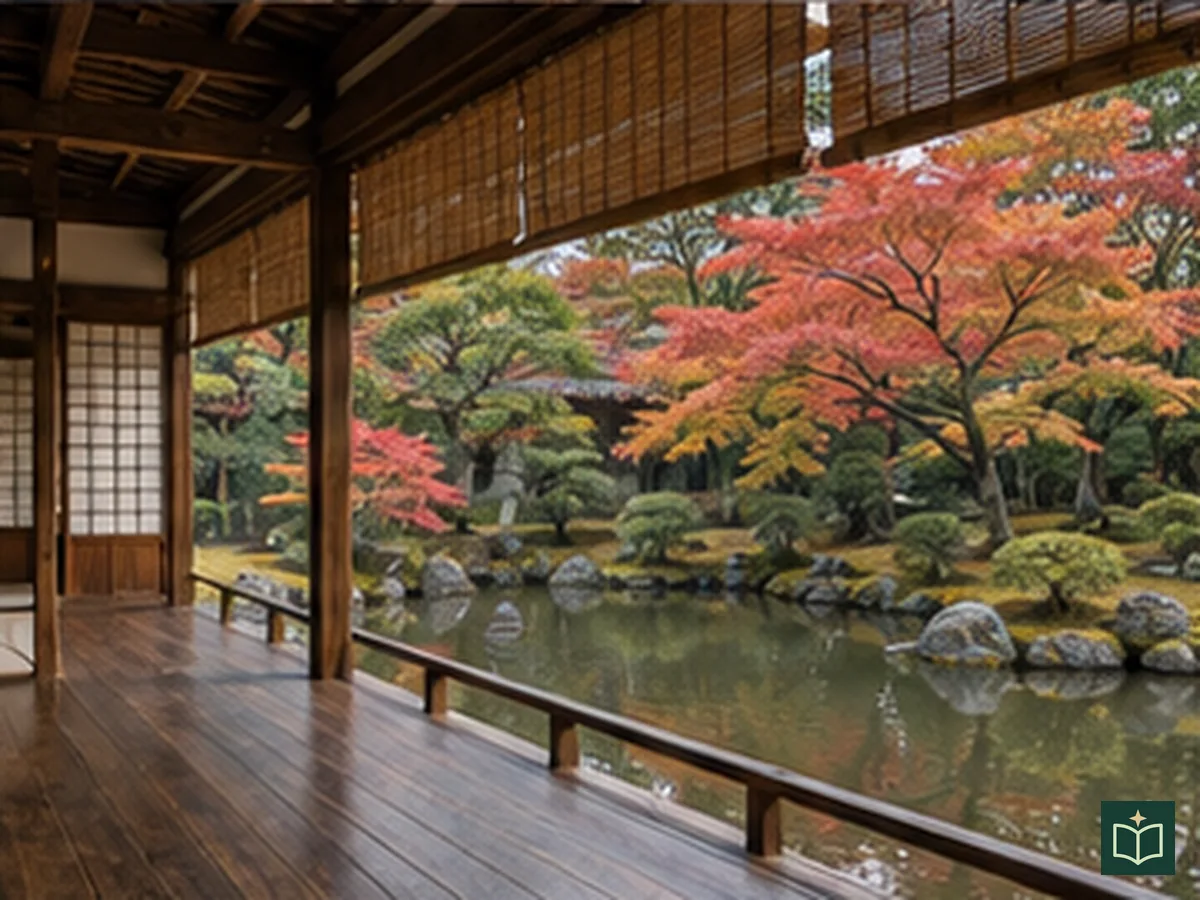
The tale is a window into the aristocratic world of Heian-kyō, today’s Kyoto, around the year 1000. Court life revolved around rank, ceremony, seasonal festivals and the exchange of poems, where handwriting, paper and scent mattered as much as words. Noblewomen lived largely behind blinds and screens, seen by few men outside their family, and wore many layered robes whose colour combinations signalled taste and season. Marriages were often arranged for political advantage, and men might have several wives, visiting them at their own homes. The story pays close attention to the emotional costs of this system for women, a perspective that gives it lasting power.
Is it the first novel?
The Tale of Genji is often called the world’s first novel, but that claim depends on definitions. Long prose fictions existed earlier in Greek and Latin, such as Daphnis and Chloe and the Satyricon, and other Japanese tales came before Genji. What makes it stand out is its length, its focus on the inner lives of many characters over a long period, and its psychological realism, which critics often compare with novels written in Europe centuries later. A central idea is mono no aware, a gentle sensitivity to the passing of things, which runs through the story’s attention to seasons, impermanence and the fragility of happiness.
A thousand years of readers
The original manuscript does not survive. The text was copied repeatedly, and in the thirteenth century the poet and scholar Fujiwara no Teika prepared an edition that became the basis of most later versions. Artists illustrated the story in scrolls, screens and prints for centuries, and its scenes became part of Japanese visual culture. Into the twentieth century it was translated into modern Japanese by leading writers, and into English by Arthur Waley in the 1920s and 1930s, followed by later translations by Edward Seidensticker, Royall Tyler and Dennis Washburn. In 2008 Japan celebrated the tale’s millennium, counting from the diary entry that first mentions it.
Sources & further reading
Figures are rounded and widely published; check the linked organisations for the latest editions. These organisations do not endorse this website.