Not the first, but a system
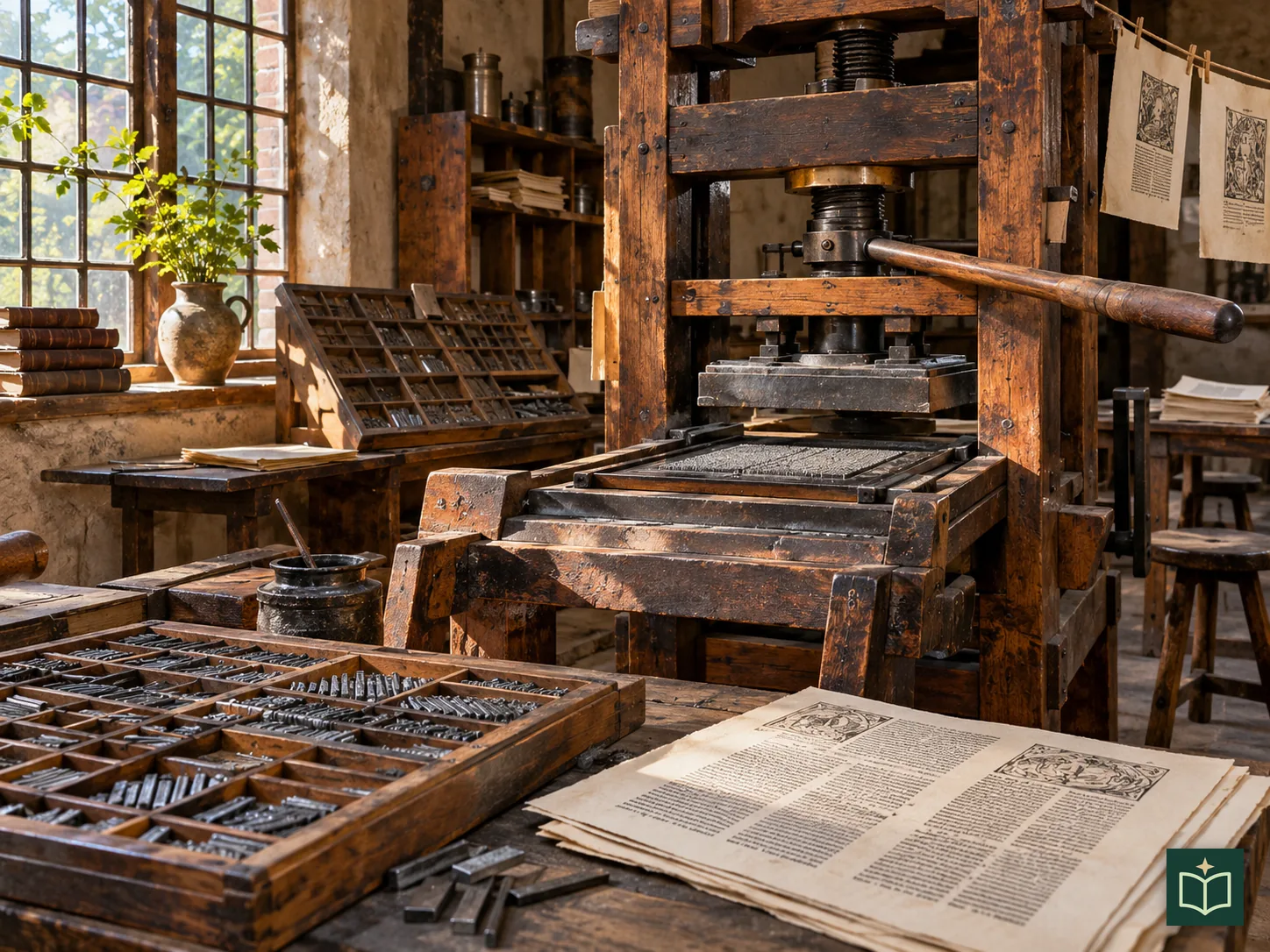
Printing has a long history. Woodblock printing flourished in China centuries earlier, and movable type was developed there and in Korea. Johannes Gutenberg’s achievement in Mainz, around the 1440s and 1450s, was a practical system for Latin alphabets: precisely cast metal type, an oil-based ink that clung to metal, and a press adapted from winemaking and papermaking.
An explosion of books
Within fifty years, printing presses operated in more than 200 European towns. Historians estimate that millions of books had been printed by 1500, known as incunabula. Prices fell and texts became more standardised, so scholars in different cities could discuss the same edition, page for page.
Fuel for debate
Printed pamphlets spread arguments quickly. Martin Luther’s writings in the early 1500s circulated widely in print, helping the Reformation spread. Scientific works, maps and tables could be reproduced accurately, which helped later scientists build on each other’s findings. Printing also helped standardise spelling and vernacular languages.
A lasting template
The basic idea—reusable components assembled into a page—dominated publishing for over 400 years until photographic and digital methods took over. Many terms survive: upper and lower case come from the cases in which compositors kept capital and small letters. Today’s debates about information spreading online echo arguments that followed the printing press.
Sources & further reading
Figures are rounded and widely published; check the linked organisations for the latest editions. These organisations do not endorse this website.