Europe in 1947
Two years after the Second World War ended, much of Europe was still in crisis. Cities, railways, ports and factories had been destroyed. The bitter winter of 1946–47 caused fuel shortages and failed harvests, and food rationing remained. Countries needed coal, grain, fertiliser and machinery from the United States, but they lacked dollars to pay for them. American officials feared economic despair would strengthen communist parties, which were large in France and Italy, and deepen Soviet influence. On 5 June 1947, in a speech at Harvard University, Secretary of State George C. Marshall proposed that the United States help, on condition that the Europeans themselves drew up a joint programme.
Who took part
The offer was open to all of Europe, including the Soviet Union. Moscow attended early talks in Paris but walked out, rejecting the conditions as American interference, and it pressured Poland and Czechoslovakia to decline. In the end sixteen Western European countries formed the Committee of European Economic Co-operation, which became the Organisation for European Economic Co-operation in 1948. The western zones of Germany, later West Germany, also joined. The US Congress approved the European Recovery Program in April 1948. Aid flowed for four years, until 1952, administered by a new American agency, the Economic Cooperation Administration, with offices in each participating country.
How the money worked
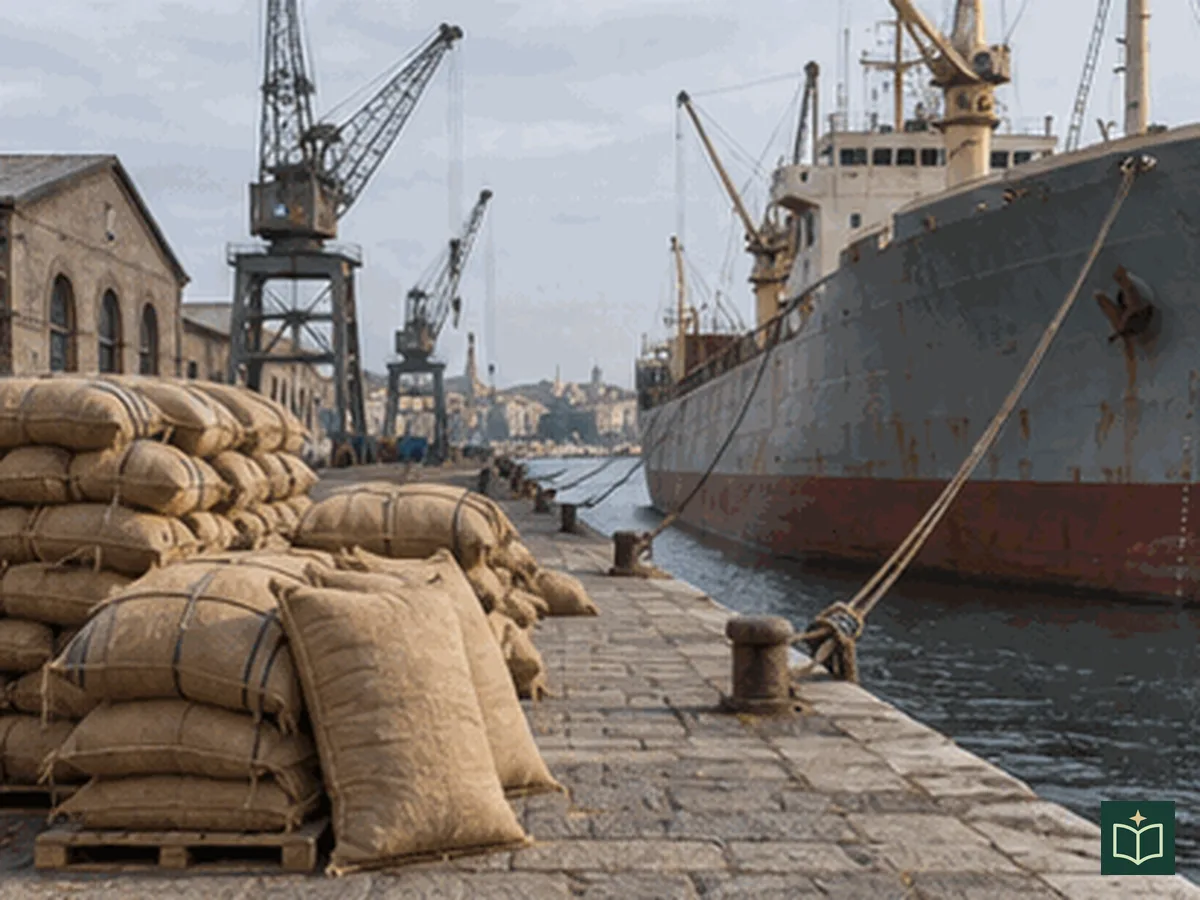
Total aid came to about $13 billion, most of it in grants rather than loans. Britain received the largest share, roughly a quarter, followed by France, Italy and West Germany. Much of the aid arrived as goods: food, animal feed, fuel, raw cotton, fertiliser and machinery shipped from the United States. European importers paid for these goods in their own currencies. That money went into special 'counterpart funds', which governments could use, with American approval, for investment such as power stations, railways and housing, or to reduce debt. The plan also funded technical exchanges, sending European managers and engineers to study American factories and farming methods.
What it changed
Western European industrial output grew rapidly over the plan's four years, rising well above pre-war levels by 1952. Shortages eased, and governments could relax rationing. The plan also encouraged cooperation. Participants had to coordinate their requests, reduce trade barriers among themselves and stabilise their currencies. The European Payments Union of 1950 helped countries trade with each other without scarce dollars. The OEEC later became the Organisation for Economic Co-operation and Development, the OECD, in 1961. Some historians see a direct line from the cooperation required by the Marshall Plan to the European Coal and Steel Community of 1951, a forerunner of today's European Union.
How much did it matter?
Historians and economists disagree about the plan's economic weight. Aid each year amounted to only a few per cent of recipients' national income, and recovery had begun in several countries before the money arrived. Critics argue that European policies, such as West Germany's 1948 currency reform, mattered more. Supporters reply that the aid arrived at a crucial moment, relieving dollar shortages that would otherwise have forced painful cuts in imports of food and machinery, and that its conditions helped persuade governments to choose open markets and cooperation. Most now see it as a powerful catalyst rather than the sole cause of Europe's post-war boom.
A Cold War divide
The Marshall Plan also deepened the division of Europe. The Soviet Union saw it as an attempt to draw countries into an American sphere, and responded in 1949 with its own organisation for Eastern Europe, Comecon. The plan therefore marks one of the moments when the Cold War's economic lines were drawn. Marshall received the Nobel Peace Prize in 1953. Since then, politicians around the world have called for a 'Marshall Plan' for regions from Africa to the Middle East, usually meaning large, coordinated reconstruction aid. Such proposals rarely match the original, which combined generous funding, a clear time limit and conditions that recipients helped design.
Sources & further reading
- US Office of the Historian · Marshall Plan, 1948 ↗
- George C. Marshall Foundation · The Marshall Plan ↗
Figures are rounded and widely published; check the linked organisations for the latest editions. These organisations do not endorse this website.