The largest reef system on Earth
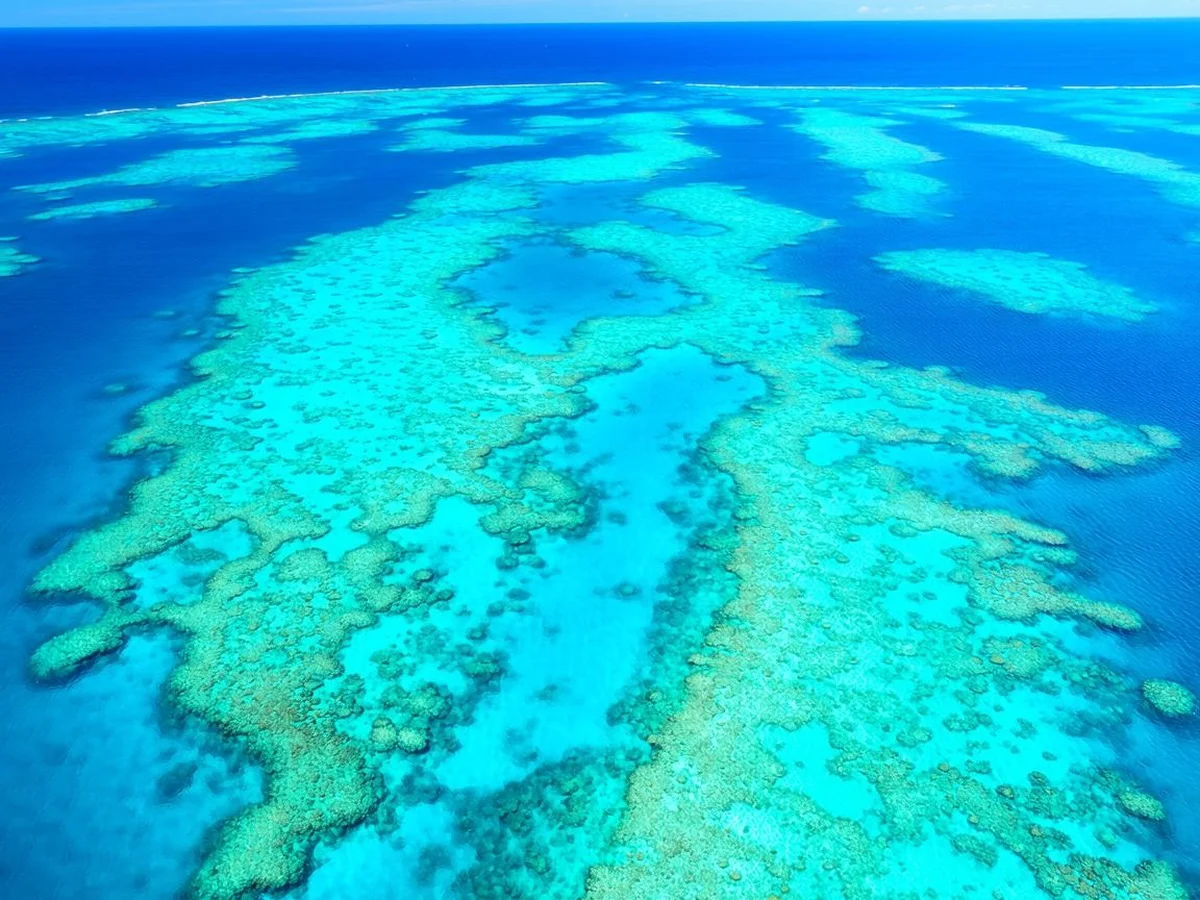
Off the northeast coast of Australia lies the Great Barrier Reef, a vast network of about 2,900 individual reefs and around 900 islands stretching for roughly 2,300 kilometres. It covers an area of about 344,000 square kilometres, larger than the United Kingdom. It is often described as the largest structure on Earth built by living things, and parts of it can be seen from space. In 1981 it was listed as a UNESCO World Heritage Site for its natural beauty and importance.
Built by tiny animals
Coral reefs are built by coral polyps, small soft-bodied animals related to jellyfish. Each polyp produces a hard skeleton of calcium carbonate, the same material as limestone. Over generations, these skeletons build up into large structures. Inside the polyps live microscopic algae called zooxanthellae, which use sunlight to make food and share it with the coral. This partnership gives many corals their colours and allows reefs to grow in warm, clear, shallow water.
A young reef on old foundations
The living reef we see today is geologically young. Reefs have grown in the region for hundreds of thousands of years, rising and falling with sea levels during ice ages. The modern reef began forming after the last ice age ended, when rising seas flooded the continental shelf around 10,000 years ago. Coral then grew on top of older foundations, keeping pace with the rising water and slowly creating the complex shapes seen today.
Remarkable wildlife
The reef supports an extraordinary range of life. It is home to more than 1,500 species of fish, about 400 types of hard coral, thousands of molluscs, sea turtles, sharks, rays, dolphins and whales. Six of the world's seven species of marine turtle are found there. Dugongs, gentle plant-eating sea mammals, graze on its seagrass meadows. Many islands are important nesting sites for seabirds and turtles.
People and the reef
Aboriginal and Torres Strait Islander peoples have connections to the reef going back tens of thousands of years, and it remains central to their culture and identity. Today the reef also supports tourism, fishing and research, contributing billions of dollars to the Australian economy every year. Much of it is protected within the Great Barrier Reef Marine Park, which uses zoning to separate areas for fishing, tourism and strict conservation.
Pressures and protection
Like reefs worldwide, the Great Barrier Reef faces pressure from warmer ocean temperatures. When water stays too warm, corals expel their algae and turn white, a process called bleaching. Corals can recover if conditions improve, but repeated bleaching events in recent years have affected large areas. Scientists, managers and local communities work on monitoring, improving water quality, controlling coral-eating crown-of-thorns starfish and researching ways to help corals adapt.
Different kinds of reef
The Great Barrier Reef is not one continuous wall. It includes fringing reefs that hug the coast and islands, platform reefs that rise from the continental shelf, and long ribbon reefs along its outer edge, where the shelf drops into deep water. Between them lie lagoons, sandy cays, seagrass meadows and channels. This variety of habitats is one reason the reef supports so many different species.
Reef science and monitoring
The reef is one of the most closely studied ecosystems on Earth. Scientists from the Australian Institute of Marine Science and universities conduct regular surveys of coral cover, fish populations and water quality. They use divers, underwater drones, aerial surveys and satellite images. Long-term records show how reefs respond to storms, heat and recovery periods, helping managers decide where action will make the biggest difference.
Visiting the reef
Millions of visitors explore the reef every year, mainly from coastal towns such as Cairns, Port Douglas and the Whitsunday Islands. Snorkelling, diving, glass-bottom boats and scenic flights let people see coral gardens, turtles and colourful fish. Tour operators in the marine park follow rules on anchoring, waste and wildlife, and many contribute to monitoring by reporting what they see.
Why it matters
Coral reefs cover a tiny fraction of the ocean floor, yet they support a large share of marine species. They protect coastlines from waves and storms, provide food and income for millions of people, and offer clues about the health of the ocean. The Great Barrier Reef, as the largest and best studied reef system, is a living laboratory. What scientists learn there helps protect reefs around the world.
Sources & further reading
- UNESCO · Great Barrier Reef ↗
- Great Barrier Reef Marine Park Authority ↗
- Wikipedia · Great Barrier Reef ↗
General information; figures are approximate and drawn from official reef sources. Photograph: original AI-generated illustration (Adobe Firefly). Reference organisations do not endorse this website.