Same material, different jobs
Tendons and ligaments are both made of dense connective tissue, tightly packed bundles of a protein called collagen arranged in parallel fibres. That structure makes them extremely strong when pulled, rather like rope. The difference lies in what they connect. A tendon joins a muscle to a bone. A ligament joins one bone to another bone. Put simply, tendons are about movement and ligaments are about stability. A useful memory aid is that ligaments link bones, both starting with the same sound. Both appear white and glistening when seen during surgery, because they have relatively few blood vessels compared with muscle, which is red and richly supplied.
How tendons work
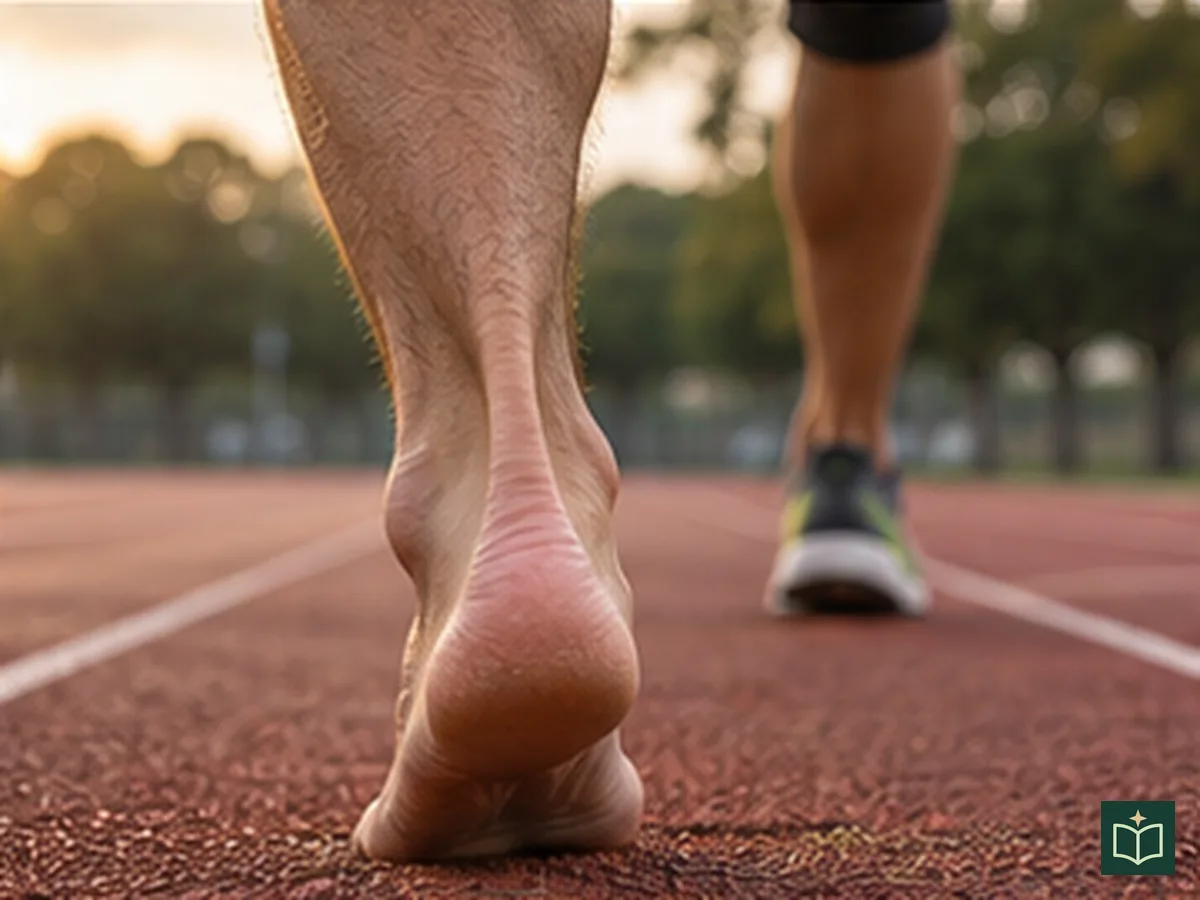
Muscles cannot push; they can only contract and pull. A tendon transmits that pull to the bone. When the biceps contracts, its tendon at the elbow pulls on the forearm bone and bends the arm. Tendons also store and release energy. During running, the Achilles tendon stretches as the foot lands and recoils as it pushes off, acting a little like a spring and saving the calf muscles effort. Tendons are slightly elastic, but they are built to be stiff enough to pass force on efficiently. Many tendons run through slippery sheaths where they cross joints, such as at the wrist, so they can glide smoothly as fingers move.
How ligaments work
Ligaments act like straps that hold a joint together and guide its motion. The knee is the best-known example. Its two collateral ligaments, on the inner and outer sides, stop the knee bending sideways. Inside the joint, the anterior and posterior cruciate ligaments cross over each other and stop the shin bone sliding too far forwards or backwards under the thigh bone. Ligaments contain more elastic fibres than tendons, allowing a little give, but if they are stretched too far they tear. They also contain nerve endings that report joint position to the brain, helping with balance. That is why a badly sprained ankle can feel unstable long after the pain fades.
Common injuries
Because they do different jobs, they fail in different ways. A sprain is an injury to a ligament, usually from a sudden twist, such as rolling an ankle while stepping off a kerb or turning sharply in football. The anterior cruciate ligament of the knee is frequently torn in sports that involve pivoting. Tendon problems are often linked to overuse. Tendinopathy, a painful thickening of the tendon, is common in the Achilles, the shoulder and the outer elbow, as in tennis elbow. Tendons can also rupture suddenly, typically in middle-aged people returning to sport. A torn Achilles often feels like being kicked in the back of the leg.
Why healing is slow
Both tissues heal far more slowly than muscle or skin. The main reason is blood supply. Muscles are packed with blood vessels that deliver oxygen, nutrients and repair cells. Tendons and ligaments have far fewer, so repair materials arrive slowly. Their cells are also relatively sparse and replace collagen gradually. When healing does occur, the new tissue is often less organised than the original, forming scar-like collagen that is weaker for months. A mild sprain may settle in a few weeks, while a serious ligament or tendon injury can take many months, and some, such as a fully torn cruciate ligament, may need surgical reconstruction. Anyone with a significant injury should seek medical advice.
Looking after them
Tendons and ligaments adapt to load, just more slowly than muscles do. That mismatch explains many injuries: muscles can strengthen within weeks of starting a new sport, but tendons need longer to catch up, so sudden jumps in training volume carry risk. Gradual increases, strength training and adequate recovery help both tissues become tougher. In hot climates such as the UAE's summers, many people exercise indoors or at night, and switching suddenly from treadmill to outdoor running or from walking to padel can expose tendons to new stresses. Physiotherapists generally favour controlled, progressive loading over long rest for tendon problems, because tendons respond to sensible use by rebuilding.
Sources & further reading
Figures are rounded and widely published; check the linked organisations for the latest editions. These organisations do not endorse this website.