How the heights are measured
Egypt has more than 100 known pyramids, most of them built as royal tombs during the Old and Middle Kingdoms, roughly between 2700 and 1700 BCE. Almost all have lost height since they were built. Their polished outer casing stones were removed over the centuries for use in other buildings, and many later pyramids, built with cores of rubble or mud brick, have slumped into mounds. This table therefore ranks pyramids by their estimated original heights, reconstructed by archaeologists from surviving masonry, angles and base lengths. Estimates differ slightly between studies, so figures are rounded. The list covers Egyptian pyramids only; other cultures, from Sudan to Mexico, built pyramids of their own.
The giants of Giza
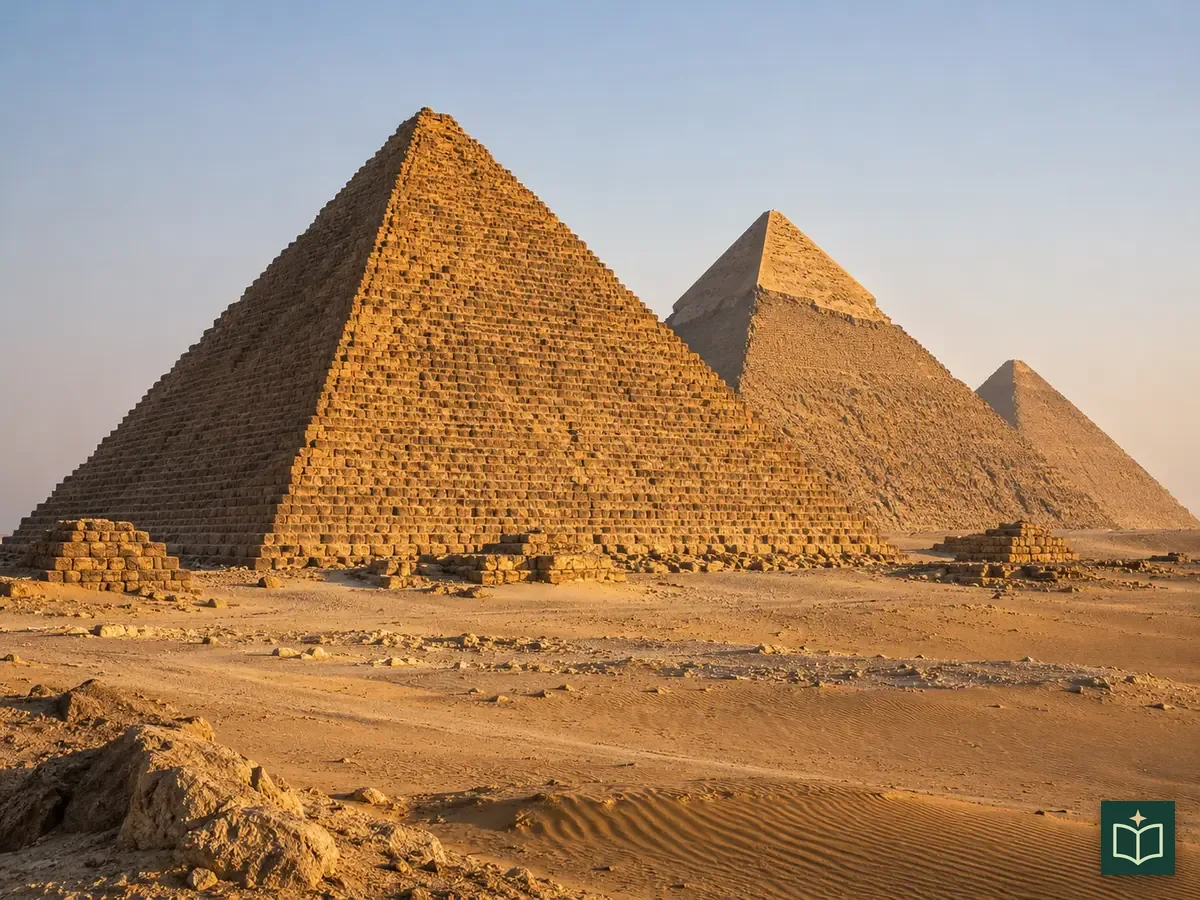
The Great Pyramid, built for the pharaoh Khufu around 2560 BCE, originally stood about 146.6 metres high and today reaches roughly 139 metres. It contains an estimated 2.3 million stone blocks and remained the tallest human-made structure on Earth for more than 3,800 years, until the spire of Lincoln Cathedral in England surpassed it in the 14th century. The pyramid of Khafre, Khufu’s son, was slightly lower at about 143.5 metres, yet it often appears taller because it stands on higher bedrock and still has some casing stones near its peak. The third Giza pyramid, built for Menkaure, is far smaller, at about 65 metres originally.
Sneferu’s experiments
The pyramids ranked third, fourth and fifth were all associated with Sneferu, Khufu’s father, and show builders learning by trial and error. At Meidum, a stepped pyramid was converted into a smooth-sided one, but its outer layers later collapsed, leaving a tower-like core in a mound of rubble. At Dahshur, the Bent Pyramid begins at a steep angle of about 54 degrees and then changes abruptly to about 43 degrees, probably because cracks appeared during construction. The nearby Red Pyramid, built at the gentler angle from the start, became Egypt’s first successful true pyramid. Its height almost exactly matches the Bent Pyramid’s, so some sources reverse their order.
Where it began
The Step Pyramid of Djoser at Saqqara, ninth in the table, is the oldest of the ten, built around the 27th century BCE. Tradition credits its design to Imhotep, an official later revered as a sage and physician. It began as a flat-topped tomb of the kind called a mastaba and was enlarged into six stacked steps, rising about 62.5 metres. It is among the oldest large buildings made of cut stone anywhere in the world. Within roughly a century, Egyptian builders had progressed from Djoser’s steps to the smooth, precisely aligned faces of the Great Pyramid, one of the fastest leaps in the history of architecture.
Later and smaller pyramids
After the Fourth Dynasty, pyramids became smaller and were built with cheaper cores. The Fifth Dynasty pyramid of Neferirkare at Abusir was planned to rise about 72 metres but may never have been fully completed. In the Middle Kingdom, the pharaoh Amenemhat III built the so-called Black Pyramid at Dahshur with a mud-brick core; it suffered structural problems and today survives as a dark, eroded mound. The pyramid of Senusret I at Lisht followed a similar pattern. These later tombs show that pyramid-building continued for centuries, but the extraordinary investment of stone and labour seen at Giza was never repeated.
Who built them and why it matters
A common misconception is that the pyramids were built by slaves. Excavations near Giza have uncovered a workers’ town and cemeteries, suggesting an organised workforce that was fed, housed and, in some cases, honoured with tombs of its own. Papyri found at Wadi al-Jarf on the Red Sea coast, dating from Khufu’s reign, record a team transporting limestone by boat for the Great Pyramid. The pyramid fields from Giza to Dahshur form a UNESCO World Heritage Site, and Cairo is less than four hours’ flight from the UAE. They remain one of the most studied achievements of the ancient world, and research into their construction continues.
Sources & further reading
Figures are rounded and widely published; check the linked organisations for the latest editions. These organisations do not endorse this website.