How the ranking works
There are around 40 species of wild cat, from tigers to rusty-spotted cats that weigh barely a kilogram. This table ranks the ten largest by the typical weight of adult males in the wild. Females are usually considerably lighter, often by a quarter to a half in the big cats. Weights vary widely between regions: jaguars in Brazil’s Pantanal wetlands are much heavier than those in Central American forests, and leopards in some parts of Africa outweigh those in parts of Asia. Captive animals, which are often heavier, are excluded. The figures are rounded ranges, and the middle of the list, especially leopards, cougars and cheetahs, overlaps considerably.
Tigers and lions
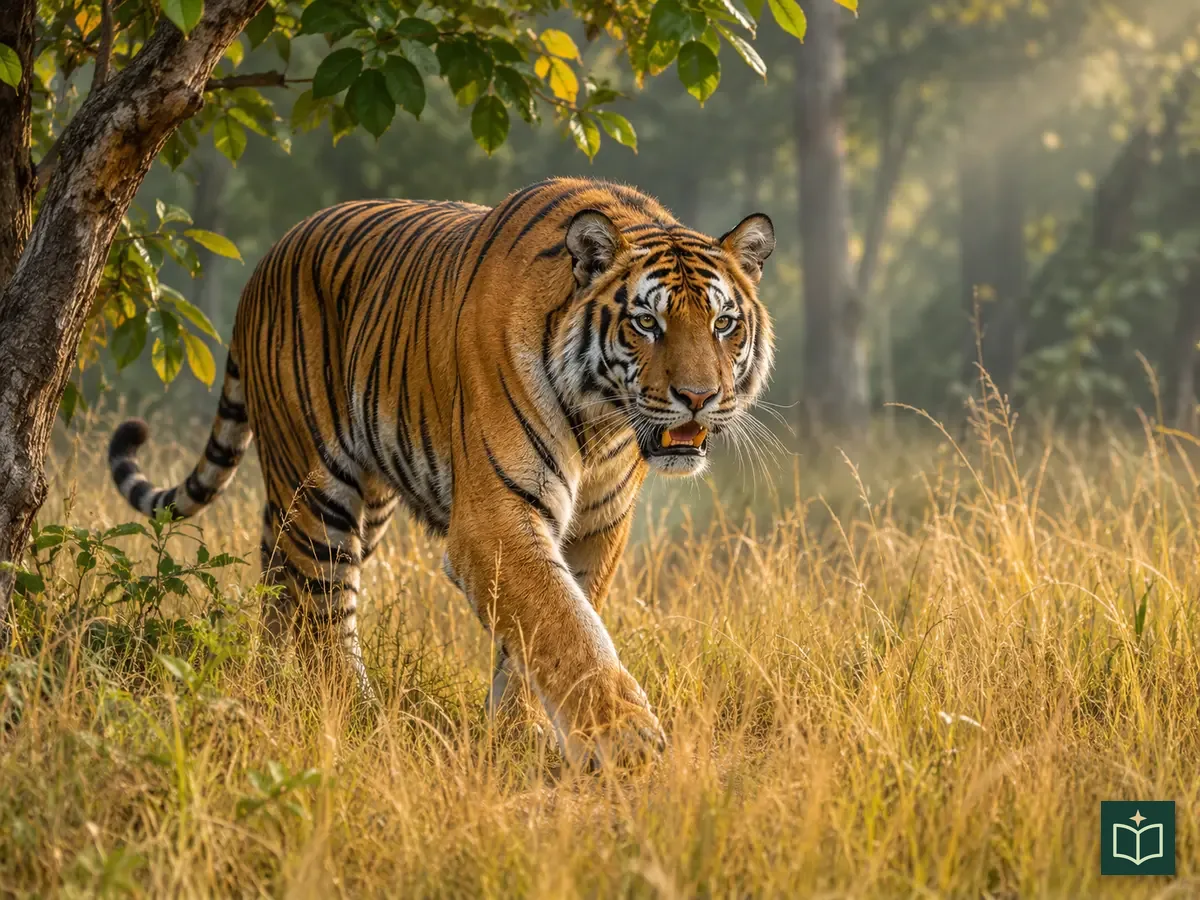
The tiger is the largest cat, with the biggest individuals found in India and the Russian Far East. Tigers are mostly solitary, ambush hunters of deer, wild pigs and buffalo, and their stripes break up their outline in long grass and forest. The lion, second, is the only truly social cat, living in prides of related females with one or more males. Lions survive mainly in sub-Saharan Africa, with a small population in India’s Gir Forest. Both species are classed as threatened by the International Union for Conservation of Nature (IUCN), and the tiger in particular has lost most of its historical range across Asia.
The cats of the Americas
The jaguar, third, is the largest cat in the Americas. It has an exceptionally powerful bite for its size, strong enough to pierce turtle shells and the skulls of prey, and it is a confident swimmer that often hunts in rivers. The cougar, also known as the puma or mountain lion, has one of the widest ranges of any wild land mammal in the Western Hemisphere, from Canada to the southern Andes. Despite its size, the cougar is not classed with the roaring big cats; it purrs, hisses and makes high-pitched calls instead. Both species face habitat loss as forests and grasslands are cleared.
Leopards, cheetahs and snow leopards
The leopard is the most adaptable of the large cats, living in rainforest, savannah, mountains and desert edges across Africa and Asia. One subspecies, the Arabian leopard, survives in the mountains of Oman, Yemen and Saudi Arabia, and probably fewer than 200 remain in the wild, according to conservation assessments. Breeding programmes in the region aim to support its recovery. The cheetah, sixth, is built for speed rather than strength and is the fastest land animal over short distances. The snow leopard lives high in the mountains of Central Asia, using its long, thick tail for balance and warmth on steep, rocky slopes.
The smaller cats
The Eurasian lynx, eighth, is the largest lynx and ranges from Europe to Siberia, hunting deer and hares. The clouded leopard of South-East Asian forests is an expert climber and has the longest canine teeth relative to its skull size of any living cat. Two closely related species are now recognised, and the table combines them. The caracal, tenth, is found across Africa, the Middle East and Central Asia, including the mountains and deserts of the UAE. Its name comes from a Turkish word meaning black ear, after its distinctive tufted ears, and it can leap high to catch birds in flight. Servals and Iberian lynxes are similar in size.
Why size matters for conservation
Large cats need large territories and plenty of prey, which puts them in direct conflict with expanding farms, roads and towns. Many are threatened by habitat loss, poaching for skins and body parts, and retaliation for attacks on livestock. Their size also makes them important to ecosystems, because top predators regulate the numbers and behaviour of grazing animals. Conservation therefore often focuses on protecting connected landscapes rather than isolated reserves. Across the Gulf, public interest in wildlife has grown, and rules on keeping big cats as private pets have been tightened, reflecting concern for both animal welfare and public safety.
Sources & further reading
Figures are rounded and widely published; check the linked organisations for the latest editions. These organisations do not endorse this website.