Why these six
The UN Charter, signed in 1945, states that its Chinese, French, Russian, English and Spanish texts are equally authentic. Those five languages reflected the founding powers and the wide use of Spanish across Latin America, whose states made up a large share of the original members. In practice, English and French were the first working languages of the Secretariat. Spanish became a working language of the General Assembly in 1948, Russian in 1968 and Chinese in 1973. Arabic was added as an official and working language of the General Assembly in December 1973, reflecting the number of Arab member states, and later of the Security Council and other bodies.
How interpretation works
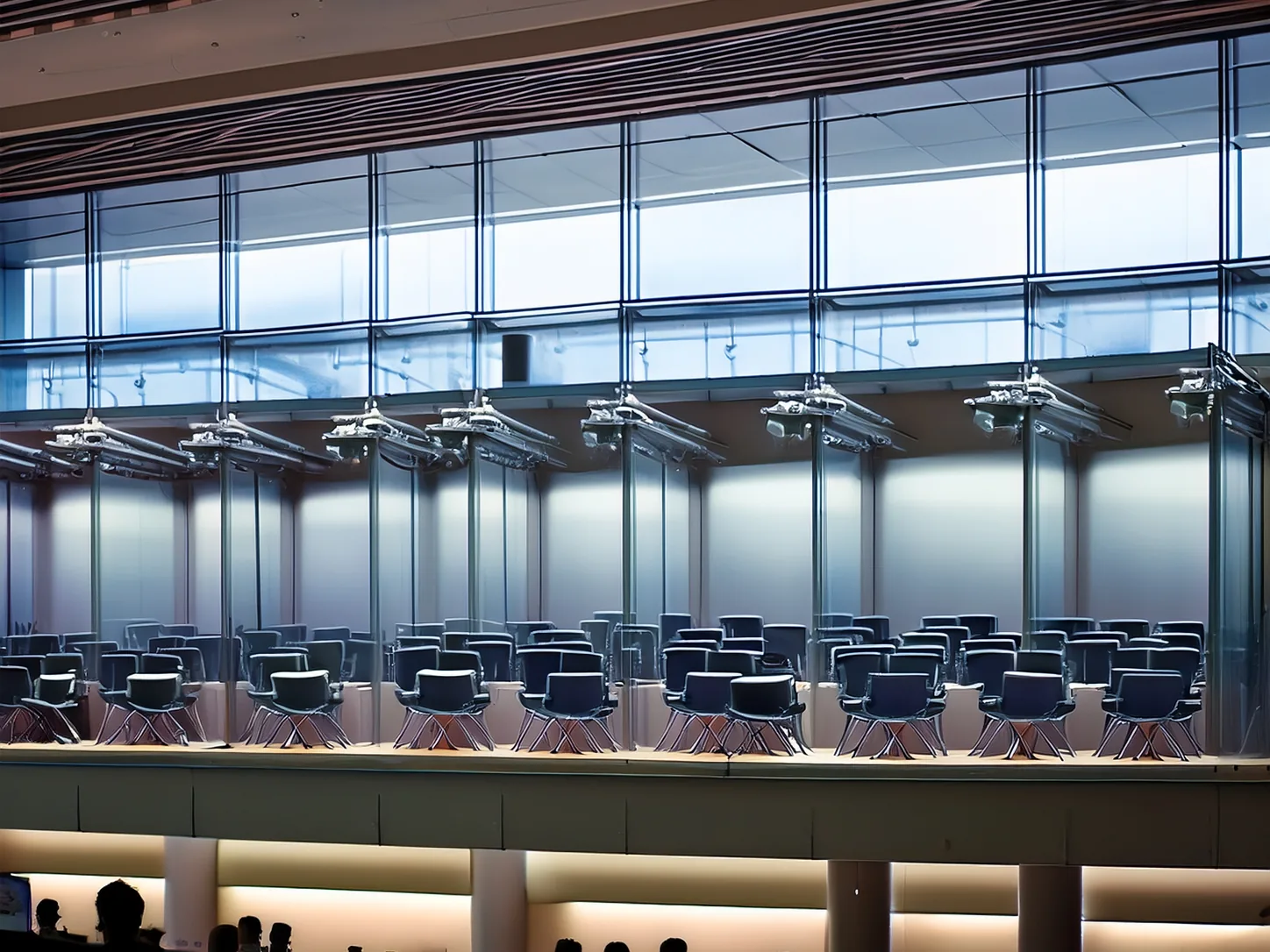
In major meetings, each delegate speaks into a microphone in one official language, and interpreters seated in soundproof booths render the speech into the other five almost instantly. Delegates listen through earpieces, selecting the channel they want. Interpreters generally work into their native language, and each booth is staffed by a small team who rotate every half hour or so because the work demands intense concentration. When a speech is in a language that an interpreter does not cover, a technique called relay is used: one booth interprets into English or French, and the others interpret from that version. Delegates often provide written texts in advance to help accuracy.
Origins of simultaneous interpretation
Large international meetings once relied on consecutive interpretation, in which a speaker paused while an interpreter repeated their words in another language, roughly doubling the length of proceedings. Simultaneous interpretation, using headsets and booths, was developed on a large scale for the Nuremberg trials in 1945 and 1946. The UN adopted it in the late 1940s, and it has been standard in its main bodies ever since. Today interpretation teams in New York, Geneva, Vienna and Nairobi support thousands of meetings each year. Interpreters also face the challenge of capturing nuance, humour and diplomatic shading, where small choices of word can carry political weight.
Documents and authoritative texts
Official UN documents, including resolutions, reports and meeting records, are issued in all six languages. Teams of translators, editors and terminologists maintain consistent vocabulary across thousands of pages, using shared terminology databases. For resolutions, all language versions are equally authentic; delegates negotiate in one language, usually English, and the agreed text is then translated. If discrepancies appear, they are corrected so that the versions align. Treaties concluded under UN auspices usually state which languages are authentic in a final clause. Many name all six, and the law of treaties says that differences in meaning should be reconciled in light of the treaty's object and purpose.
Costs and debates
Multilingualism is expensive, and the UN regularly debates how to manage the cost of translation, interpretation and multilingual websites. Smaller meetings may run with fewer languages, and some Secretariat work happens mainly in English. The General Assembly has repeatedly stressed the importance of equal treatment of the six languages, and a coordinator for multilingualism monitors progress. Other UN agencies set their own rules: some use fewer working languages, while others add languages relevant to their members. Many countries would like their own language recognised, but adding an official language requires a General Assembly decision and a commitment to fund the substantial extra cost of interpretation and translation.
Why it matters
For Arabic speakers, the 1973 decision means that resolutions, reports and debates are available in Arabic as of right, and that Gulf diplomats can address the General Assembly in their own language with confidence that every word will be interpreted. The six languages together are official or widely used in a large majority of the world's countries. For journalists and researchers, the system means that the wording of a resolution can be checked in several versions. A common misconception is that English is the UN's only real language. It is the most used in practice, but legally it has no higher status than the other five.
Sources & further reading
- United Nations · Official languages ↗
- UN Department for General Assembly and Conference Management ↗
- United Nations · Charter of the United Nations, Chapter XIX ↗
Figures are rounded and widely published; check the linked organisations for the latest editions. These organisations do not endorse this website.