The basic idea
If a haircut, a loaf of bread and a bus ride cost far less in one country than another, then money goes further there. Market exchange rates do not capture this well, because they are driven mainly by trade, investment flows and financial markets. Purchasing power parity, or PPP, offers an alternative. It asks: at what exchange rate would the same basket of goods and services cost the same in both countries? That rate, the PPP conversion factor, lets economists compare living standards and the size of economies in terms of what money actually buys, rather than what it would fetch in a currency market at a given moment.
A simple illustration
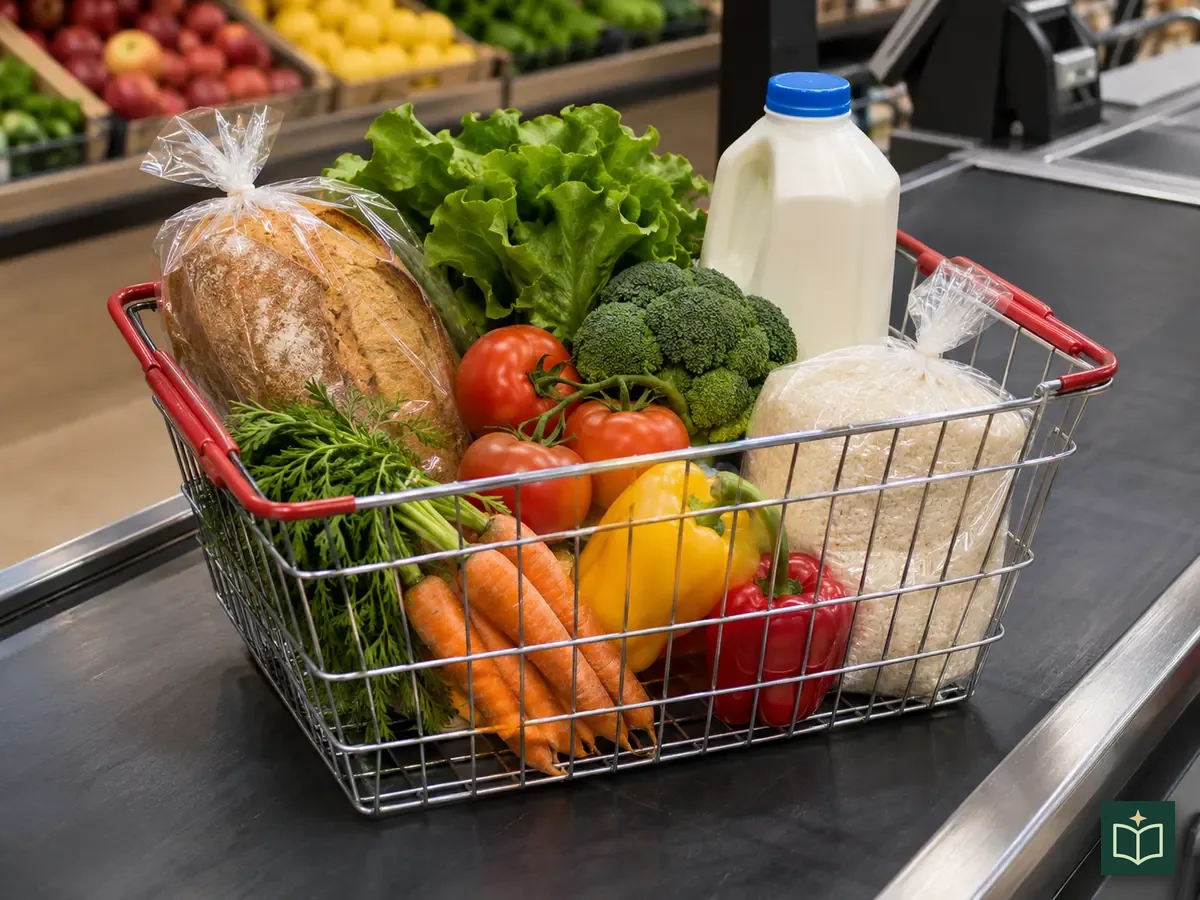
Suppose a basket of everyday goods and services costs AED 100 in the UAE and 30 dollars in the United States. The implied PPP rate is 100 divided by 30, about 3.33 dirhams per dollar. The market rate, fixed by the peg, is 3.6725. In this illustration, a dirham buys slightly more in the UAE than its market conversion suggests. If basket prices were equal at the market rate, the two would match. These figures are hypothetical, chosen to show the arithmetic; real PPP rates come from detailed price surveys covering thousands of products and services, and they are published with a lag of several years.
How the data are built
Real PPP rates are produced by the International Comparison Program, a global statistical partnership now coordinated by the World Bank, with the OECD and Eurostat covering their members. National statistics offices collect prices for comparable items, from rice and medicines to rents and construction, across many countries. Statisticians then match quality and weight items by their importance in each economy. The resulting rates are used to compare GDP, poverty levels and consumption. The World Bank's international poverty line, for instance, is expressed in PPP-adjusted dollars, so that the threshold represents a similar standard of living in each country, rather than a fixed market sum.
How rankings change
Converting at PPP rather than market rates can transform comparisons. Prices for many services, such as haircuts, domestic help and local transport, tend to be lower in countries with lower wages, because those services are not easily traded internationally. As a result, PPP-based GDP figures for lower-income economies are often substantially higher than market-rate figures, and the gap narrows for richer economies. Measured at PPP, China's economy has been estimated by the IMF and World Bank as larger than that of the United States for some years, while at market exchange rates the US remains larger. Both statements can be true because they answer different questions.
Limits and misconceptions
PPP is not a forecast of where exchange rates will go, although some economists see it as a long-run anchor around which rates fluctuate. Market rates can diverge from PPP for many years. Baskets are hard to match: a meal or a flat in one country is never quite identical to another, and consumption patterns differ. The popular Big Mac index, published by The Economist, illustrates the idea with a single product, but it is a teaching tool rather than a rigorous measure. PPP comparisons also say little about the cost of imported goods or foreign travel, for which market exchange rates remain the relevant guide.
Why it matters
Whenever a report compares living standards, poverty or economic size across countries, it is worth checking whether figures use market exchange rates or PPP. The choice can change rankings significantly and alter conclusions about growth, inequality and the balance of economic power. For individuals, the idea helps explain why a salary that sounds modest in one country can support a comfortable life there, and why a high salary in an expensive city may stretch less far than expected. PPP is a reminder that money's value is local as well as global, measured by what it buys where it is spent.
Sources & further reading
Figures are rounded and widely published; check the linked organisations for the latest editions. These organisations do not endorse this website.