Why banks are fragile
Banks perform a valuable transformation. They take deposits that customers can withdraw on demand and lend that money, or money they create, for years, as mortgages and business loans. This lets savers keep instant access while borrowers receive long-term funding. But it creates a mismatch. On any normal day, only a small share of depositors withdraw, and new deposits arrive, so the bank holds only a fraction of its assets in cash and easily sold securities. If a large share of depositors demand their money simultaneously, the bank cannot recall long-term loans quickly. That structural vulnerability is the root of every bank run.
How panic spreads
A run can start with a real problem, such as heavy losses on loans, or with a rumour. What makes it dangerous is its self-fulfilling logic. If you think other depositors might withdraw and leave the bank short of cash, the rational move is to withdraw first. Each withdrawal increases the pressure on the bank and the fear among remaining depositors. To meet demands, the bank may have to sell assets quickly at depressed prices, turning paper losses into real ones. A bank that was solvent, with assets worth more than its liabilities, can be driven into insolvency simply because too many customers lost confidence at once.
A simple illustration
Picture a bank with AED 1 billion of deposits. It holds AED 100 million in cash and liquid securities and AED 950 million in loans that will be repaid over many years, giving it assets of AED 1.05 billion and a capital cushion of AED 50 million. If depositors withdraw AED 80 million in a week, it can cope. If they try to withdraw AED 300 million, it must sell loans or borrow. Selling AED 250 million of loans at a 20 per cent discount would bring in only AED 200 million and wipe out its entire AED 50 million cushion in the process.
Famous runs
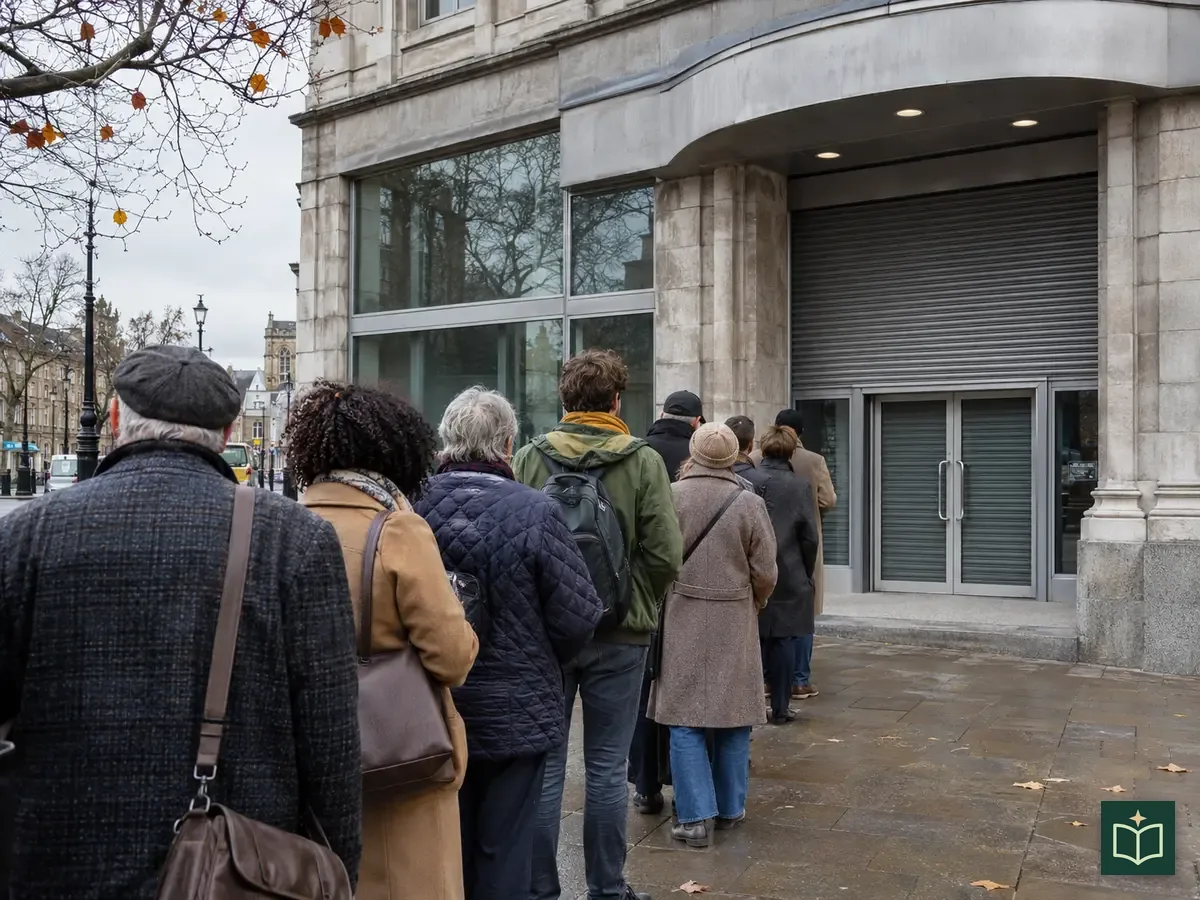
History is full of bank runs, from the panics of nineteenth-century Britain and America to the waves of failures during the Great Depression, when thousands of US banks closed. In 2007, the British lender Northern Rock suffered the country's first major run in over a century, with queues forming outside its branches. In March 2023, Silicon Valley Bank in the United States collapsed after customers attempted to withdraw tens of billions of dollars in a single day, much of it through mobile and online banking. That episode showed that digital banking and social media can make modern runs far faster than those of the past.
The defences
Several safeguards have been built to prevent runs. Deposit insurance, pioneered at national scale by the US in 1933, guarantees deposits up to a limit, removing the incentive for small savers to rush to withdraw. Central banks act as lenders of last resort, a principle associated with the nineteenth-century writer Walter Bagehot, providing cash to solvent banks against good collateral. Regulators require banks to hold capital and liquid assets and to plan for stress. Many countries, including the UAE, have their own frameworks for deposit protection and bank supervision; the details vary by jurisdiction and are set out by the relevant central bank.
Why it matters
Bank runs are rare in well-regulated systems precisely because these defences exist, but the underlying fragility never disappears. Understanding it explains why central banks act quickly in a crisis, why regulators focus on liquidity as well as capital, and why confidence is central to banking. For individuals, the practical lessons are simple: understand which deposits are protected in your country and up to what limit, and recognise that panic can be contagious. A common misconception is that a run means a bank was badly run; sometimes it does, but sometimes a sound institution is caught in a wider loss of trust.
Sources & further reading
- Federal Deposit Insurance Corporation ↗
- Bank of England · Knowledge bank ↗
- Bank for International Settlements ↗
Figures are rounded and widely published; check the linked organisations for the latest editions. These organisations do not endorse this website.