What counts as a metro?
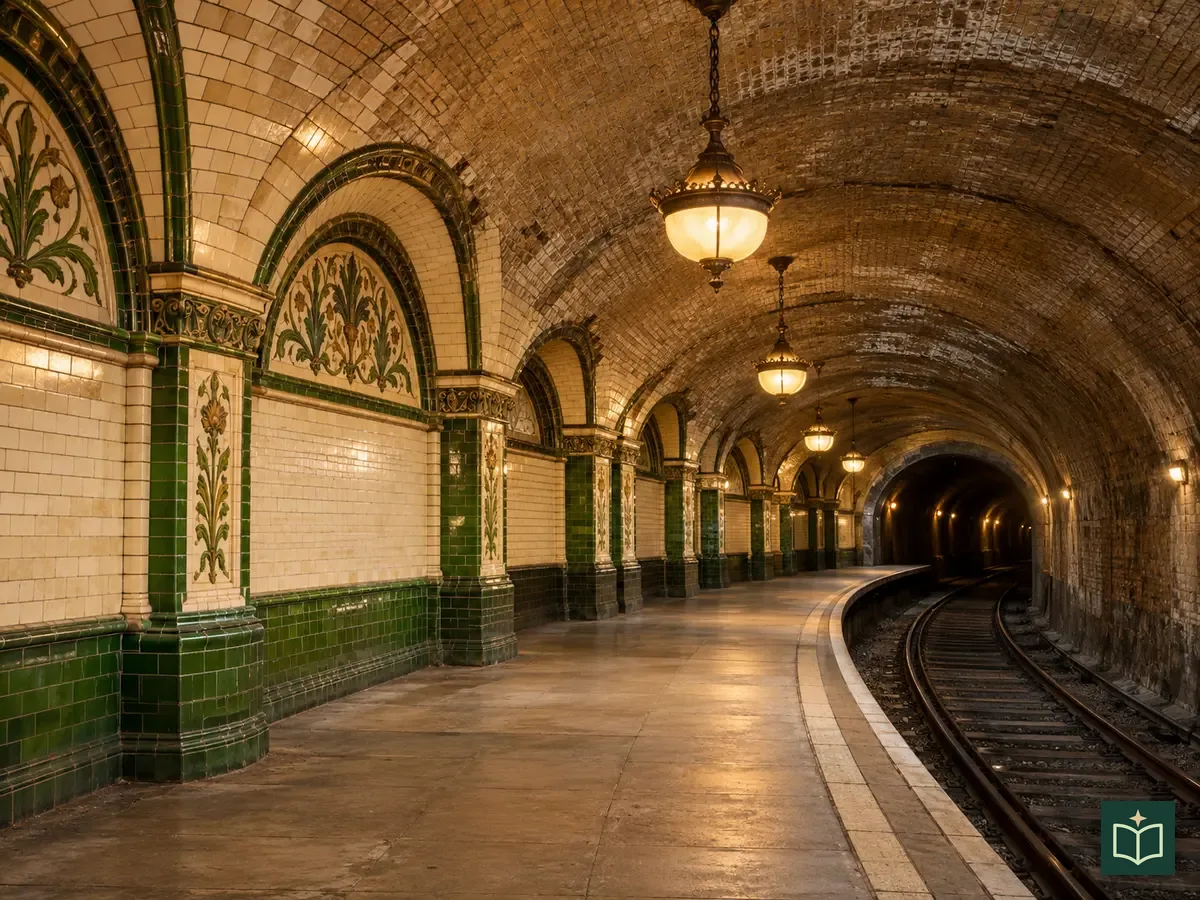
A metro is an urban railway that runs frequently and is separated from street traffic, usually in tunnels or on viaducts. Deciding which was first depends on definitions. Istanbul’s Tünel, opened in 1875, is a short underground funicular rather than a railway network. Chicago’s elevated railway opened in 1892, before most of the cities here, but ran above ground. The line between Athens and Piraeus opened as a steam railway in 1869 and only later became part of the metro. This table lists systems by the opening of their first underground or largely grade-separated rapid-transit line, a common approach, and notes such cases rather than ranking them.
London, the pioneer
London’s Metropolitan Railway opened on 10 January 1863 between Paddington and Farringdon, carrying tens of thousands of passengers on its first day. It was built by cut-and-cover, digging a trench along the line of streets, laying track and roofing it over. Trains were hauled by steam locomotives, and despite efforts to reduce smoke, tunnels were notoriously sooty. In 1890 the City and South London Railway opened the world’s first deep-level electric tube line, using tunnelling shields to bore beneath buildings. The network that grew from these lines, known as the Underground or the Tube, became a model for cities around the world.
Budapest and Glasgow
Budapest’s first metro line opened in 1896 to mark the thousandth anniversary of the Hungarian state. Running beneath Andrássy Avenue, it was the first underground railway in continental Europe and the first designed for electric trains from the start. It is now part of a UNESCO World Heritage Site and still operates with restored stations. Glasgow’s Subway opened later the same year as a single circular line. Originally pulled by moving cables, it was electrified in the 1930s. Unusually, its narrow-gauge loop has never been extended, and it remains one of the simplest metro systems anywhere, affectionately nicknamed the Clockwork Orange by locals.
Boston, Paris and Berlin
Boston’s Tremont Street Subway opened in 1897 to take streetcars off congested surface roads, making it the first subway in the United States; its tunnels are still used by today’s Green Line. Paris opened its Métro in 1900 in time for that year’s Universal Exposition. Its Art Nouveau entrances, designed by Hector Guimard, became symbols of the city. The Paris network grew quickly and remains one of the densest in the world, with stations close together across the central city. Berlin’s U-Bahn opened in 1902; its first section ran largely on an elevated viaduct, with only a short stretch underground.
New York to Buenos Aires
New York opened its first subway line in 1904, although elevated railways had operated in the city for decades. The system grew into one of the largest in the world and is known for running around the clock. Philadelphia’s Market Street subway followed in 1907, and Hamburg’s U-Bahn in 1912. Buenos Aires opened its Line A in 1913, the first metro in Latin America and the Southern Hemisphere. Remarkably, some of its original wooden carriages remained in passenger service until 2013. After this burst of construction, the next wave came later in the 20th century, with Moscow in 1935 and many Asian cities from the 1970s onwards.
Metros in the Gulf
Gulf cities are recent but ambitious metro builders. Dubai Metro opened on 9 September 2009 and is one of the longest driverless metro networks in the world, linking the airport, business districts and residential areas. Doha Metro opened in 2019, and Riyadh’s metro, a multi-line driverless system, opened in stages from late 2024. These systems use technologies the pioneers could not have imagined, including automatic train control, platform screen doors and air-conditioned stations designed for extreme heat. Yet the basic idea is the same as in 1863: separate trains from street traffic so that large numbers of people can move quickly through a growing city.
Sources & further reading
Figures are rounded and widely published; check the linked organisations for the latest editions. These organisations do not endorse this website.