A thin outer skin
Earth’s crust is the thin, rocky outer layer of the planet, typically 5 to 10 kilometres thick beneath the oceans and around 30 to 70 kilometres beneath the continents. It makes up less than 1% of Earth’s mass, yet it is the only part we can sample directly and the source of almost every raw material we use. The percentages in this table are shares of the crust’s mass, estimated by combining thousands of rock analyses weighted by how common each rock type is. Different studies use different methods and assumptions, so figures vary slightly, and the order of sodium, magnesium and potassium in particular changes between sources.
Oxygen and silicon
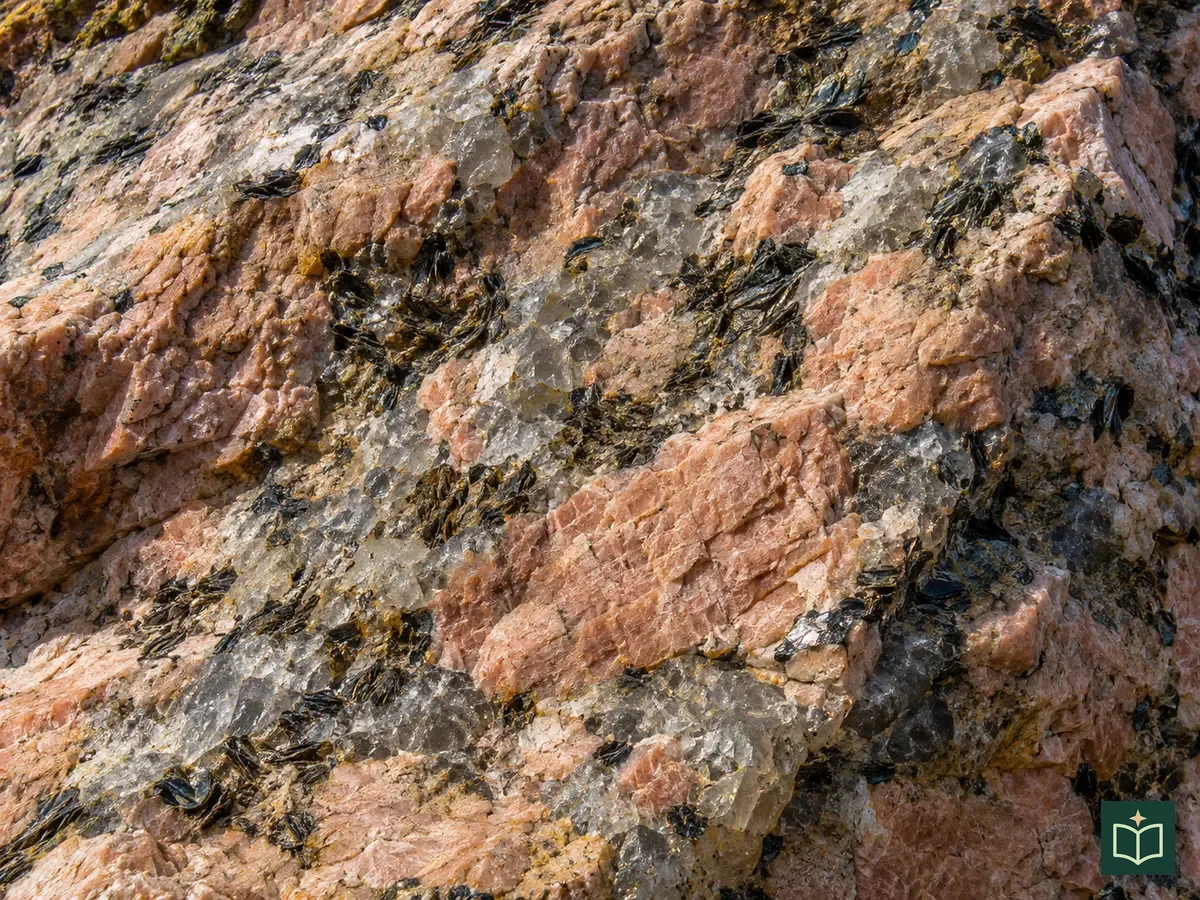
Oxygen and silicon together make up about three-quarters of the crust by mass. They combine to form silicate minerals, built from a basic unit of one silicon atom surrounded by four oxygen atoms. These units link into chains, sheets and frameworks that form quartz, feldspars, micas and many other common minerals. Because oxygen atoms are large compared with most metal atoms, oxygen dominates the crust even more by volume than by mass. In other words, most rock is essentially a closely packed framework of oxygen with smaller atoms tucked into the spaces. The oxygen we breathe, by contrast, is a gas largely produced by photosynthesis.
Aluminium and iron
Aluminium is the most abundant metal in the crust, yet it was not isolated until the 1820s, because it binds tightly to oxygen and is hard to extract. For decades it was more expensive than gold. That changed in 1886, when the Hall–Héroult electrolytic process made large-scale production possible. Today the main ore is bauxite, and smelting requires vast amounts of electricity, which is why the UAE, with abundant natural gas, has become one of the world’s major aluminium producers. Iron, fourth in the crust, is far more abundant in Earth as a whole, because most of it sank into the planet’s core early in its history.
The common metals
Calcium, sodium, magnesium and potassium each make up a few per cent of the crust. Calcium is concentrated in limestone and in many feldspars, and it is the basis of cement and building lime. Sodium and potassium are found in feldspars and, after weathering releases them, in salts; sodium is the main reason seawater tastes salty. Magnesium is common in dark volcanic rocks and in the mantle below. Titanium, ninth, is widespread but difficult to refine, so the metal remains relatively expensive, although titanium dioxide is used in huge quantities as a white pigment. Hydrogen, tenth, is present mainly in water locked into minerals such as clays.
Abundant is not the same as available
Many valuable elements are scarce in the crust as a whole. Copper averages only around 60 parts per million and gold a few parts per billion. They can be mined only where geological processes, such as hot fluids circulating through rock, have concentrated them into ore deposits many times richer than average. Conversely, an element can be abundant yet expensive to use if it is hard to separate from the minerals that contain it, as titanium and, historically, aluminium show. The economics of mining therefore depend less on average abundance than on concentration, ease of extraction, energy costs and demand, which is why resource rankings and abundance rankings rarely match.
The crust versus the whole Earth
The crust is chemically very different from the planet as a whole. Taken as a whole, Earth is about one-third iron by mass, followed by oxygen, silicon and magnesium, because the dense metal sank to form the core while lighter silicates rose to form the mantle and crust. Studying crustal chemistry has practical value. It guides the search for minerals, explains the fertility of soils and underpins industries close to home: Gulf countries produce cement from local limestone, glass from silica sand and aluminium from imported ores. Understanding which elements are common and which are rare also shapes debates about the supply of materials for batteries and electronics.
Sources & further reading
Figures are rounded and widely published; check the linked organisations for the latest editions. These organisations do not endorse this website.