A simple scratch test
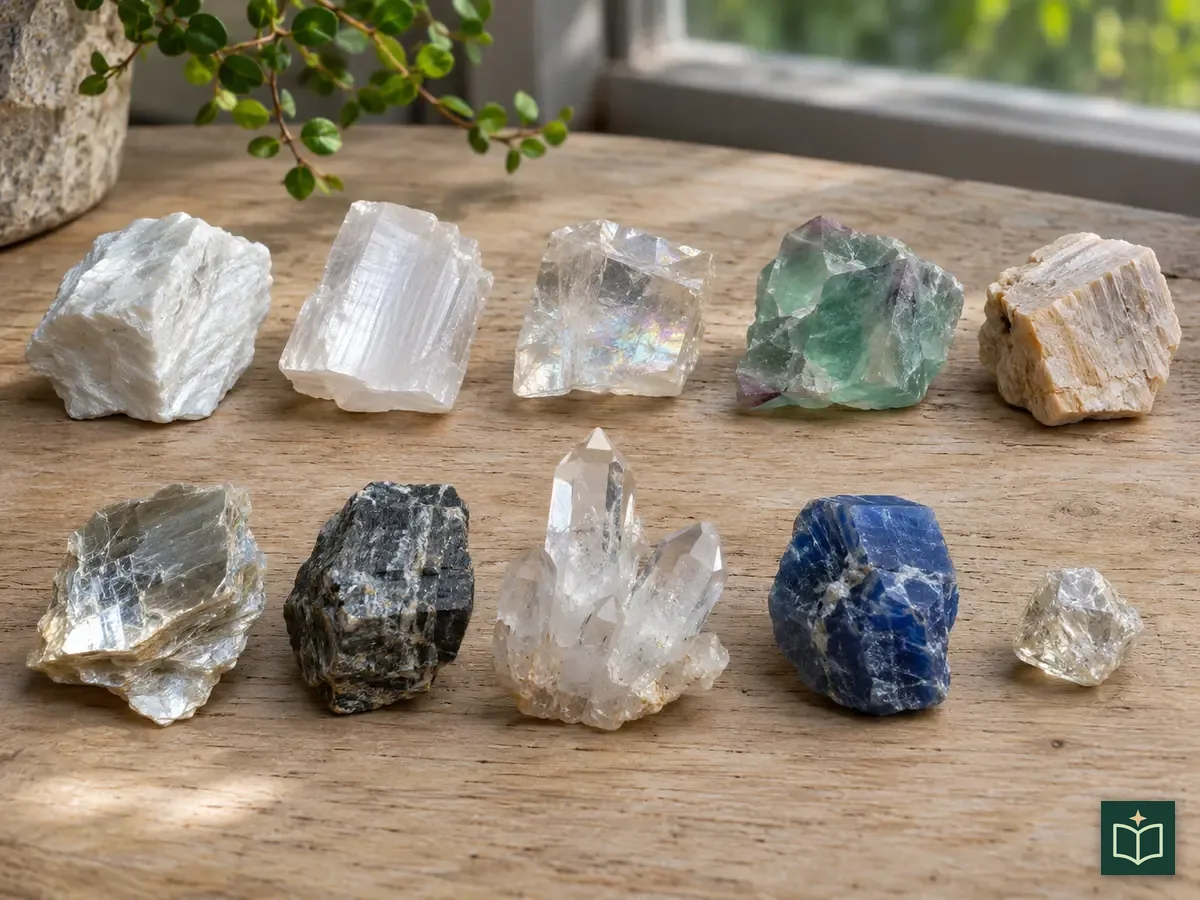
In 1812 the German mineralogist Friedrich Mohs proposed a way to compare hardness using ten common minerals as reference points. The principle is simple: a harder mineral will scratch a softer one, but not the other way round. To test an unknown sample, a geologist tries to scratch it with the reference minerals or with everyday objects of known hardness. If quartz scratches it but feldspar does not, its hardness lies between 6 and 7. The test needs no laboratory equipment, which is why it is still used in fieldwork, classrooms and gem identification more than two centuries after Mohs devised it.
Ordinal, not linear
The Mohs scale is ordinal: it puts minerals in order but does not say how much harder one is than another. The steps are very uneven. Laboratory methods, which measure how deeply a shaped diamond tip indents a surface under a known load, show that diamond is roughly four times harder than corundum, even though they are only one step apart on the scale. The difference between talc and gypsum, by contrast, is small. Engineers therefore use absolute measures, such as the Vickers and Knoop tests, when they need precise numbers. The Mohs ranking remains useful because it is quick, intuitive and easy to remember.
The hard end
Diamond, at 10, is pure carbon arranged in a rigid three-dimensional lattice of very strong bonds, which makes it the hardest natural mineral. That property is why diamond is used in drill bits, saws and abrasives. Corundum, at 9, is aluminium oxide; its red form is ruby and its other colours are sapphire. Synthetic sapphire is used for scratch-resistant watch faces and some camera lens covers. Topaz, at 8, is a popular gemstone. Quartz, at 7, is one of the most common minerals in Earth’s crust and the main component of most sand, which matters a great deal in practical terms.
The middle of the scale
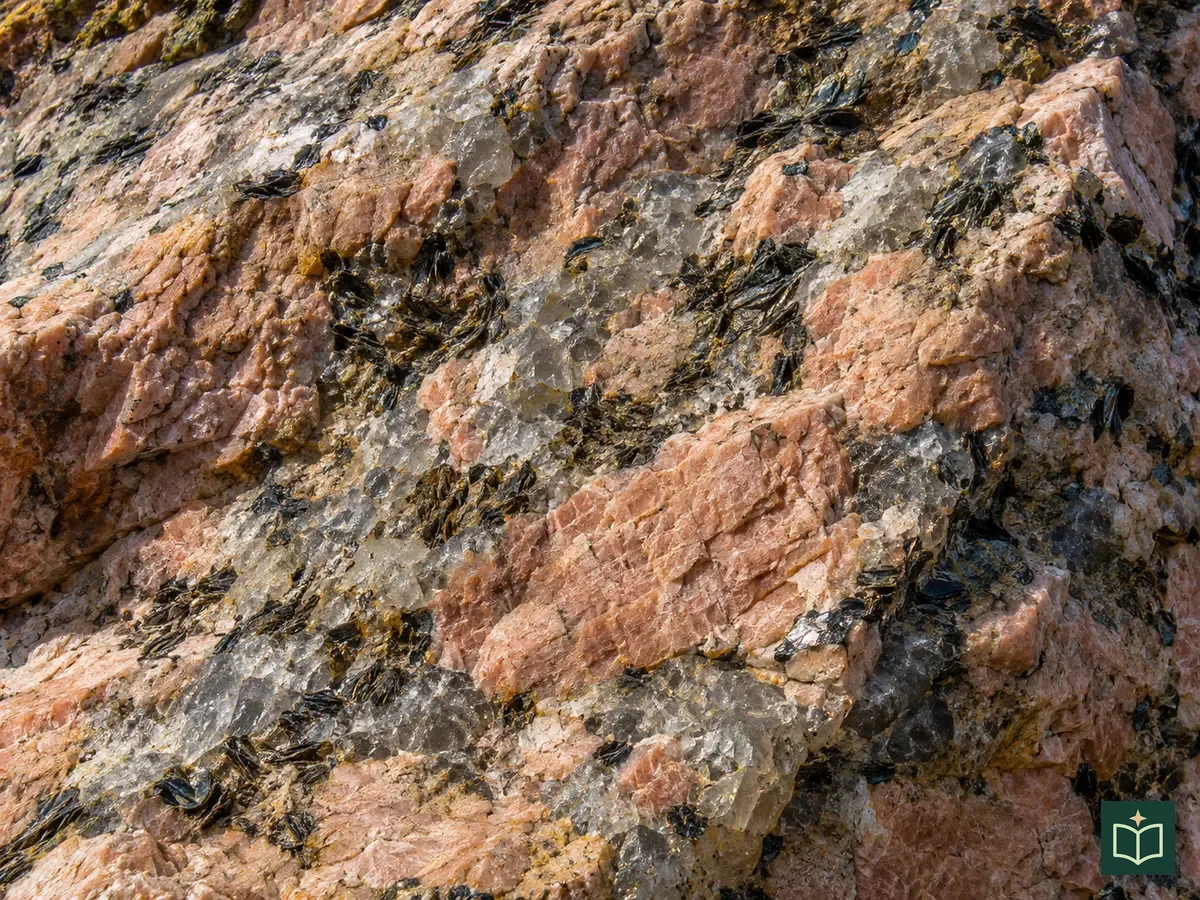
Orthoclase feldspar, at 6, is a major constituent of granite and many other rocks. Apatite, at 5, is a phosphate mineral; the enamel on human teeth is made of a closely related material, which helps explain why enamel is the hardest substance in the body. Fluorite, at 4, comes in many colours and gave its name to fluorescence because some samples glow under ultraviolet light. Calcite, at 3, is the main mineral in limestone and marble. It fizzes in weak acid, another simple field test. Many building stones used across the Gulf, from limestone to marble, therefore sit in the softer half of the scale.
The soft end and everyday tools
Gypsum, at 2, can be scratched with a fingernail and is used to make plaster and plasterboard. The desert roses found in parts of the Arabian Peninsula are clusters of gypsum or baryte crystals mixed with sand. Talc, at 1, is so soft it feels greasy and crumbles under a fingernail. Useful everyday references fill the gaps: a fingernail is about 2.5, a copper coin about 3.5, a steel knife blade and window glass about 5.5, and a steel file about 6.5. Natural pearls, central to the Gulf’s pearling heritage, sit at roughly 2.5 to 4.5, which is why they scratch easily and need careful handling.
Why hardness matters
Hardness determines how materials wear. Airborne dust and sand, rich in quartz, can scratch softer surfaces such as ordinary glass, car paint and some phone screens, a familiar problem during sandstorms. Gemstones that rate 8 or above keep their polish in daily wear, while softer stones dull more quickly. Hardness is not the same as toughness, though. Diamond resists scratching but can chip or split if struck sharply along certain planes, while jade, which is much softer, is unusually tough because of its interlocking fibres. Understanding the difference helps jewellers choose settings, engineers choose cutting tools and anyone decide how to clean and store precious objects.
Sources & further reading
Figures are rounded and widely published; check the linked organisations for the latest editions. These organisations do not endorse this website.