Setting the scope
The Middle East has no single agreed boundary, so this ranking sets one. It covers rivers in the Asian part of the region, from Türkiye and the Levant to Iraq, Iran and the Arabian Peninsula. The Nile, which flows through Egypt, is far longer than any river listed here, but it is usually ranked as an African river and appears in that continent’s list. Rivers of the Caucasus and Central Asia, such as the Kura and the Amu Darya, are also left out. Within this region, the table includes rivers that flow into others, such as the Murat, a source of the Euphrates, as is common in national river lists.
Euphrates and Tigris
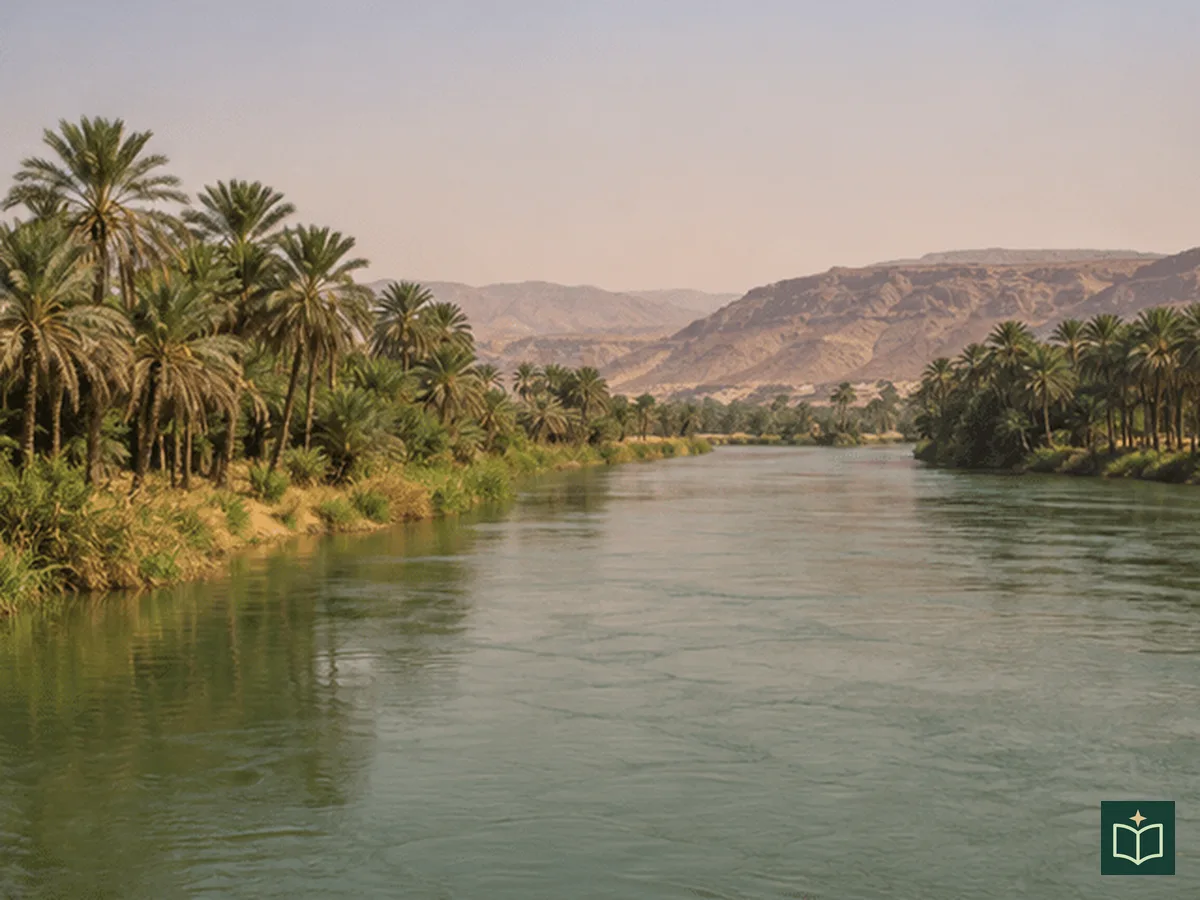
The Euphrates, about 2,800 kilometres long, rises in the mountains of eastern Türkiye from two headstreams, the Karasu and the Murat, and flows through Syria and Iraq. The Tigris, about 1,850 kilometres, rises nearby and runs a more easterly course past Mosul and Baghdad. The two meet in southern Iraq to form the Shatt al-Arab, which flows about 200 kilometres to the Arabian Gulf. The land between them, Mesopotamia, whose name means between the rivers, saw some of the world’s first cities, writing and irrigated farming. The marshes of southern Iraq, fed by both rivers, were listed as a World Heritage Site in 2016.
Rivers of Türkiye
Türkiye has more rivers than any other country in the region, thanks to its mountains and relatively high rainfall. The Kızılırmak, or Red River, about 1,350 kilometres long, is the longest river entirely within the country. Known in ancient times as the Halys, it curves through central Anatolia to the Black Sea, and its reddish silt gives it its name. The Sakarya, about 820 kilometres, also flows to the Black Sea. The Aras, about 1,070 kilometres, rises in eastern Türkiye and forms parts of the borders between Türkiye, Armenia, Iran and Azerbaijan before joining the Kura. Many Turkish rivers are dammed for hydroelectric power and irrigation.
Rivers of Iran
Iran’s longest rivers drain its western mountains. The Karun, rising in the Zagros, flows past the city of Ahvaz and joins the Shatt al-Arab at Khorramshahr. Iranian sources give its length as about 950 kilometres, while others, measuring differently, give about 830. It is Iran’s largest river by flow and the only one long navigable by boats. The Karkheh, about 900 kilometres, ends in the Hawizeh marshes on the border with Iraq. In the north, the Sefid Rud flows to the Caspian Sea, while the Atrek forms part of the border with Turkmenistan. Because figures differ between sources, the order of the Karun and Karkheh is not certain.
Why Arabia has none
Saudi Arabia is often cited as the largest country with no permanent river, and the wider peninsula has no large river that flows all year. Rainfall is too low and evaporation too high for streams to last. Instead, the peninsula is crossed by wadis, dry valleys that carry sudden, sometimes dangerous floods after storms, as in the Hajar Mountains of the UAE and Oman. Ancient rivers did flow across Arabia during wetter periods, and satellite images reveal their buried channels beneath the sand. Today the Gulf states rely on groundwater from deep aquifers, much of it thousands of years old, and on desalination, which supplies most drinking water in the UAE, Qatar and Kuwait.
Shared water, shared tension
Most of the region’s major rivers cross borders, which makes water a source of cooperation and dispute. Türkiye’s large dams on the Euphrates and Tigris, including the Atatürk Dam, give it influence over flows into Syria and Iraq, and Iraq has long sought guaranteed shares. Iran’s dams and transfers have also affected rivers and marshes shared with Iraq. The Jordan, only a few hundred kilometres long, is among the most politically significant rivers anywhere; heavy use of its water has reduced its flow to the Dead Sea, whose level is falling by about a metre a year. Climate change and growing populations are expected to add pressure across the region.
Sources & further reading
Figures are rounded and widely published; check the linked organisations for the latest editions. These organisations do not endorse this website.