Qeshm leads by far
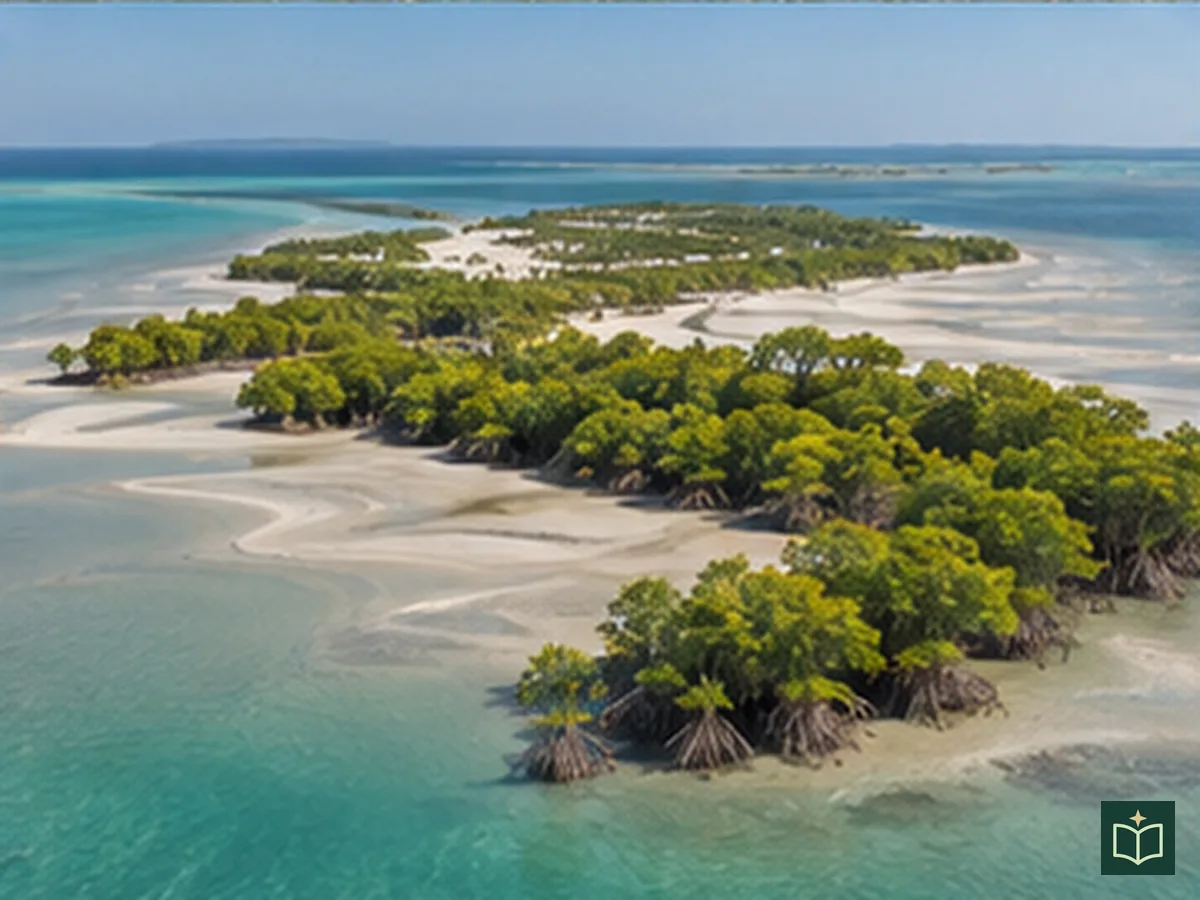
Qeshm, at about 1,490 square kilometres, is the largest island in the Gulf, lying at its eastern entrance in the Strait of Hormuz, close to the Iranian port of Bandar Abbas. It is roughly 135 kilometres long, low and arid, and known for its salt caves, eroded sandstone canyons and the Hara mangrove forests along its northern shore, a protected habitat for herons and other wading birds. Kuwait’s Bubiyan, about 860 square kilometres, is second. Bahrain Island, about 590 square kilometres, is third. Areas in this table are rounded and reflect standard references; reclamation and shifting coastlines, especially around Bahrain and Abu Dhabi, mean that published figures change over time.
Bubiyan and the north
Bubiyan lies at the far north-western corner of the Gulf, near the mouth of the Shatt al-Arab, where the Tigris and Euphrates reach the sea. It is flat and marshy, with mudflats that support huge numbers of migratory birds, including crab plovers, and much of it is a protected reserve. A bridge links it to the Kuwaiti mainland, and Kuwait has been building the large Mubarak Al-Kabeer port on its eastern side. Nearby Failaka, about 43 square kilometres and just outside this table, has remains from the Bronze Age Dilmun culture and a Hellenistic settlement founded after the campaigns of Alexander the Great.
Bahrain’s islands
Bahrain is an archipelago, and its main island, Bahrain Island, holds the capital, Manama, and most of the population. Its area has grown through land reclamation, and the country as a whole now covers close to 790 square kilometres. Hawar, near the coast of Qatar, is the largest of a group of low islands that are an important nesting site for Socotra cormorants; their ownership was settled by the International Court of Justice in 2001. Muharraq, linked to Manama by causeways and home to Bahrain International Airport, has been enlarged several times by reclamation, so its area depends on the date of the source.
Abu Dhabi’s islands
The UAE has around 200 islands, most of them off Abu Dhabi. The largest, Abu al Abyad, covers about 306 square kilometres west of the capital and is low, sandy and edged with mangroves and sabkha salt flats. Sir Bani Yas, about 87 square kilometres, is a salt dome island turned into a large wildlife reserve where Arabian oryx, gazelles and giraffes roam; it is often called the largest natural island in the UAE because much of Abu al Abyad merges with tidal flats. The city of Abu Dhabi itself stands on an island, greatly enlarged by reclamation, alongside Saadiyat, Yas and Al Reem.
Iran’s Gulf islands
Iran holds most of the islands along the Gulf’s northern side. Kish, about 91 square kilometres, is a free trade zone and resort with modern malls and coral beaches. Lavan, about 76 square kilometres, hosts an oil terminal and refinery. Larak and Hormuz lie in the Strait of Hormuz, and Hormuz is famed for its red, yellow and ochre soils, shaped by an ancient salt dome. Kharg, smaller but strategic, is Iran’s main crude-export terminal. Many of these islands rise over salt domes, pushed up from thick salt layers deposited hundreds of millions of years ago and buried beneath the Gulf’s sediments.
Why the islands matter
The Gulf’s islands sit beside some of the world’s most important shipping lanes and oil and gas fields, giving even small ones strategic value. Several host export terminals, ports, airports or military facilities, and the sovereignty of some islands remains contested. They also matter for nature: mangroves, seagrass beds and mudflats around Bubiyan, Abu al Abyad and Qeshm support fish nurseries, dugongs, turtles and migrating birds. Climate change and sea-level rise pose risks to these low-lying islands. Meanwhile, artificial islands such as Dubai’s Palm Jumeirah have added new land, but these man-made islands are not included in this ranking of natural islands.
Sources & further reading
Figures are rounded and widely published; check the linked organisations for the latest editions. These organisations do not endorse this website.