What it is
Ordinary inflation is a gradual rise in prices; central banks in many economies aim for about 2 per cent a year. Hyperinflation is something else entirely: prices rising so quickly that money ceases to function as a reliable store of value or even as a unit for setting prices. The economist Phillip Cagan, in a classic 1956 study, defined it as inflation exceeding 50 per cent a month. Compounded, that is about 13,000 per cent a year, meaning prices multiply roughly 130 times. In the worst episodes, the pace has been far faster, with prices doubling within days or, in the most extreme case, within hours.
How it starts
Hyperinflations almost always share a root cause: a government spending far more than it can raise in taxes or borrow, and covering the gap by having the central bank create money. This often follows a severe shock, such as war, the loss of productive capacity, heavy foreign debts or political collapse. At first, extra money raises prices moderately. The decisive change comes when people lose confidence. If they expect prices to keep rising, they spend wages immediately, hoard goods or switch to foreign currencies. Money changes hands faster, prices rise faster still, tax revenues shrink in real terms, and the government prints even more to keep up.
Germany, 1923
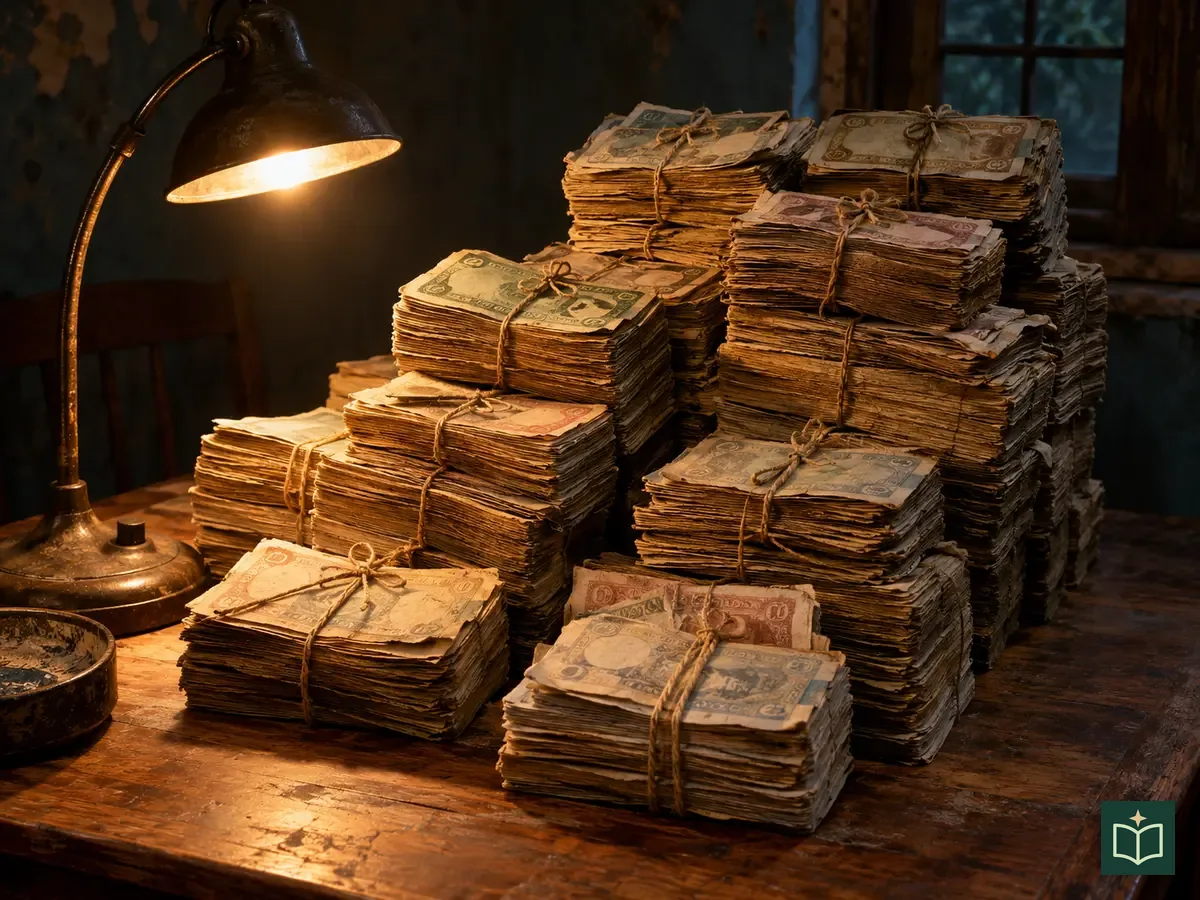
The best-known case is Weimar Germany. Burdened by war debts, reparations obligations and, in 1923, the occupation of the industrial Ruhr region, the government financed itself through the printing press. Prices spiralled. By November 1923, one US dollar was worth about 4.2 trillion marks. Workers were paid once or twice a day and rushed to spend their wages before prices rose again; banknotes were used as fuel or wallpaper. Savings held in marks were wiped out, devastating the middle class. The episode ended with a new currency, the Rentenmark, and strict limits on money creation, and it left a deep mark on German attitudes to inflation.
Other episodes
Germany's experience was not the most extreme. Hungary after the Second World War holds the record: in July 1946, prices were doubling roughly every fifteen hours. Zimbabwe experienced hyperinflation in 2007 and 2008, after a collapse in agricultural output and heavy money creation, and eventually abandoned its own currency for foreign ones. Other cases include Austria and Poland in the 1920s, several Latin American countries in the 1980s and early 1990s, and Yugoslavia in the early 1990s. The details differed, but the pattern was strikingly similar: large deficits, money financing, a collapse of trust and a cycle that fed on itself until halted.
How it ends
Hyperinflation is usually stopped by a credible break with the past rather than gradual adjustment. Typical measures include a new currency or a fixed exchange rate, an independent central bank barred from financing the government, and a budget brought close to balance through tax and spending reforms, sometimes supported by international lenders. Some countries adopt a foreign currency outright. Once people believe the money will hold its value, they stop rushing to spend it, and prices can stabilise remarkably quickly. A common misconception is that any money printing leads to hyperinflation; historically it has required extreme deficits combined with a collapse in confidence.
Why it matters
Hyperinflation is rare, but its memory shapes economic institutions worldwide. Central bank independence, legal limits on financing government deficits and inflation targets all reflect lessons from these episodes. It also illustrates a fundamental truth: money is a social agreement, valuable because people trust that others will accept it tomorrow at a similar value. When that trust breaks, no amount of new banknotes can restore it. For economies with stable currencies, including those anchored by a fixed exchange rate such as the UAE dirham, hyperinflation is a distant risk, but understanding it clarifies why monetary discipline and credibility matter so much.
Sources & further reading
Figures are rounded and widely published; check the linked organisations for the latest editions. These organisations do not endorse this website.