Where the heat comes from
Earth’s interior is hot, partly from heat left over from the planet’s formation and partly from radioactive decay in rocks. Temperatures rise with depth—typically by about 25–30°C per kilometre. Near volcanoes and plate boundaries, hot rock lies much closer to the surface, which is where most geothermal power plants are built.
Types of plants
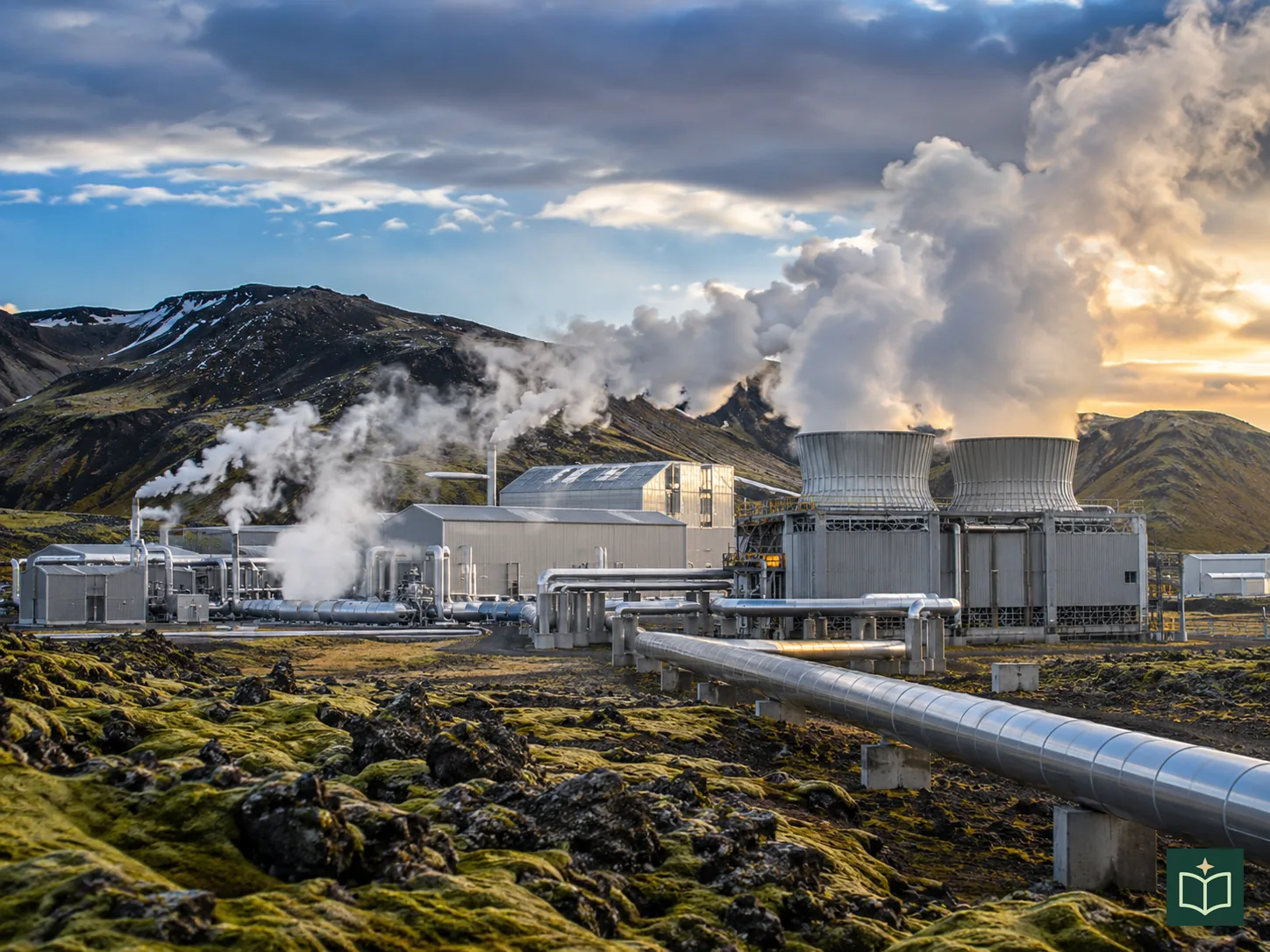
Dry-steam plants pipe steam straight to turbines; The Geysers in California is the largest example. Flash plants bring very hot water to the surface, where it boils into steam. Binary-cycle plants pass moderately hot water through a heat exchanger to vaporise a second fluid, allowing lower-temperature resources to be used.
Who uses it
The world’s first geothermal power plant opened at Larderello, Italy, in 1904. Today, countries along volcanic zones lead the way: Kenya, Iceland, Indonesia, the Philippines, New Zealand and Türkiye. In Iceland, geothermal heats most homes. Ground-source heat pumps use shallow ground temperatures for heating and cooling almost anywhere.
New frontiers
Enhanced geothermal systems aim to create reservoirs in hot dry rock by fracturing it and circulating water, potentially opening geothermal to many more regions. Drilling techniques borrowed from the oil and gas industry are lowering costs. Challenges include high upfront drilling costs, uncertainty about reservoirs and, occasionally, induced small earthquakes.
Sources & further reading
Figures are rounded and widely published; check the linked organisations for the latest editions. These organisations do not endorse this website.