The chip restrictions
Since 2022, the United States has imposed export controls restricting sales of the most advanced AI chips, such as Nvidia's top GPUs, to China, and limiting China's access to the equipment needed to manufacture leading-edge chips. The aim is to slow China's progress in AI with potential military uses. The rules have been tightened several times. Chinese companies have responded by stockpiling chips, using less powerful ones and developing alternatives.
Huawei's Ascend chips
Huawei, the Chinese telecoms and technology giant, began developing AI processors under the Ascend brand in 2018. Huawei itself has faced US sanctions since 2019, cutting it off from many American technologies. Its Ascend 910B chip became one of China's main alternatives to Nvidia. In 2025, the Ascend 910C, which combines two 910B chips in one package, entered mass production, according to industry reports.
Manufacturing limits
Huawei designs its chips, but manufacturing is a challenge. Without access to the most advanced chipmaking machines, such as extreme ultraviolet lithography systems from ASML, Chinese factories such as SMIC must use older equipment and clever techniques to produce advanced chips, often with lower yields and higher costs. Reports have also suggested that some Huawei chips used components made by foreign suppliers before restrictions tightened.
Strength in numbers
Because each Ascend chip is less powerful than Nvidia's best, Huawei compensates by connecting large numbers of them with fast networks. Its Atlas 900 A3 SuperPoD links 384 Ascend 910C chips. At its Huawei Connect conference in September 2025, it announced the Atlas 950 SuperPoD, with 8,192 chips, planned for the last quarter of 2026, and the Atlas 960 SuperPoD, with 15,488 chips, in 2027. Huawei claimed these would outperform rival systems.
The roadmap
Huawei's rotating chairman Eric Xu set out a roadmap of new chips: the Ascend 950PR in early 2026 and 950DT later in 2026, the Ascend 960 in 2027 and the Ascend 970 in 2028, with each generation promising major gains. Notably, Huawei said the Ascend 950 would use high-bandwidth memory developed in-house, a crucial component that Chinese companies had struggled to obtain due to restrictions on imports from South Korean and American suppliers.
Software matters too
One of Nvidia's biggest advantages is CUDA, its widely used software platform for programming GPUs. Huawei has developed its own software, called CANN, and the MindSpore AI framework. It said it would open source much of CANN by the end of 2025 to encourage developers to adopt Ascend. Moving AI software from Nvidia to Ascend chips requires effort, and some Chinese developers have reported challenges.
Chinese AI companies
Chinese AI developers, such as DeepSeek, Alibaba, Baidu and ByteDance, use a mix of Nvidia chips obtained before or within restrictions and domestic chips from Huawei and others such as Cambricon. The Chinese government has encouraged companies to use domestic chips, particularly for new data centres. Efficient model designs, like those from DeepSeek, partly reflect the need to do more with limited computing power.
Power and energy
Linking thousands of less efficient chips uses more electricity than equivalent systems built with the most advanced chips. China has a large and expanding electricity supply, including rapid growth in solar, wind, hydro and nuclear power, which helps it run energy-hungry AI systems. Analysts note that China's ability to build power infrastructure quickly is an advantage in the AI race.
Debate over controls
Experts debate the effectiveness of export controls. Supporters argue they have slowed China's progress and preserved a US lead in frontier AI. Critics argue they have accelerated China's push for self-sufficiency, cost American companies sales and could eventually create strong Chinese competitors in global chip markets. US policy has shifted over time, at times allowing some less advanced chips to be sold to China.
Why it matters
The contest over AI chips is central to competition between the United States and China. Huawei's progress shows China's determination to build its own AI supply chain, while its manufacturing challenges show how hard it is to replicate the global chipmaking system. The outcome will shape who leads in AI, how global technology markets divide and how countries such as the UAE choose their technology partners.
Sources & further reading
- Huawei · Keynote speech by Eric Xu at Huawei Connect 2025 ↗
- TrendForce · Huawei unveils Ascend 950 with in-house HBM in 2026 (2025) ↗
- Tom's Hardware · Huawei Ascend NPU roadmap examined (2025) ↗
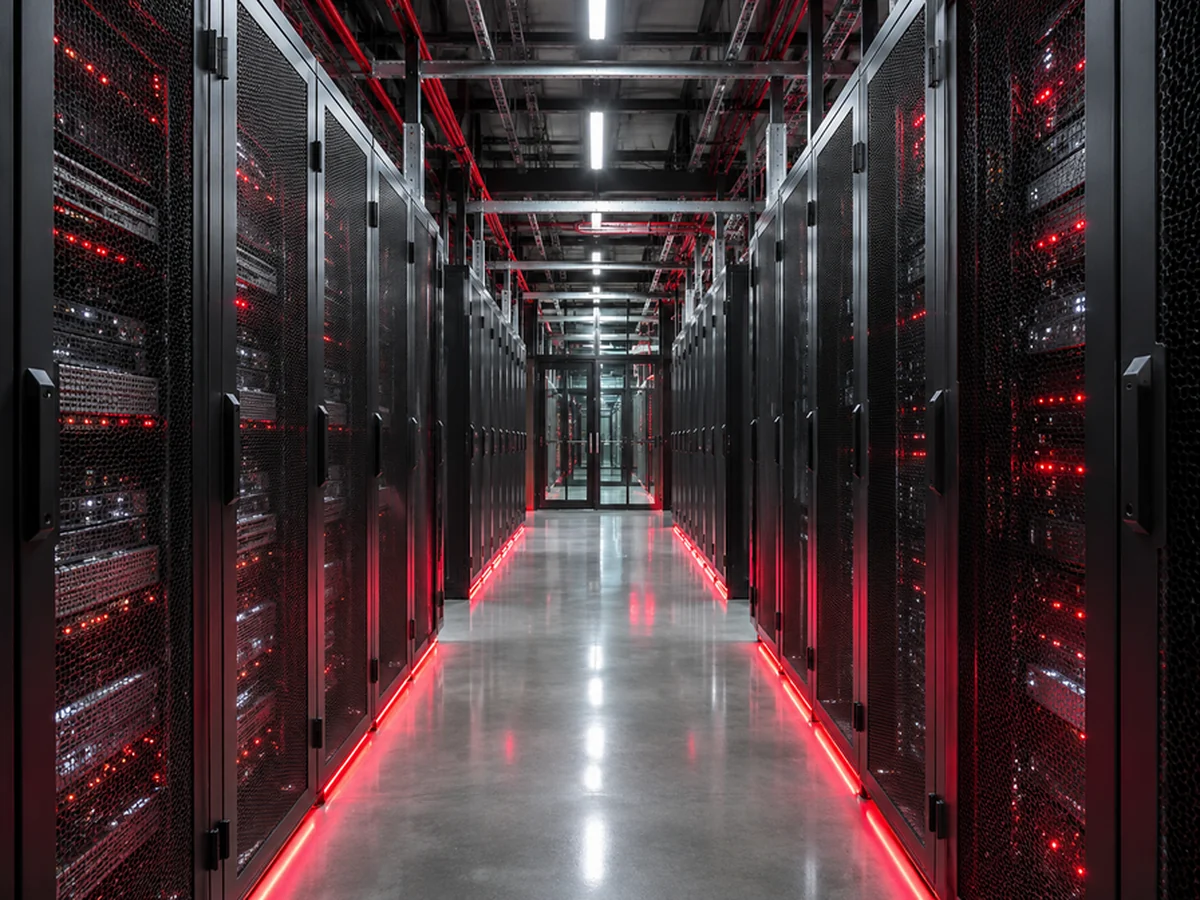
Product plans are as announced and may change. Photograph: original AI-generated illustration (Adobe Firefly). Reference organisations do not endorse this website.