What a COP is
COP stands for Conference of the Parties, the supreme decision-making body of the United Nations Framework Convention on Climate Change. The convention was adopted in 1992 at the Earth Summit in Rio de Janeiro and entered into force in 1994. Its parties, 198 in total, have met almost every year since the first COP in Berlin in 1995. The same meeting also serves as the governing body for the Kyoto Protocol of 1997 and the Paris Agreement of 2015, so a modern COP contains several overlapping sets of negotiations. COP28 was held at Expo City Dubai in 2023, the first hosted in the United Arab Emirates.
Hosting and the presidency
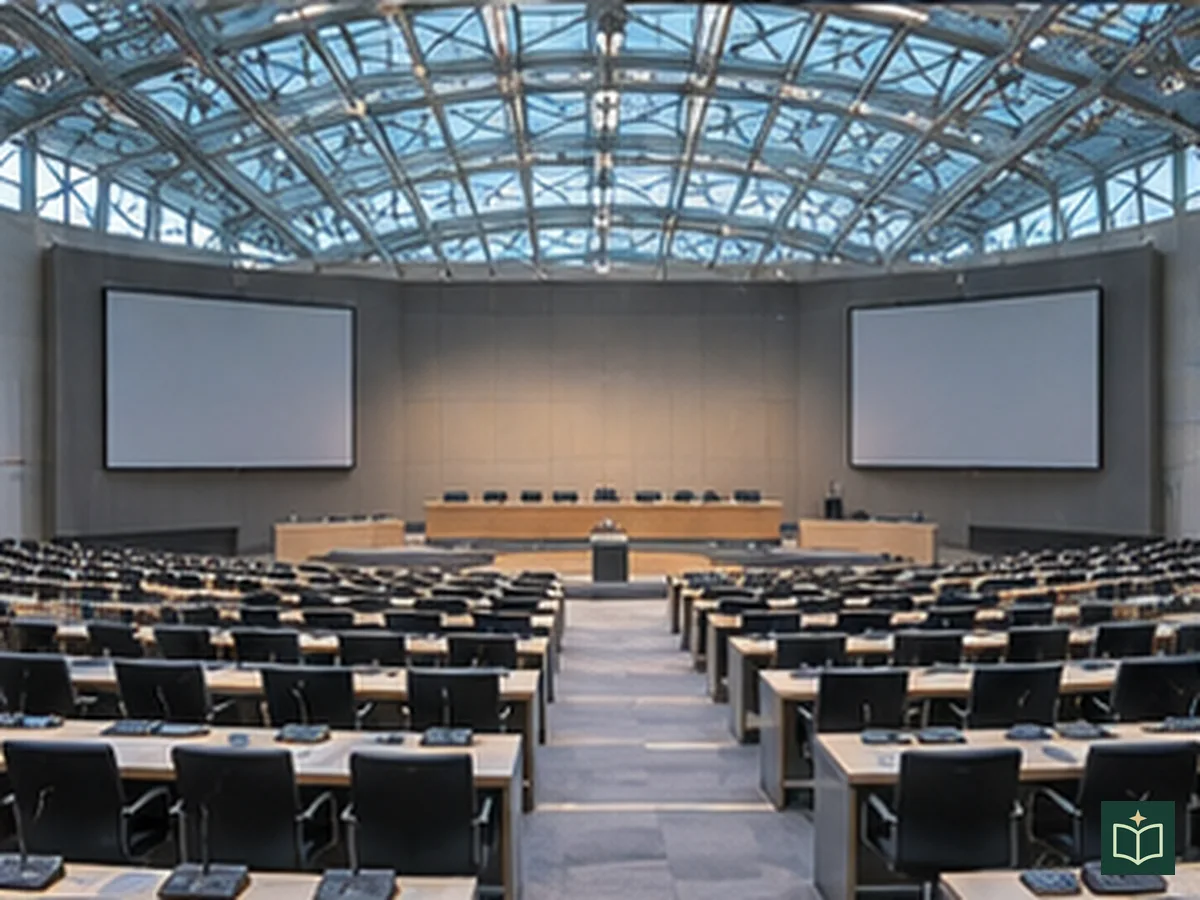
The presidency of each COP rotates among the five UN regional groups: African, Asia-Pacific, Eastern European, Latin American and Caribbean, and Western European and others. Within the group whose turn it is, countries agree on a candidate host, which is then confirmed by the parties. The host government supplies the venue, security and logistics and appoints a COP president, usually a minister, who chairs the plenary and steers negotiations. The site is divided into a UN-managed blue zone for official negotiations and accredited observers, and a host-managed green zone open to the public. Preparatory talks in Bonn, where the convention's secretariat is based, take place each June.
Negotiating in blocs
With nearly 200 parties, countries negotiate largely through blocs that share interests. The Group of 77 and China represents most developing countries. Within and alongside it sit groups such as the Alliance of Small Island States, the Least Developed Countries, the African Group of Negotiators and the Arab Group. The European Union negotiates as one, and the Umbrella Group brings together several other developed countries. Negotiators work through draft texts in contact groups and informal consultations, with disputed wording placed in square brackets. In the final days, ministers take over the hardest issues, often in pairs from developed and developing countries appointed by the presidency to broker compromises.
Consensus, not votes
COP decisions are taken by consensus. The parties have never adopted the rule in their draft procedures that would allow voting, so any party can in principle block a decision by formally objecting. In practice, consensus is declared when the president gavels a decision and no party raises an objection. This explains why conferences often run past their scheduled end, sometimes by more than a day, as presidents search for wording that every delegation can accept. Small changes, such as "phase down" instead of "phase out" or "calls on" rather than "decides", can carry great weight because they record exactly what was agreed by all.
What COPs produce
Each conference adopts dozens of decisions, many technical, covering reporting rules, carbon markets, finance and adaptation. Some sessions deliver landmark agreements. COP3 produced the Kyoto Protocol, and COP21 produced the Paris Agreement, under which each country sets its own nationally determined contribution and updates it every five years. COP28 concluded the first global stocktake of progress under the Paris Agreement, which called on parties to contribute to transitioning away from fossil fuels in energy systems, and it made operational a new fund for responding to loss and damage. A common misconception is that COP decisions impose binding national targets; most commitments are set nationally.
Why it matters
COPs are the only forum where almost every government negotiates climate policy together, so their decisions set shared rules for reporting emissions, trading carbon credits and mobilising finance. They also act as deadlines that prompt countries to announce new targets and partnerships, many of them outside the formal negotiations. Critics argue that consensus produces cautious outcomes and that the conferences have grown too large; supporters reply that universal participation gives decisions legitimacy. When a COP ends, the useful questions are what the main decision text actually says, which verbs it uses, and which issues were postponed to the next meeting or to the June talks in Bonn.
Sources & further reading
Figures are rounded and widely published; check the linked organisations for the latest editions. These organisations do not endorse this website.