Born after a world war
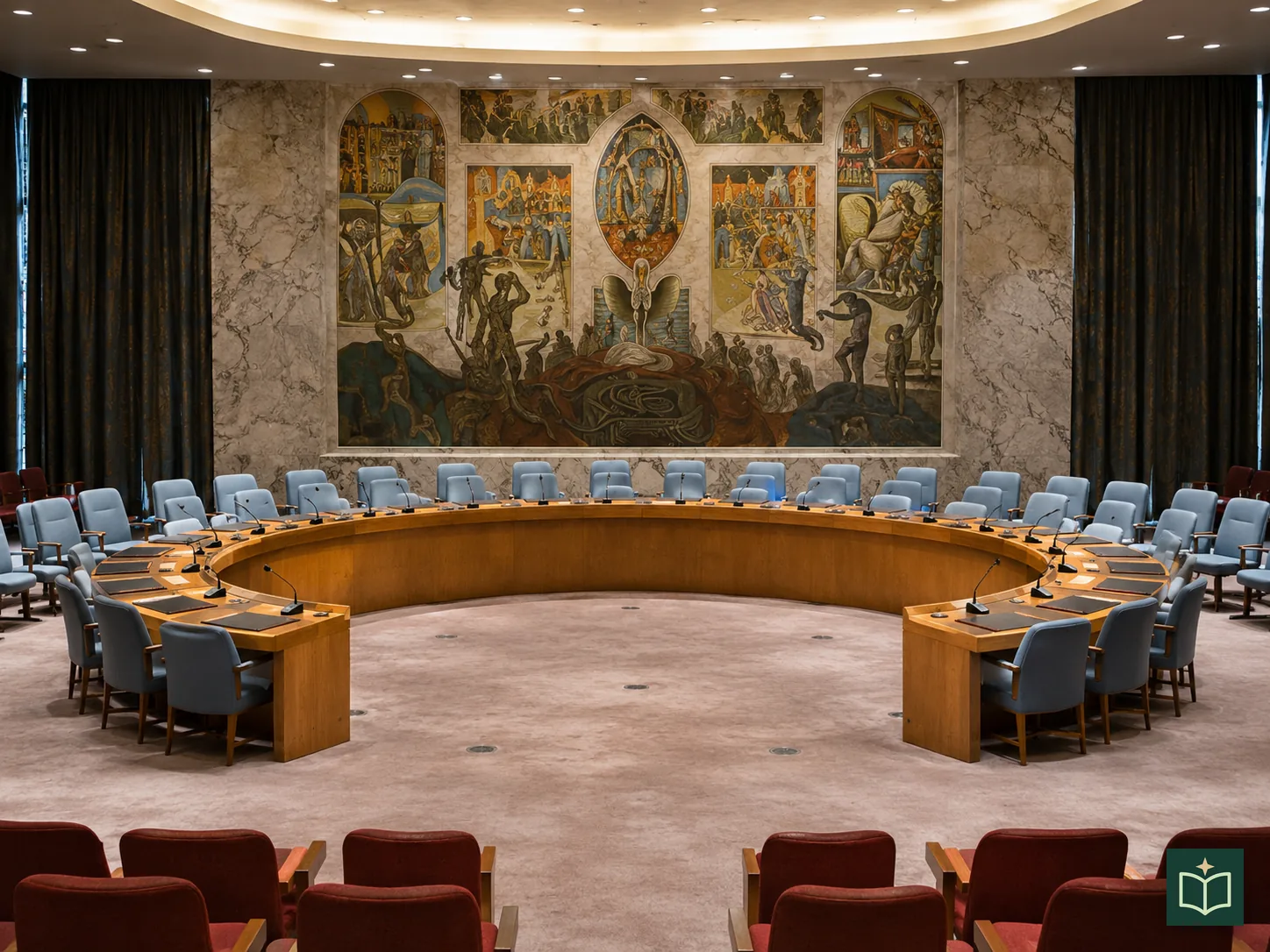
The United Nations was founded in 1945 to prevent another global war. Its Charter gave the Security Council primary responsibility for international peace and security. The designers, remembering the failures of the League of Nations, wanted the major powers inside the system, so they gave the main Allied victors permanent seats and the veto.
How decisions are made
The Council has 15 members: 5 permanent and 10 elected for two-year terms by the General Assembly, with seats allocated by region. The UAE served as an elected member in 2022–23. A substantive resolution needs at least nine votes and no veto from a permanent member. Abstaining does not count as a veto.
What it can do
Under Chapter VI, the Council can recommend peaceful settlements. Under Chapter VII, it can impose binding measures, from arms embargoes and asset freezes to authorising the use of force. It also mandates peacekeeping operations, which deploy uniformed personnel from many countries under UN command.
Calls for reform
Critics argue that the permanent membership reflects 1945 rather than today’s world, with no permanent seat for Africa or Latin America and none for large countries such as India, Brazil or Germany. Vetoes have blocked action on several major conflicts. Reform requires amending the Charter, which itself needs the approval of all five permanent members.
Sources & further reading
Figures are rounded and widely published; check the linked organisations for the latest editions. These organisations do not endorse this website.