Gravity is the easy part
For most buildings, the main structural job is carrying their own weight down to the ground. Above about 300 metres, wind takes over as the critical force. Wind speeds increase with height, and a tall, slender tower acts like a giant vertical sail anchored only at its base. The concern is less that the building will fall than that it will move too much. Towers are designed to flex slightly, and some sway is normal. But if the top moves too far or too quickly, people inside feel queasy, water sloshes in toilets and lifts must slow. Comfort, not collapse, often sets the design limits for the world's tallest buildings.
Swirls that push sideways
The surprising danger comes from the side. As wind flows around a building, it separates at the edges and rolls into swirls called vortices, which peel off alternately from the left and right faces. Each departing vortex leaves a patch of low pressure, nudging the building first one way, then the other, across the direction of the wind. This pattern is called vortex shedding. Its frequency depends on wind speed and the building's width: a 50-metre-wide tower in a 30 metre-per-second wind sheds a vortex pair roughly every eight seconds. If that rhythm matches the building's natural swaying period, each push adds to the last, like pushing a child on a swing.
Confusing the wind
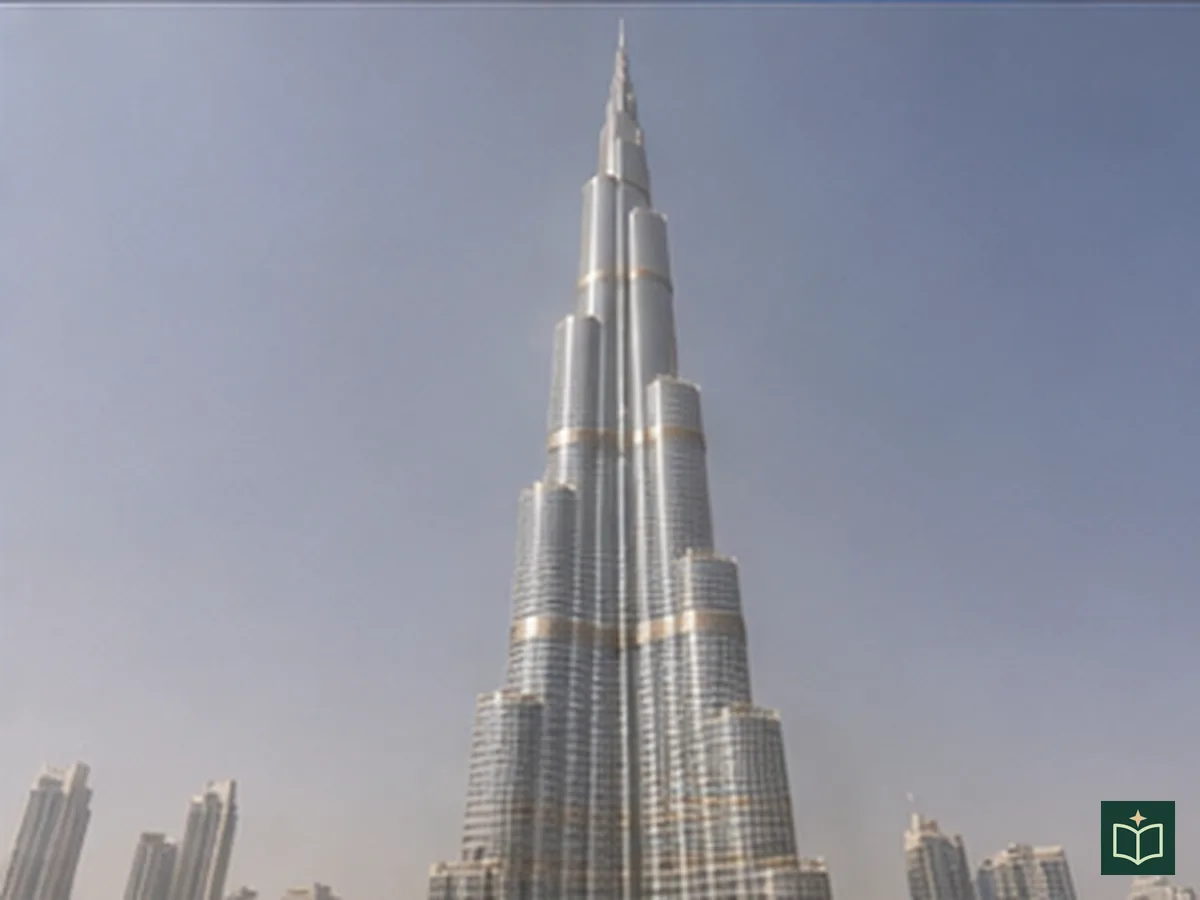
The solution is to deny the wind a consistent target. If the building's cross-section changes with height, vortices form at different frequencies at different levels and cannot organise into one strong, synchronised rhythm. The Burj Khalifa, designed by the architects and engineers of Skidmore, Owings & Merrill, does this with a Y-shaped plan of three wings around a central core, stepping back in a spiral pattern as it rises, so the width and shape seen by the wind keep changing. Engineers ran extensive wind-tunnel tests on scale models and rotated the tower's orientation to suit Dubai's prevailing winds. The Y shape also braces the structure, each wing supporting the others.
Other tricks of the trade
Other supertall towers use different shapes towards the same goal. Shanghai Tower twists through about 120 degrees as it rises, which its designers say significantly reduced wind loads compared with a straight tower. Shanghai World Financial Center has a large opening at its top, letting wind pass through instead of pushing against a solid face. Many towers soften or notch their corners, since sharp corners produce stronger vortices. Tapering helps too, reducing the area exposed to the strongest winds high up. These choices are tested and refined in boundary-layer wind tunnels, which recreate how wind behaves over real terrain, including the surrounding buildings that can channel gusts towards a new tower.
Giant pendulums and sloshing water
When shaping cannot remove enough motion, engineers add dampers. The most famous hangs inside Taipei 101 in Taiwan: a steel sphere weighing about 660 tonnes suspended between upper floors. When the tower sways one way, the pendulum's inertia lags behind, and hydraulic cylinders convert the relative motion into heat, calming the building. Other towers use tuned liquid dampers, tanks of water whose sloshing is tuned to oppose sway, or active systems driven by computers. The Burj Khalifa relies mainly on its shape and its very stiff reinforced-concrete core and wings. Strong foundations matter too: its concrete raft rests on deep piles that carry loads into the ground beneath Dubai.
What it means for future towers
Wind engineering has made towers taller, lighter and more economical. Reducing wind forces means less steel and concrete, which also lowers a building's embodied carbon. Designers now use computer simulations of airflow alongside wind tunnels, testing hundreds of shapes before settling on one. In the Gulf, where shamal winds carry dust and blow strongly across open land, local conditions shape every tall building. Cladding, balconies and pedestrian areas at street level also need wind checks, since tall buildings can funnel uncomfortable gusts onto the pavements around them. The lesson of the supertall era is that the most efficient way to resist the wind is often to avoid giving it something regular to push.
Sources & further reading
Figures are rounded and widely published; check the linked organisations for the latest editions. These organisations do not endorse this website.