What hawala is
Hawala is an informal value transfer system that has operated for centuries across South Asia, the Middle East and Africa. The word comes from Arabic and is linked to the idea of transfer or trust. In its simplest form, it allows someone to send money to another country without the funds physically crossing the border or passing through the conventional banking system. It relies on a network of brokers, known as hawaladars, who trust one another and keep running accounts. Historically, it served traders on long routes where carrying gold or cash was dangerous. Today it remains widely used by migrant workers sending money home, particularly to places where banking is limited.
How a transfer works
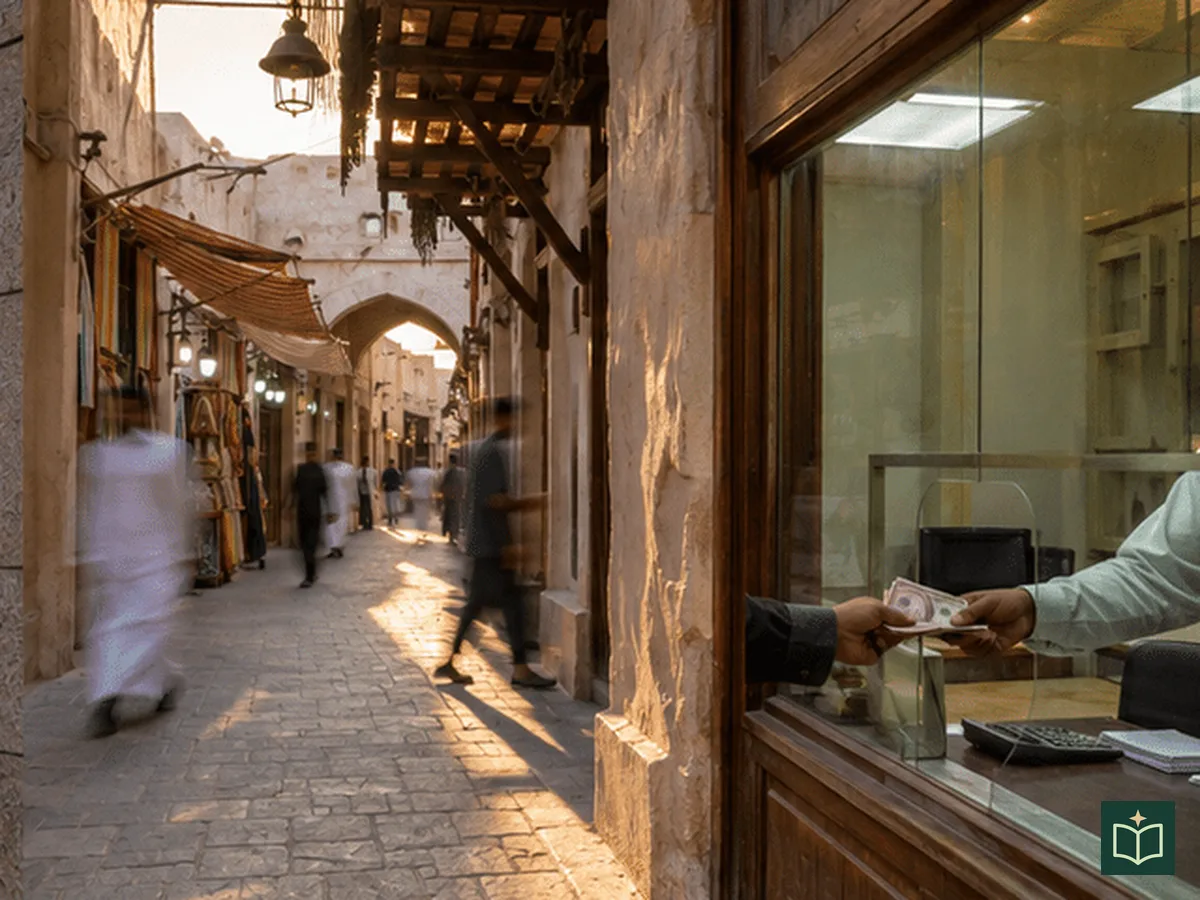
Suppose a worker in Dubai wants to send money to a relative in another country. The worker hands cash to a hawaladar in Dubai, along with the recipient's name and perhaps a code. The Dubai broker contacts a partner hawaladar in the recipient's town, often by phone or message. That partner pays the recipient from their own local cash, usually within hours or a day, deducting a small fee. No money has moved between the two countries. Instead, the Dubai broker now owes the partner broker the amount paid out. The transfer is fast and cheap because it avoids the formal correspondent banking chain that international bank transfers require.
Settling the balance
Over time, flows between brokers rarely balance perfectly. Settlement happens in several ways. Flows in the opposite direction, such as money sent from the second country to the UAE, can offset each other. Brokers may settle through trade, for example by under- or over-invoicing goods shipped between the two places, through occasional bank transfers, or through cash couriers. Networks often involve several brokers, so balances may be cleared through a third location. This flexibility is part of hawala's appeal, but it is also why regulators pay close attention to it: settlement through trade invoices or unrecorded cash can be difficult to trace and can be exploited.
Why people use it
Hawala persists for practical reasons. Fees are often lower than those of banks or money transfer companies, and exchange rates may be more favourable. It reaches remote areas without bank branches and can operate where banking systems have broken down, as in conflict zones. It is fast, works with cash and requires little paperwork, which matters for people without formal identification or bank accounts. Cultural familiarity and personal relationships also play a part, since many hawaladars serve their own communities. For many migrant families, hawala has been a lifeline. The same features that make it accessible, however, raise concerns about money laundering and terrorist financing.
How the UAE regulates it
The UAE has taken a registration-based approach rather than an outright ban. In 2002, Abu Dhabi hosted an international conference that produced the Abu Dhabi Declaration on Hawala, calling for countries to register and supervise providers. The Central Bank of the UAE introduced a registration system for hawala providers, requiring them to obtain a certificate, identify customers, keep records of transfers and report suspicious transactions. These rules have been tightened over time, in line with standards set by the Financial Action Task Force, which requires countries to license or register all money or value transfer services. Operating as an unregistered hawaladar in the UAE is illegal and can lead to serious penalties.
The balance regulators seek
Regulating hawala involves a trade-off. Heavy restrictions could push transfers underground, where they would be harder to monitor, and cut off families who depend on them. Too little oversight leaves a channel open for criminals. Regulators therefore aim to bring hawaladars into a supervised framework, while encouraging cheaper formal remittance options through banks, exchange houses and digital services. The growth of mobile money and digital remittance apps has reduced the cost gap in many corridors, though hawala remains significant in some regions. For users, the safest option is a provider that is licensed or registered with the relevant authority. This article provides general information and is not legal advice.
Sources & further reading
Figures are rounded and widely published; check the linked organisations for the latest editions. These organisations do not endorse this website.