What LPG is
Liquefied petroleum gas, or LPG, is mainly propane, butane or a mixture of the two. Both are by-products of natural gas processing and oil refining, and both share a useful property: at room temperature they are gases, but under modest pressure they become liquids. That means a steel cylinder can hold a large amount of fuel in a small space. One litre of liquid produces roughly 250 litres of gas. LPG is used for cooking and heating in homes and restaurants worldwide, especially where there is no piped gas network. In the Gulf, cylinders have long been common in kitchens, though many newer buildings now use central gas systems.
Inside the cylinder
A cylinder is never filled completely with liquid. It is filled to about 80 per cent, leaving a space at the top for vapour, because liquid expands when warm and could otherwise build dangerous pressure. In that space, gas sits above the liquid at a pressure that depends on temperature: warmer cylinders have higher pressure. When the valve opens and gas is drawn off, the pressure drops slightly and more liquid boils to replace it. Boiling absorbs heat, which is why heavily used cylinders can feel cold or even form frost on the outside. A safety relief valve releases gas if the pressure ever becomes dangerously high, for example in a fire.
The regulator's job
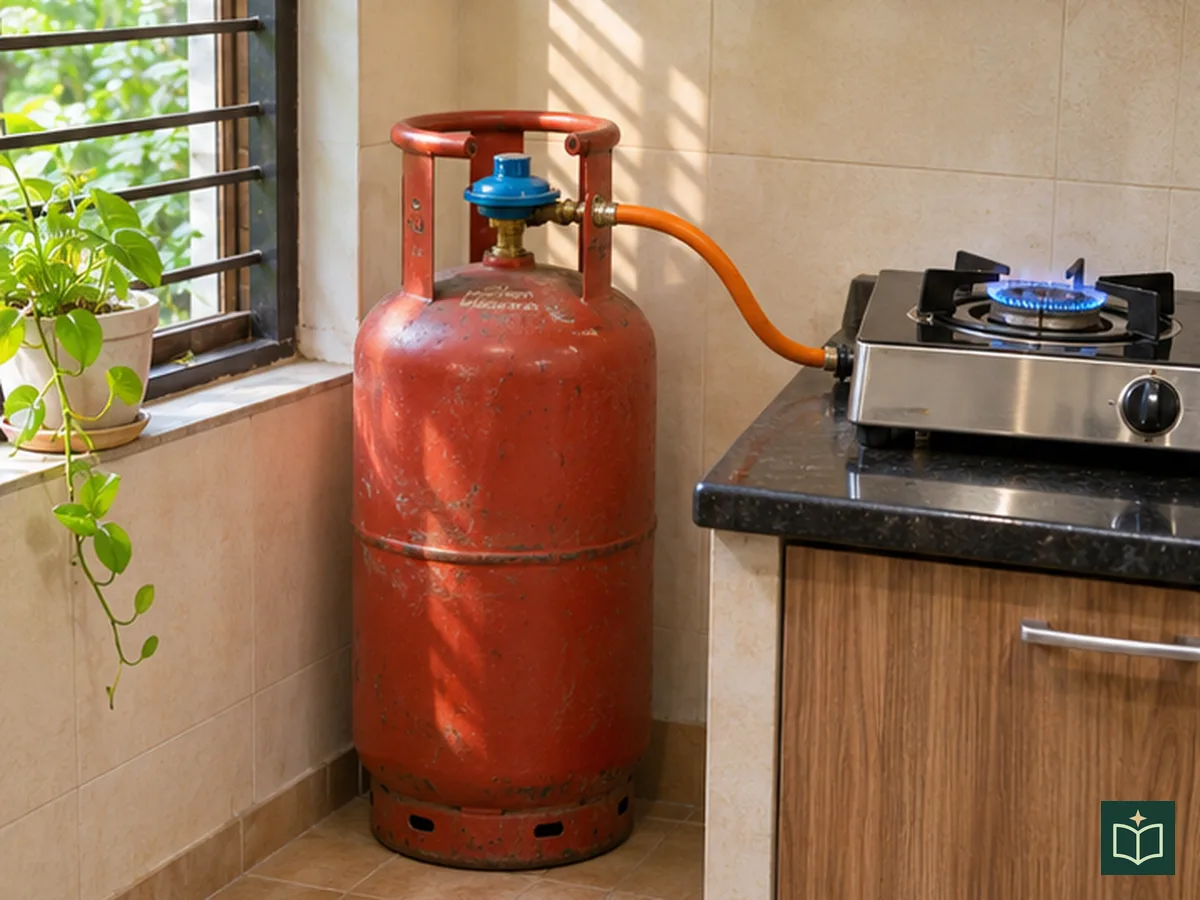
Cylinder pressure is far too high and too variable for a cooker. The regulator, the device screwed or clipped onto the cylinder valve, reduces it to a low, constant pressure suited to household appliances. Inside, a flexible diaphragm balances the gas pressure against a spring. If pressure on the outlet side rises, the diaphragm moves and partly closes a small valve; if it falls, the valve opens further. The result is a steady supply whether the cylinder is full or nearly empty and whatever the outside temperature. A hose carries the gas to the cooker, where it mixes with air at the burner and burns with a clean blue flame.
Smelling a leak
LPG has almost no smell of its own, so suppliers add a strong-smelling compound, often described as like rotten eggs or cabbage, so leaks can be detected. LPG is heavier than air, so leaked gas sinks and can collect in low places such as floors, cupboards and drains, rather than drifting away. If you smell gas, safety guidance is consistent: turn off the cylinder valve if it is safe to do so, do not use flames or operate electrical switches, open doors and windows, leave the area and call the supplier or emergency services. To check fittings for small leaks, brush soapy water over the joints and watch for bubbles; never use a flame.
Safe use at home
Cylinders should always stand upright, in a well-ventilated position away from heat, direct sun and electrical sockets. Lying a cylinder down can allow liquid rather than gas to reach the regulator, which is dangerous. Hoses and regulators wear out, crack or are damaged by pests, so they should be inspected regularly and replaced at the intervals recommended by the supplier. Turning off the cylinder valve after cooking adds a layer of safety. Only approved cylinders from licensed distributors should be used, as they are tested and maintained. In the UAE and elsewhere, civil defence authorities set rules on where cylinders may be kept, especially in apartment buildings.
Why it matters
LPG is cleaner-burning than wood, charcoal or kerosene, and the World Health Organization counts it among clean household fuels that reduce indoor air pollution, a leading health risk in homes that cook over open fires. In many countries, switching to LPG has been a major public health policy. At the same time, mishandled cylinders cause fires and explosions every year, so understanding how they work matters. In Gulf cities, the trend towards central gas systems, piped from a building tank with leak detectors and automatic shut-off valves, reduces the number of individual cylinders in apartments. For households still using cylinders, a few simple habits keep the risk low.
Sources & further reading
Figures are rounded and widely published; check the linked organisations for the latest editions. These organisations do not endorse this website.