Why fish is auctioned
Fresh fish is an unusual product. Nobody knows exactly how much will be caught on a given night, the catch spoils within days and quality varies from crate to crate. Fixed price lists suit products with steady supply, such as canned goods, but they would leave fish unsold one day and sold out the next. An auction solves this by setting the price at the moment of sale, according to that morning's supply and the buyers present. For centuries, ports from northern Europe to Japan and the Gulf have sold their catch this way, often before sunrise, so the fish can reach shops and kitchens the same day.
Landing and grading
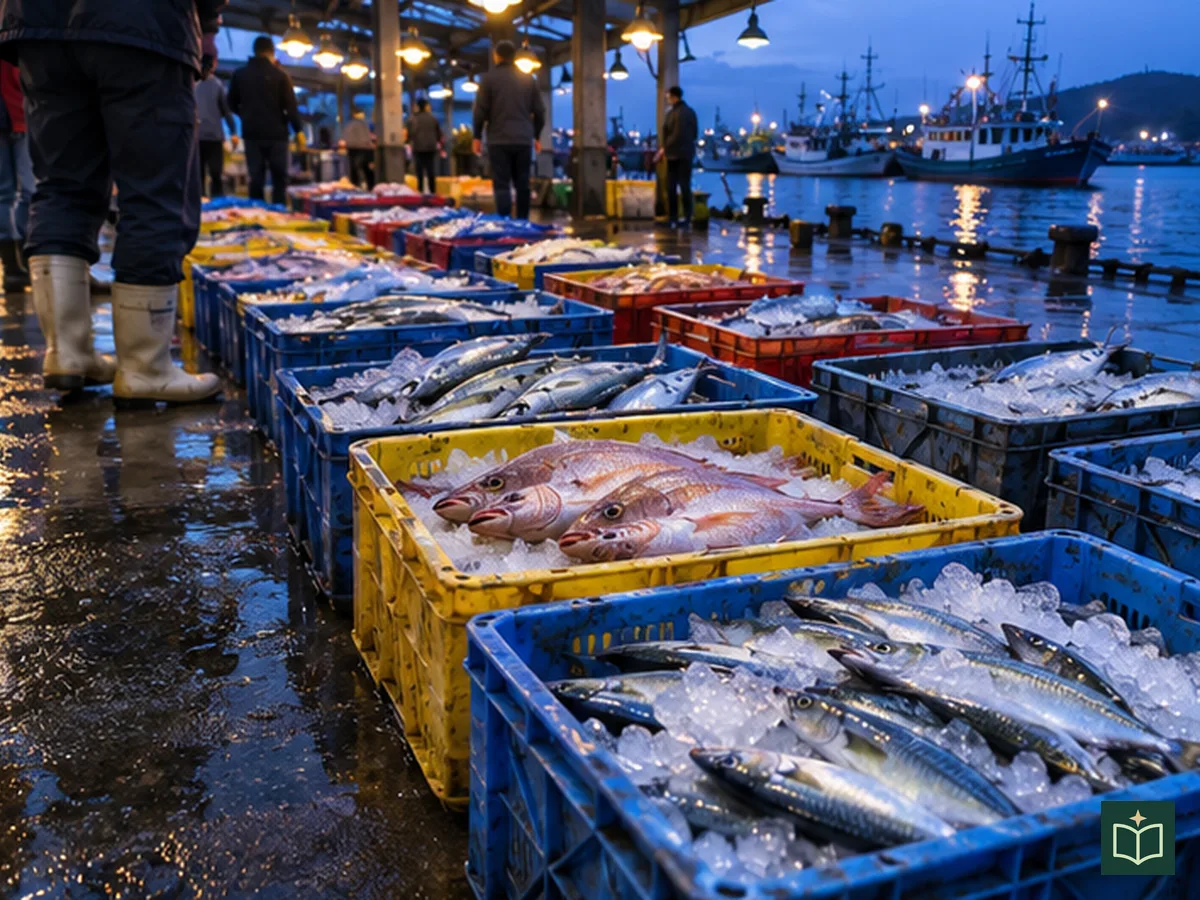
The process begins when boats return to harbour, often in the early hours. Fish are unloaded, iced and sorted by species, size and condition into crates or lots. Grading matters because buyers pay very different prices for the same species depending on freshness, handling and size; a large, firm fish with bright eyes and red gills commands a premium. In many modern markets each lot is weighed and labelled with its origin and boat, information that supports traceability rules and later food safety checks. Buyers walk among the crates before bidding starts, inspecting the fish and deciding what they want and how much it is worth.
Rising and falling prices
Auctions use different formats. In an English, or ascending, auction the auctioneer starts low and buyers call out or signal higher bids until only one remains. This is common in many Gulf markets, where auctioneers sell lots of hammour, kingfish and other local fish in fast open-outcry sessions. In a Dutch, or descending, auction, used in parts of Europe, a clock starts at a high price and falls until the first buyer presses a button, winning the lot at that price. Descending auctions are very fast, which suits large volumes of perishable produce. Japan's famous tuna auctions use hand signals among licensed bidders after careful inspection.
A crate at dawn
Imagine a 20-kilogram crate of kingfish offered in a descending auction. The clock opens at AED 60 per kilogram and ticks downwards. A restaurant buyer who values the fish at AED 40 waits, hoping to pay less, while risking that someone else will stop the clock first. At AED 38 a supermarket buyer presses the button and wins the crate for 20 times 38, or AED 760. On a day when storms have kept boats in harbour and few crates are offered, competition might stop the clock much higher. On a day of plentiful catch, prices may fall far lower. These figures are illustrative, not market prices.
From market to counter
After the auction, speed and cold are everything. Buyers' staff move crates into insulated vans or refrigerated trucks, packed with fresh ice. Some fish goes directly to restaurant kitchens and fishmongers, some to processors who fillet and pack it, and some to exporters who fly it overseas within hours. Wholesalers may resell lots in smaller quantities to traders who did not attend the auction. Supermarkets often place standing orders and buy through agents. Traceability records follow the fish, linking each portion back to the boat and landing date. In hot climates in particular, any break in the cold chain shortens shelf life and raises food safety risks.
Changes on the quayside
Fish auctions are changing. Many now run electronically, with buyers bidding from screens on the market floor or remotely from elsewhere, and catch data published before boats land. Rules on fishing quotas, minimum sizes and protected species shape what can be sold. Aquaculture now supplies a large share of the world's seafood, often sold under contracts rather than at auction, because farmed supply is more predictable. Yet the auction remains valuable wherever catches are uncertain and quality varies. It is one of the clearest everyday examples of price discovery, the process by which many buyers and sellers together reveal what a product is worth that day.
Sources & further reading
Figures are rounded and widely published; check the linked organisations for the latest editions. These organisations do not endorse this website.