Denali, the top of the continent
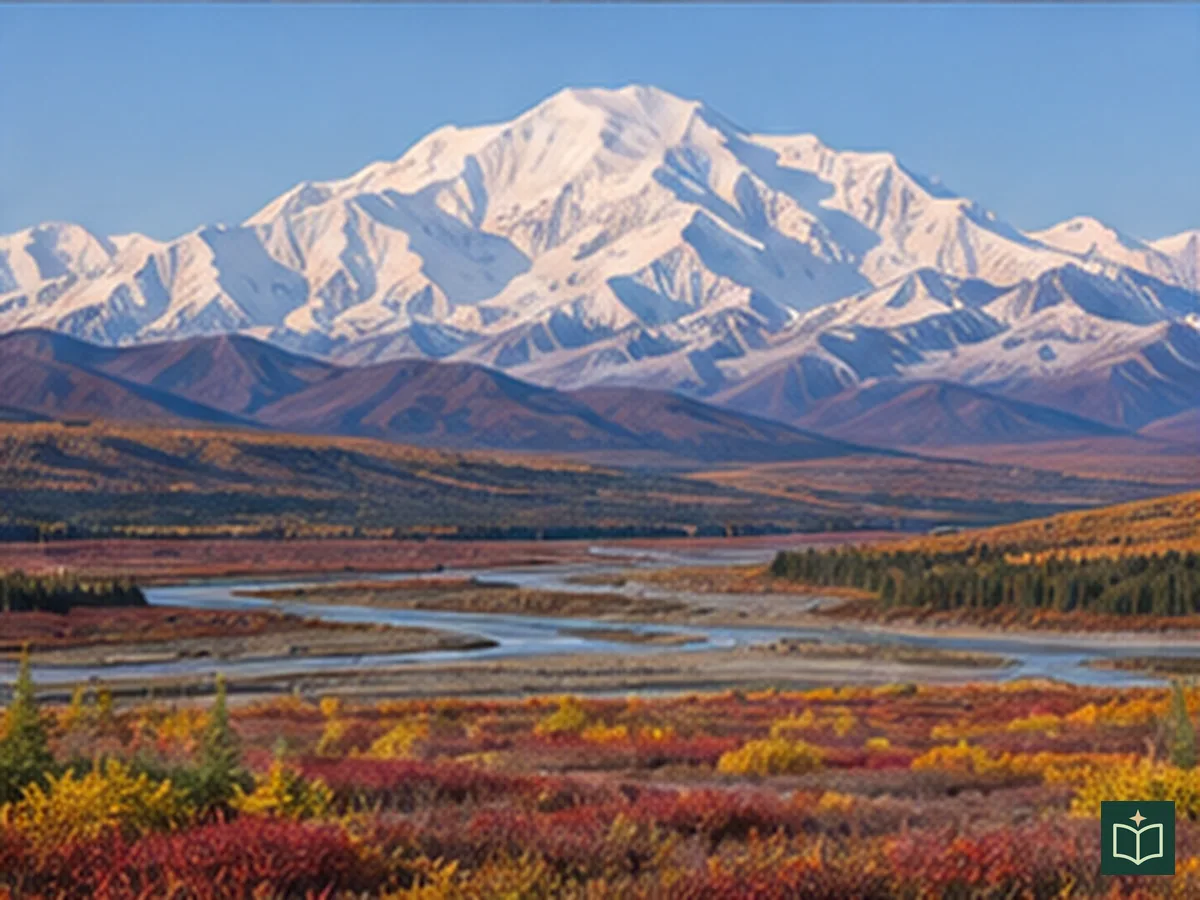
Denali, in the Alaska Range, is North America’s highest mountain at about 6,190 metres. A survey in 2015 using satellite positioning lowered its accepted height by about three metres from earlier figures. Its Koyukon Athabascan name, often translated as ‘the high one’, was adopted by the US federal government in 2015; a 2025 order restored Mount McKinley federally, while Alaska keeps Denali. Although it is about 2,650 metres lower than Everest, Denali rises roughly 5,500 metres from the lowlands around it, a greater vertical rise from base to summit than Everest has above the Tibetan Plateau. Its high latitude also makes it extremely cold, and the thinner air near the poles makes it feel higher still.
The Saint Elias giants
Six other peaks in the table, Mount Logan, Mount Saint Elias, Mount Foraker, Mount Lucania, Mount Steele and Mount Bona, rise in Alaska or Canada’s Yukon. Most stand in the Saint Elias Mountains near the Gulf of Alaska, where a block of crust called the Yakutat terrane is being pushed into the continent. That collision is lifting the range rapidly, and moist Pacific air brings enormous snowfall. Mount Logan, Canada’s highest peak at about 5,959 metres, has one of the largest bases of any mountain on Earth. Mount Saint Elias rises about 5,500 metres from the sea in less than 20 kilometres, one of the steepest relief profiles anywhere.
Mexico’s volcanoes
The three southern entries are volcanoes of the Trans-Mexican Volcanic Belt, formed as the Cocos plate sinks beneath Mexico. Pico de Orizaba, also called Citlaltépetl, is Mexico’s highest point at about 5,636 metres and the highest volcano in North America. Popocatépetl, about 5,393 metres high, is one of the most active volcanoes in the world and lies about 70 kilometres from Mexico City, where millions of people live within range of its ash. Iztaccíhuatl, its dormant neighbour, has a profile resembling a sleeping woman, which gave it its name in the Nahuatl language. Older references give Popocatépetl a greater height, before eruptions changed its summit.
Close heights, changing figures
Several peaks in the table are close in height. Iztaccíhuatl and Mount Lucania differ by only a few metres, and published figures for each vary, so their order is uncertain. Mount Logan’s height was lowered after a 2005 survey, and Orizaba has been given figures from about 5,610 to 5,700 metres over the years. Lists also differ over which summits count as separate mountains: King Peak, a subsidiary summit of Mount Logan, is higher than Mount Steele but is often left out because it does not stand far enough above the surrounding ridge. The figures in the table follow recent surveys and are rounded.
Ice, cold and climbing
The northern peaks are among the coldest mountains on Earth outside Antarctica, and their glaciers are vast. The Saint Elias Mountains, together with neighbouring ranges, hold the largest non-polar icefield in the world, part of a UNESCO World Heritage Site shared by Canada and the United States. Climbing Denali typically takes two to three weeks, with climbers flown to a glacier base camp at about 2,200 metres. Orizaba and Iztaccíhuatl are popular high-altitude climbs because they are accessible from Mexico City, while Popocatépetl has been closed to climbers for many years because of its activity. Denali is one of the Seven Summits.
Why they matter
North America’s highest mountains are a laboratory for studying how mountains grow and how ice responds to a warming climate. Alaska’s glaciers are losing mass quickly, contributing to sea-level rise and changing river flows. The region is also seismically active: the 1964 Alaska earthquake, magnitude 9.2, was the second-largest ever recorded. In Mexico, monitoring of Popocatépetl’s ash and gas emissions protects millions of people and the airports of the capital. For visitors, the peaks are surrounded by protected areas, from Denali National Park, with its bears and caribou, to Mexican national parks on the forested slopes of the volcanoes, which draw hikers and climbers all year.
Sources & further reading
Figures are rounded and widely published; check the linked organisations for the latest editions. These organisations do not endorse this website.