A distinction by plant part
In the kitchen the difference between a herb and a spice comes down to which part of the plant is used. Herbs are leaves, sometimes with their soft stems: mint, parsley, dill, basil, thyme and coriander leaf. Spices come from almost every other part. Black pepper and cardamom are fruits or seeds, cinnamon is bark, ginger and turmeric are underground stems, cloves are dried flower buds, and saffron is the stigma of a crocus flower. Botanists use the word herb differently, for any plant without a woody stem, so a cook's herb and a botanist's herb are not quite the same. The culinary definition, based on the part eaten, is the one that matters at the stove.
Fresh green, dried and dense
The difference in plant part leads to differences in handling. Leaves are tender and full of water, so herbs are often used fresh, added at the end of cooking or scattered on top to keep their bright aroma. Many herbs also dry well, although drying changes their character: dried mint tastes quite unlike fresh. Spices are mostly dried, hard and dense, and their flavour lives in oils locked inside seeds or bark. Heating them in oil or dry-toasting them releases those compounds, which is why many recipes begin by frying cumin or cardamom. Whole spices keep their strength far longer than ground ones, which lose aroma within months.
Mint, cardamom and saffron
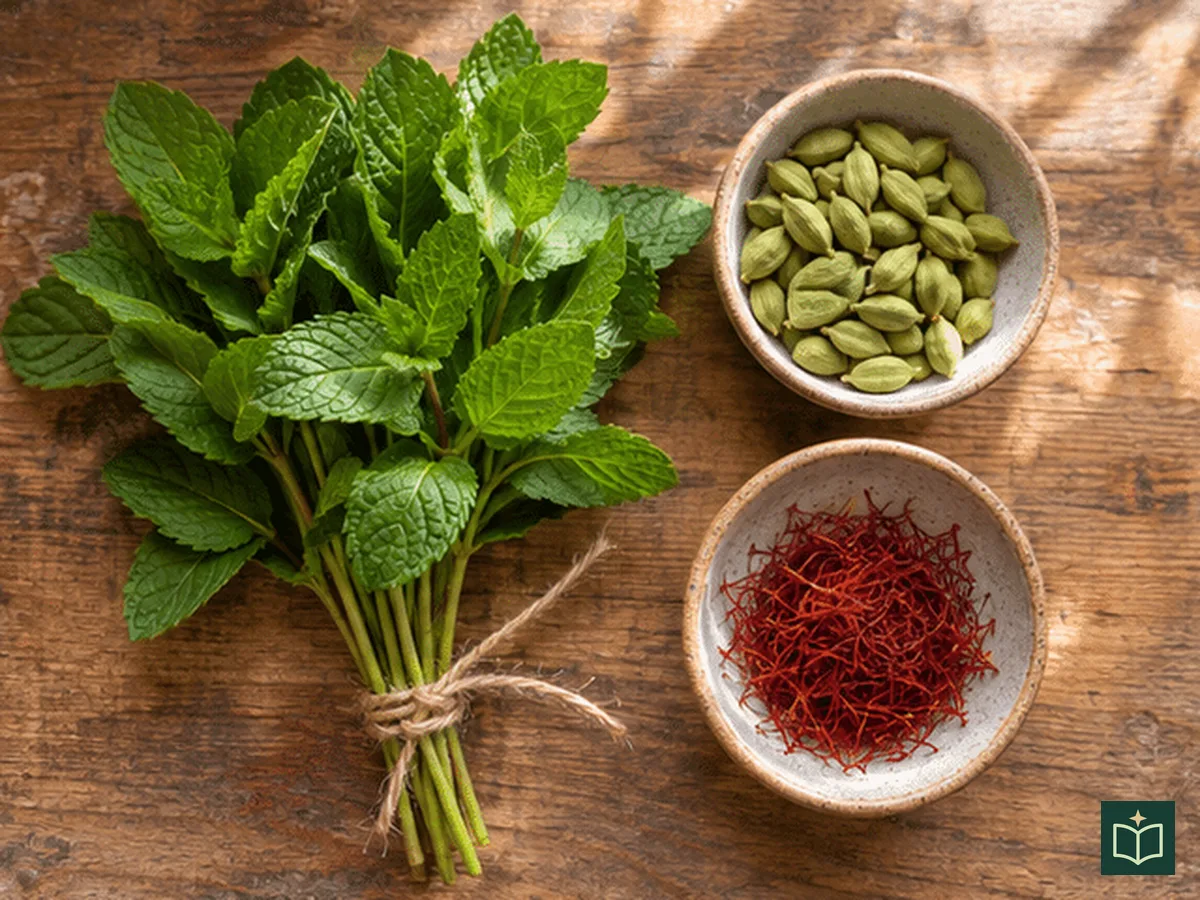
Three Gulf kitchen staples show the rule at work. Mint is a herb: its leaves go into tea, salads and yoghurt dishes, and it is grown locally in many gardens. Cardamom is a spice: the green pods are the dried fruits of a plant in the ginger family, and their seeds flavour Arabic coffee, rice and sweets. Saffron is a spice too, though an unusual one. It consists of the dried red stigmas of the saffron crocus, picked by hand, three to a flower. Roughly 150,000 flowers are needed for a single kilogram, which explains its price and its use in tiny quantities to colour and scent rice, desserts and drinks.
Plants that are both
Some plants supply a herb and a spice at the same time. Coriander is the clearest case: the fresh leaves, called cilantro in American English, taste green and citrusy, while the round dried seeds are warm and nutty, used in spice blends across the Middle East and South Asia. Dill gives feathery leaves and flat seeds. Fennel offers fronds, a bulb and aniseed-flavoured seeds. Fenugreek leaves are used as a herb, while its hard seeds are a classic spice. Bay leaves, though dried and woody, are counted as a herb because they are leaves. These examples show why the plant-part rule is useful: it works even when the same species appears twice on the shelf.
Wars, routes and fortunes
Spices have shaped history far more than herbs, largely because they travel well. Dried seeds, bark and buds survive months at sea, while fresh leaves wilt in days. For centuries pepper, cloves, nutmeg and cinnamon moved from South and Southeast Asia through Arabian and Persian ports to the Mediterranean, enriching the traders who controlled the routes. The search for direct access drove Portuguese voyages around Africa in the fifteenth century and later the rise of the Dutch and English East India companies. Herbs, by contrast, were usually grown close to home, in monastery gardens, courtyards and kitchen plots, and were valued as much for medicine as for flavour.
Common mix-ups
Several everyday terms blur the line. Spice blends such as baharat or garam masala are mixtures of spices, sometimes with dried herbs added. Za'atar is the name of a herb in the oregano and thyme family and also of a blend that combines that dried herb with sumac and sesame seeds. Garlic and onion are often shelved with spices when dried and powdered, though in cooking they are vegetables. Salt, sometimes called a seasoning alongside spices, is a mineral, not a plant product at all. None of this affects how food tastes, but knowing which part of the plant you hold helps you decide when to add it and how to store it.
Sources & further reading
Figures are rounded and widely published; check the linked organisations for the latest editions. These organisations do not endorse this website.