Same order, different names
Frogs and toads are amphibians belonging to the order Anura, a name meaning "without a tail". Biologists treat all members of this order as frogs. The word toad is a common name, not a formal category, used for species with certain traits: dry, bumpy skin, short legs and a heavier body. Many animals called toads belong to one family, Bufonidae, the so-called true toads, which includes the common toad of Europe and the cane toad. Yet some species called toads sit in other families, and some members of Bufonidae are rarely called toads. So the labels reflect appearance and tradition as much as evolutionary relationships.
How to tell them apart
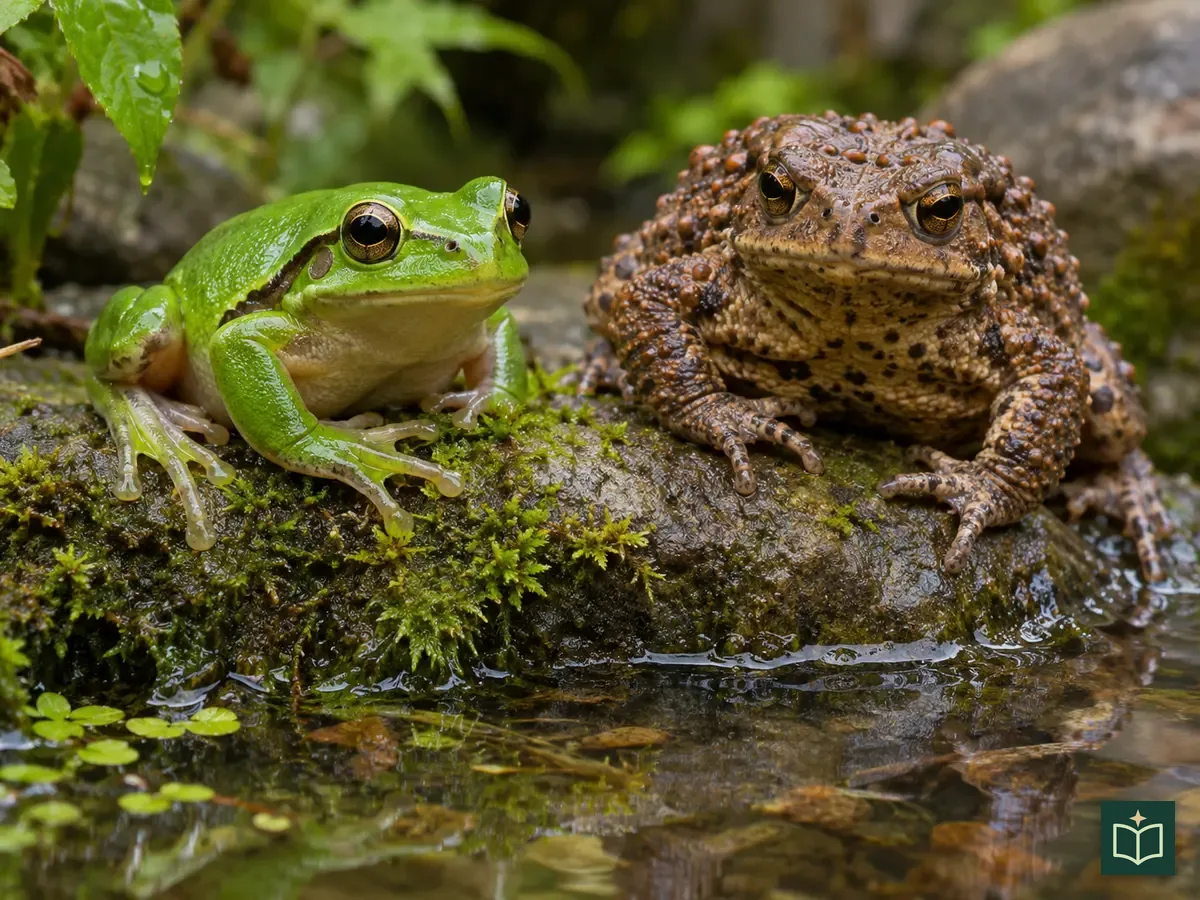
Typical frogs have smooth, moist, often shiny skin, long, powerful hind legs built for leaping, and usually live in or close to water. Many have webbed hind feet and teeth in the upper jaw. Typical toads have thicker, dry and warty skin that resists water loss, shorter hind legs suited to walking or short hops, and often spend much of their lives away from water. Most true toads have no teeth and carry large glands behind the eyes, called parotoid glands, which produce toxic secretions to deter predators. Frog eggs are typically laid in clumps, while many toads lay eggs in long strings.
Examples from the region
The Arabian Peninsula is dry, yet it supports a small number of amphibians. The Arabian toad lives in wadis, oases and irrigated farmland in the UAE, Oman and neighbouring countries, emerging after rain and gathering in pools to breed. The Dhofar toad is found in Oman, Yemen and parts of the UAE. These animals show how a toad's tougher skin and burrowing habits help it survive in arid places, sheltering underground through hot, dry periods. In contrast, the classic leaping frogs of rainforests and temperate ponds depend on constant moisture. The contrast in habitat captures, in miniature, the everyday distinction between frogs and toads.
Where they are similar
Frogs and toads share far more than separates them. Both breathe partly through their skin as well as their lungs, so both are sensitive to pollution. Both are cold-blooded and rely on their surroundings to regulate body temperature. Most of both lay eggs in water that hatch into tadpoles, which breathe through gills and later grow legs and absorb their tails in a transformation called metamorphosis. Both are mainly predators of insects and other small animals, catching prey with sticky, fast-moving tongues. Males of both usually call to attract mates, producing croaks, trills and whistles that are often specific to each species.
Common misconceptions
The most persistent myth is that touching a toad gives you warts. It does not; human warts are caused by a virus, and toads' bumpy skin is simply glandular tissue. That said, toad secretions can irritate eyes and mouths and can be dangerous to pets that bite them, so washing hands after handling any amphibian is sensible. Another misconception is that frogs and toads are separate groups that cannot be closely related. Some frogs are more closely related to toads than to other frogs. Finally, not all frogs live in water; some tree frogs and rain frogs never enter ponds at all.
Why it matters
Amphibians are among the most threatened groups of animals on Earth. Habitat loss, pollution, climate change and a fungal disease called chytridiomycosis have driven sharp declines and some extinctions. Because their permeable skin and dual life in water and on land expose them to many pressures, frogs and toads act as early indicators of environmental health. They also matter to people directly, eating large numbers of insects, including pests. Knowing that frog and toad are overlapping names rather than strict categories helps people appreciate the diversity of the group, and supports conservation efforts that protect wetlands, wadis and the small pools many species need to breed.
Sources & further reading
- Britannica · Frog ↗
- AmphibiaWeb · University of California, Berkeley ↗
- IUCN Amphibian Specialist Group ↗
Figures are rounded and widely published; check the linked organisations for the latest editions. These organisations do not endorse this website.