Two families, one order
Crocodiles and alligators are crocodilians, an order of large, semi-aquatic reptiles that also includes caimans and gharials. The group has existed for more than 80 million years, and its ancestors lived alongside the dinosaurs. True crocodiles belong to the family Crocodylidae and include about 15 or more species found across Africa, Asia, Australia and the Americas. Alligators belong to the family Alligatoridae. Only two alligator species survive: the American alligator of the south-eastern United States and the much smaller, critically endangered Chinese alligator of the lower Yangtze. The two families split tens of millions of years ago, so they are cousins rather than close siblings, despite their similar appearance.
How to tell them apart
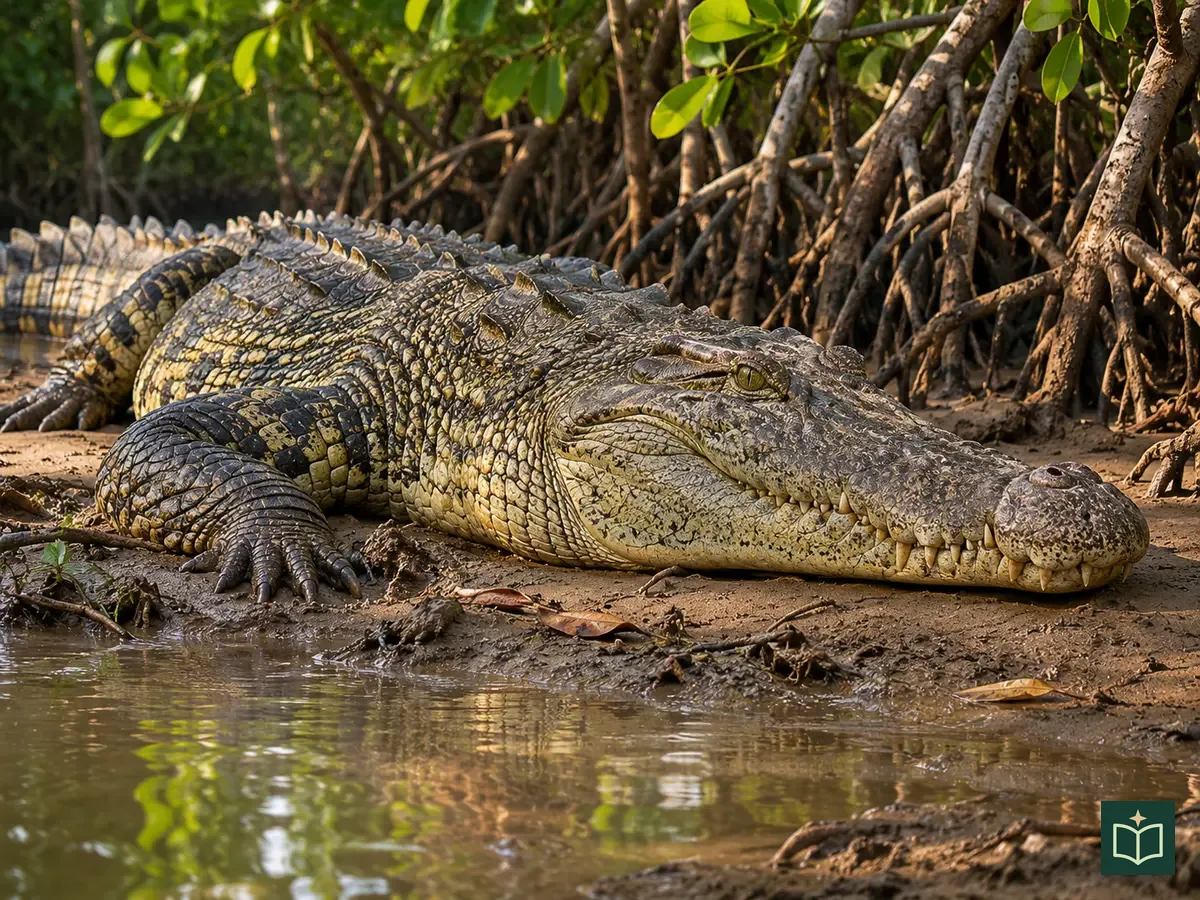
The easiest clue is the head. Alligators have a broad, rounded, U-shaped snout, while most crocodiles have a longer, more pointed V-shaped snout. The teeth are another giveaway. An alligator's upper jaw is wider than its lower jaw, so when the mouth closes, the lower teeth fit inside and are largely hidden. In crocodiles the jaws are a similar width, so teeth from both jaws interlock and remain visible, especially the large fourth tooth of the lower jaw. Colour often differs too: alligators tend to be dark grey or almost black, while many crocodiles are lighter olive or tan, though colour varies with habitat and age.
Salt, habitat and range
Crocodiles have working salt glands on their tongues that let them excrete excess salt, which allows many species to live in brackish estuaries and even cross stretches of open sea. The saltwater crocodile, found from India to northern Australia, is the largest living reptile, with the biggest males reaching about 6 metres. Alligators have only vestigial salt glands and mostly keep to fresh water such as swamps, rivers and lakes. That difference helps explain geography. Crocodiles are spread across the tropics on several continents, while alligators are limited to the United States and China. The Florida Everglades is the only place where wild alligators and crocodiles naturally live side by side.
Where they are similar
Beyond the details, the two are strikingly alike. Both are cold-blooded predators that ambush prey from the water's edge, using eyes, ears and nostrils set high on the head so they can watch while almost submerged. Both have powerful jaws, armoured skin reinforced with bony plates, and a four-chambered heart, unusual among reptiles. Both lay hard-shelled eggs in nests, and in both the temperature of the nest determines whether hatchlings are male or female. Mothers of both kinds guard their nests and gently carry newly hatched young to the water in their mouths, a level of parental care that surprises many people.
Temperament and misconceptions
A common belief is that all crocodiles are more aggressive than alligators. It is broadly true that the saltwater and Nile crocodiles are responsible for most serious attacks on people, while American alligators tend to be less aggressive unless provoked or fed by humans. But many crocodile species are small and shy, and any large crocodilian deserves caution. Another misconception is that crocodilians are slow and clumsy on land. Most move awkwardly over long distances, yet they can lunge very quickly over short ones. Visitors to wildlife parks should always follow safety rules and keep a respectful distance from enclosures and water's edges.
Why it matters
Crocodilians are important predators that shape wetland ecosystems, controlling fish and other animal populations and creating pools that other species use during droughts. Both families have conservation stories. The American alligator recovered from serious decline after hunting was regulated, and is now often cited as a conservation success. The Chinese alligator, by contrast, survives in very small numbers in the wild and depends on breeding programmes. Several crocodile species are also threatened by habitat loss. Learning to distinguish them is more than trivia: it helps travellers, scientists and local communities understand which animals they share their waters with and how to protect them.
Sources & further reading
Figures are rounded and widely published; check the linked organisations for the latest editions. These organisations do not endorse this website.