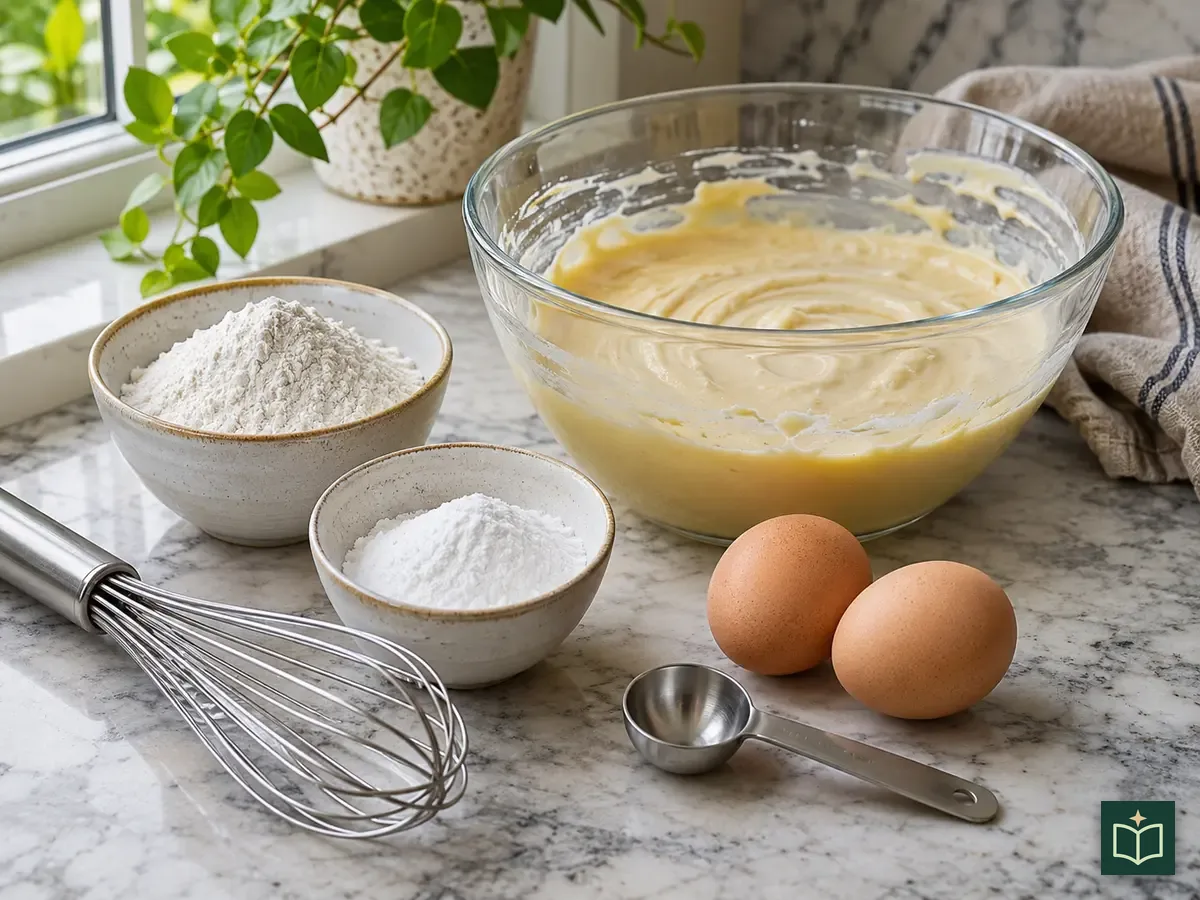
Two chemical leaveners
Bakers have long used yeast to make dough rise, but yeast is slow. Chemical leaveners act within minutes. Baking soda is sodium bicarbonate, a mild base. On its own it does little at room temperature, but when it meets an acid in the presence of moisture it reacts, releasing bubbles of carbon dioxide. Baking powder is a ready-made mixture: sodium bicarbonate combined with one or more dry acids, such as cream of tartar or sodium aluminium phosphate, plus a starch like cornflour to absorb moisture and keep the ingredients from reacting in the tin. Add liquid, and the powder supplies both halves of the reaction.
How they work in a recipe
Recipes using baking soda include an acidic ingredient to trigger it, such as yoghurt, laban, buttermilk, lemon juice, vinegar, honey, brown sugar, molasses or natural cocoa. The reaction starts as soon as wet and dry ingredients meet, so batters should be baked promptly. Most modern baking powders are double-acting: one acid reacts when liquid is added, and a second, slower acid reacts only when heated in the oven, giving a second lift. That makes baking powder more forgiving for cakes, muffins and scones. Many recipes use both: baking soda to neutralise an acidic ingredient and help browning, and baking powder for reliable extra rise.
A kitchen example
Consider two versions of a simple pancake. Made with laban or buttermilk, the batter is acidic, so a little baking soda produces a fluffy rise and a golden colour, and the soda balances the tang. Made with ordinary milk, which is only slightly acidic, baking soda alone would leave a soapy, metallic taste and poor rise, so baking powder is used instead. Many traditional Gulf and Middle Eastern sweets, such as some versions of chebab pancakes or semolina cakes, rely on one or both raising agents in this way. The same principles apply to biscuits, banana bread and countless other baked goods.
Where they are similar
Both powders are leavening agents built on the same molecule, sodium bicarbonate, and both make baked goods rise by producing carbon dioxide gas. Both are fine white powders that look almost identical, which is why they are easily confused. Both are used in small quantities, often measured in teaspoons, and both should be mixed evenly through dry ingredients to avoid bitter pockets. Both lose strength over time, especially in humid conditions, so they should be stored in airtight containers. And both are safe, common food ingredients regulated as food additives, used in households and commercial bakeries worldwide, from flatbreads to cakes.
Misconceptions and substitutions
A common belief is that the two are interchangeable. They are not directly swappable. Using baking soda in place of baking powder, without adding acid, gives a flat, soapy result, while replacing soda with powder requires roughly three times as much and may change flavour and colour. Another misconception is that more raising agent always means a lighter cake. Too much makes bubbles grow large and collapse, producing a coarse, sunken bake with a bitter taste. To test freshness, a pinch of baking soda should fizz in vinegar, and a spoonful of baking powder should fizz in hot water. Old powders may barely bubble.
Why it matters
Understanding the chemistry turns baking from guesswork into a reliable process. It explains why recipes specify one powder or the other, why batters made with soda should go into the oven quickly, and why altitude, humidity and ingredient swaps affect the result. Baking soda also has uses beyond baking, including cleaning, deodorising and, under medical guidance, as an antacid, because it neutralises acids. The broader lesson is the chemistry of acids and bases at work in an everyday kitchen. For anyone adapting a recipe, the key question is simple: does the batter already contain enough acid for baking soda, or does it need the acid that baking powder brings?
Sources & further reading
Figures are rounded and widely published; check the linked organisations for the latest editions. These organisations do not endorse this website.