Same job, different vocabularies
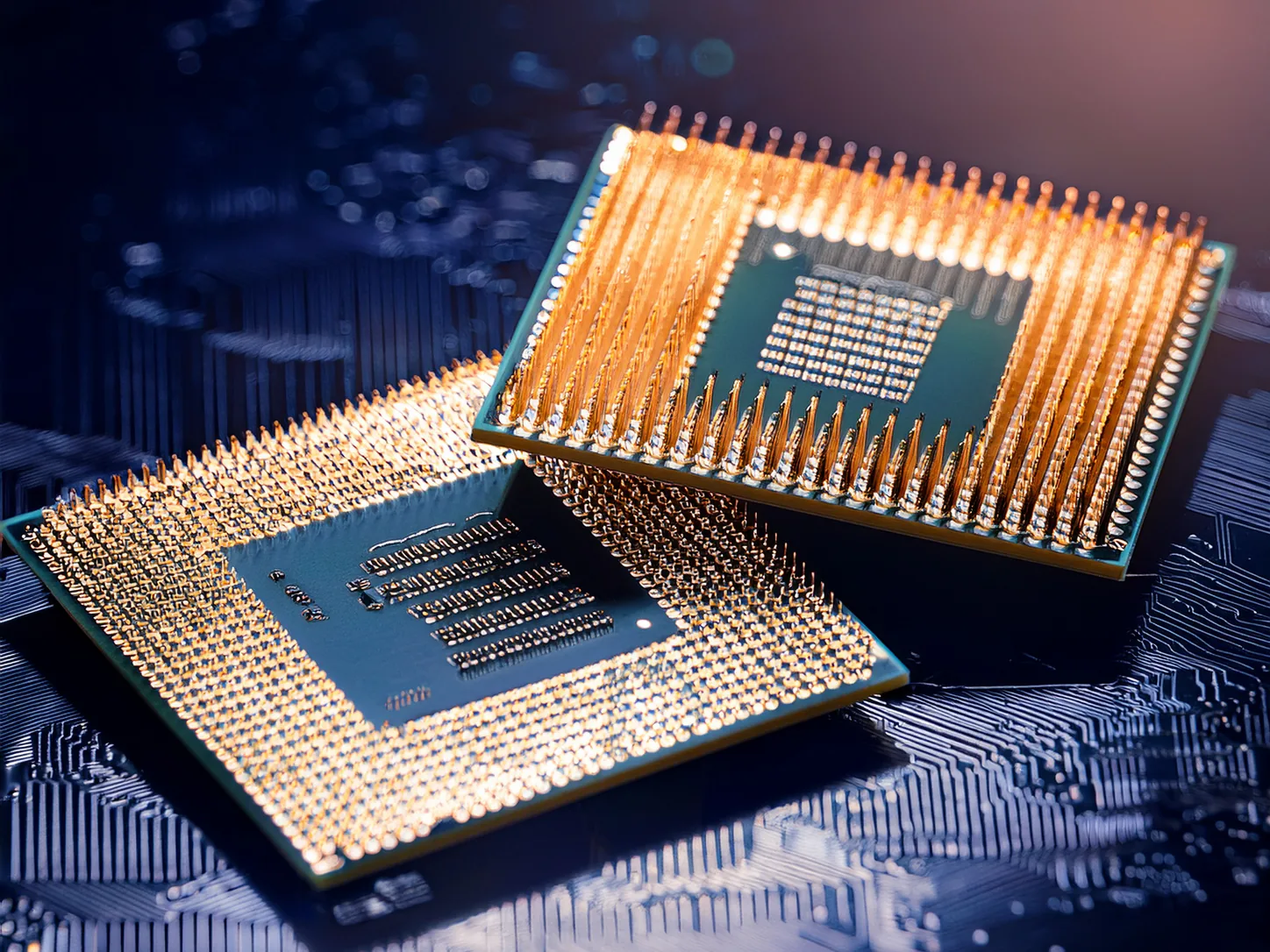
Every processor obeys a fixed list of basic commands: add these two numbers, load this value from memory, jump to that instruction. This list is called the instruction set architecture, and it is the contract between hardware and software. Two families dominate everyday computing. x86, born at Intel and shared with AMD, runs most Windows PCs and many servers. ARM runs almost every smartphone and tablet, many laptops and a growing share of data centres. A program compiled for one family cannot run directly on the other, any more than a recipe in Japanese helps a cook who reads only Spanish. Translation is possible, but it costs effort.
Complex versus reduced
x86 dates from Intel's 8086 of 1978 and was later described as CISC, a complex instruction set. Its instructions vary in length, from one byte to fifteen, and some perform several steps at once, such as reading memory and doing arithmetic in one go. ARM began as RISC, a reduced instruction set, with fixed-length instructions that each do one simple thing. Simpler instructions are easier to decode and need fewer transistors, which saves power. Today the line has blurred: x86 chips translate their complex instructions internally into simpler operations, and ARM's set has grown considerably. The differences that remain are partly in decoding and partly in decades of design habits.
Born in a Cambridge office
ARM started at Acorn Computers in Cambridge, England, which needed a processor for its home computers. Its first chip worked in 1985 and used remarkably little power. In 1990 the design team became a separate company, Advanced RISC Machines, with an unusual business model: it would not make chips itself but license its designs to others. That suited the mobile age perfectly. Phone makers could buy a proven processor core and combine it with their own graphics, modem and camera circuits on a single chip. Low power mattered more than raw speed in a pocket device running on a battery, and ARM spread to billions of phones.
Why x86 held the desktop
x86 kept its grip on PCs for a different reason: software. From the IBM PC of 1981 onwards, decades of programs, games and business tools were written for x86, and each new Intel and AMD chip could still run them. Backward compatibility created a powerful lock-in. Intel and AMD also invested heavily in raw performance, which desktops plugged into the wall could afford. Licensing differs too. Only a handful of companies make x86 chips, while many firms license ARM designs or build their own cores to the ARM rules. That openness to many designers is a big reason ARM-based chips now range from tiny sensors to supercomputers.
The great crossover
The boundary began to move around 2020, when Apple switched its Mac computers from Intel to its own ARM-based chips, delivering long battery life and strong performance. A software translator ran older x86 programs during the transition. Cloud providers such as Amazon designed ARM-based server chips to cut power bills, a serious concern for data centres in hot climates, including the Gulf, where cooling is costly. Windows laptops with ARM processors have also arrived. Meanwhile x86 chips have become far more power-efficient. A third, open instruction set called RISC-V, free for anyone to use, is gaining ground in smaller devices and may challenge both.
What it means for you
A common belief is that ARM is always slower or always more efficient. Neither holds: performance depends far more on how a specific chip is designed and manufactured than on its instruction set. What the instruction set really determines is which software runs natively. Most phone and web apps never notice, but some specialised programs, older games and hardware drivers may not yet exist for ARM, or run more slowly through translation. When choosing a laptop, it is worth checking that the programs you rely on support its processor family. For everything else, the battle between ARM and x86 is largely invisible, fought in design labs and data-centre budgets.
Sources & further reading
- Arm · Company history ↗
- Britannica · Microprocessor ↗
- Centre for Computing History · Acorn Computers ↗
Figures are rounded and widely published; check the linked organisations for the latest editions. These organisations do not endorse this website.