Patterns and proofs
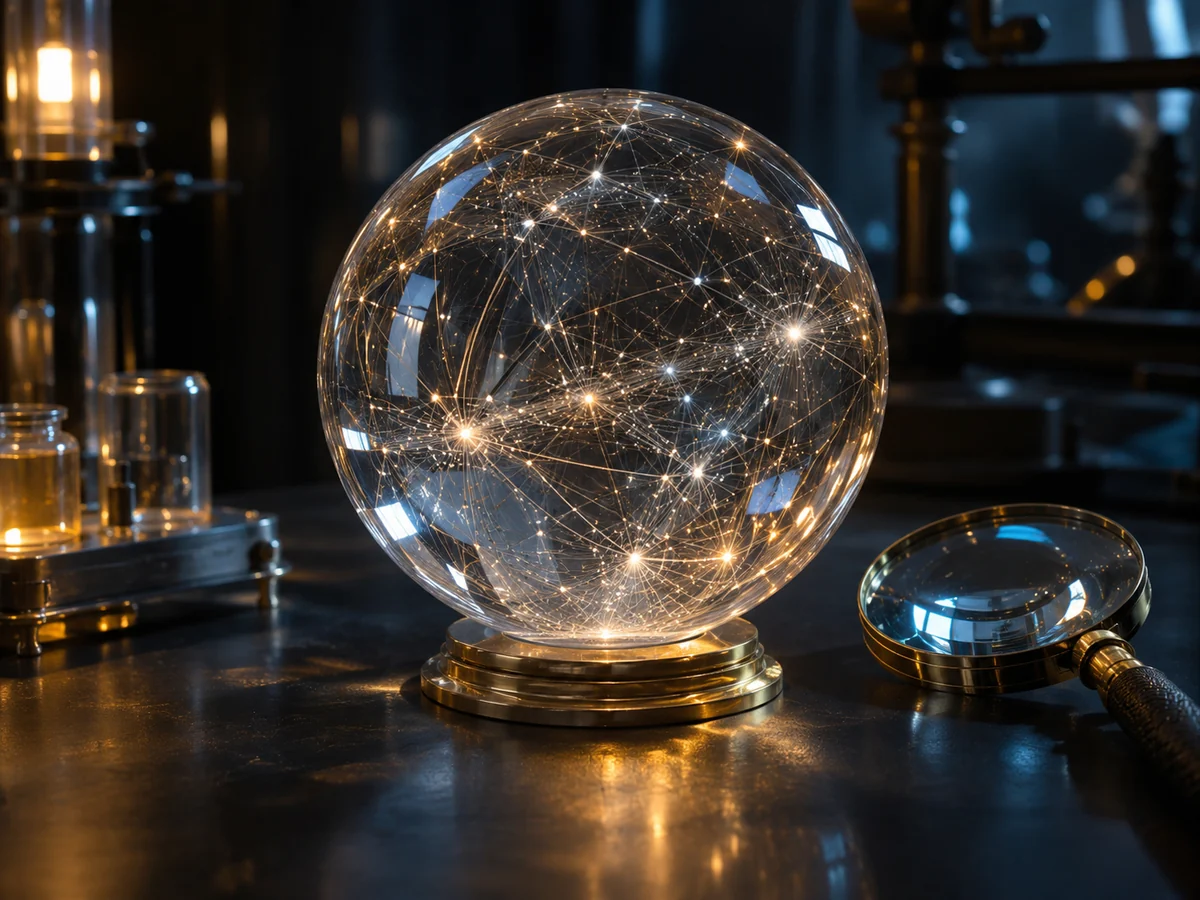
Mathematics advances when people notice patterns, form conjectures, guesses about what might be true, and then prove them with rigorous logic. For centuries, great mathematicians such as Srinivasa Ramanujan relied on extraordinary intuition to spot patterns. Computers have long helped by calculating examples, and some famous results, such as the four colour theorem in 1976, were proved with the help of computer calculations. But finding meaningful patterns in vast amounts of mathematical data still depended on human insight.
A 2021 breakthrough
In December 2021, Google DeepMind published a paper in Nature describing work with mathematicians from the University of Oxford and the University of Sydney. They used machine learning to look for relationships between different properties of mathematical objects. Leading mathematicians who reviewed the work described the results as among the first significant mathematical discoveries made with the help of machine learning, a milestone for a field that had been sceptical of AI's usefulness for deep research.
Knots
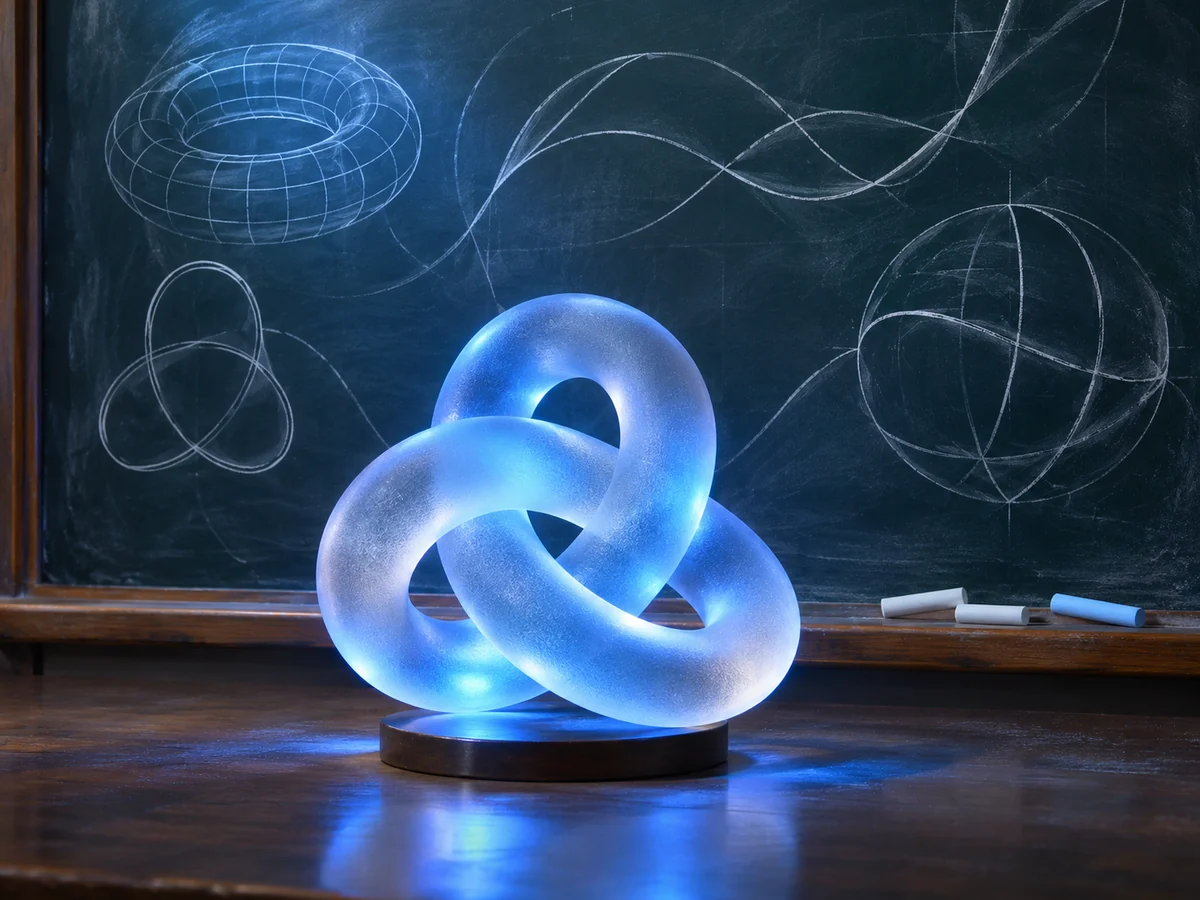
In knot theory, a branch of topology, a knot is a closed loop in three-dimensional space. Mathematicians describe knots using many different measurements, some algebraic and some geometric. Working with Marc Lackenby and colleagues at Oxford, DeepMind's machine learning models suggested an unexpected relationship between two types of measurements. The mathematicians then proved a new theorem describing this connection.
Representation theory
With Geordie Williamson at the University of Sydney, the team studied an area of representation theory involving objects called Kazhdan-Lusztig polynomials, related to a conjecture that had remained open for about 40 years. Machine learning helped reveal structure in the data that pointed towards a possible solution, and Williamson formulated a striking new algorithm that, if proven correct in general, would resolve the conjecture.
Guiding intuition
The researchers described their approach as using AI to guide human intuition. The AI did not produce proofs. Instead, it helped mathematicians identify which patterns were worth investigating among huge amounts of data. Humans then used their expertise to understand the patterns and prove theorems. The team proposed this as a model for collaboration between mathematicians and AI, especially in areas where there is plenty of data or where objects are too large and complex to study by hand.
Searching for constructions
Other AI systems have helped find mathematical constructions, examples with special properties. In 2023, DeepMind's FunSearch used a language model to discover new solutions to a problem in combinatorics called the cap set problem. Later systems such as AlphaEvolve found improved constructions for dozens of problems, working with mathematicians to explore possibilities far faster than by hand.
Checking proofs with Lean
Proofs can be long and complicated, and even experts can make mistakes. Proof assistants such as Lean are computer programs that check every step of a proof written in a formal language. AI systems are increasingly being trained to write proofs in Lean, so their correctness can be verified automatically. In 2024, DeepMind's AlphaProof combined AI with Lean to solve difficult mathematical olympiad problems.
Mathematicians' views
Leading mathematicians, including Terence Tao, have described AI as a potentially powerful assistant that could help with routine parts of research, literature searches, calculations and checking, allowing humans to focus on deeper questions. Some worry about errors, overhyped claims and the risk that AI-generated proofs may be correct but hard for humans to understand. Most see AI as complementing, not replacing, human creativity.
Mathematics in the region
The UAE and other Gulf countries have growing research communities in mathematics and computer science, including at universities such as Khalifa University, New York University Abu Dhabi and the Mohamed bin Zayed University of Artificial Intelligence. As AI tools for mathematics improve, researchers and students in the region can use them to explore problems, learn and contribute to international research.
Why it matters
Mathematics underpins science, engineering, computing and finance. If AI can help mathematicians discover new results faster and check them more reliably, the effects could ripple across many fields. The collaboration between AI and mathematicians also offers lessons for other sciences, showing how AI can enhance human understanding rather than simply producing answers.
Sources & further reading
- Nature · Advancing mathematics by guiding human intuition with AI, Davies et al. (2021) ↗
- University of Oxford · Machine learning helps mathematicians make new connections (2021) ↗
- Google DeepMind · Exploring the beauty of pure mathematics in novel ways (2021) ↗
Simplified description of advanced mathematics. Photograph: original AI-generated illustration (Adobe Firefly). Reference organisations do not endorse this website.