A deadly, common disaster
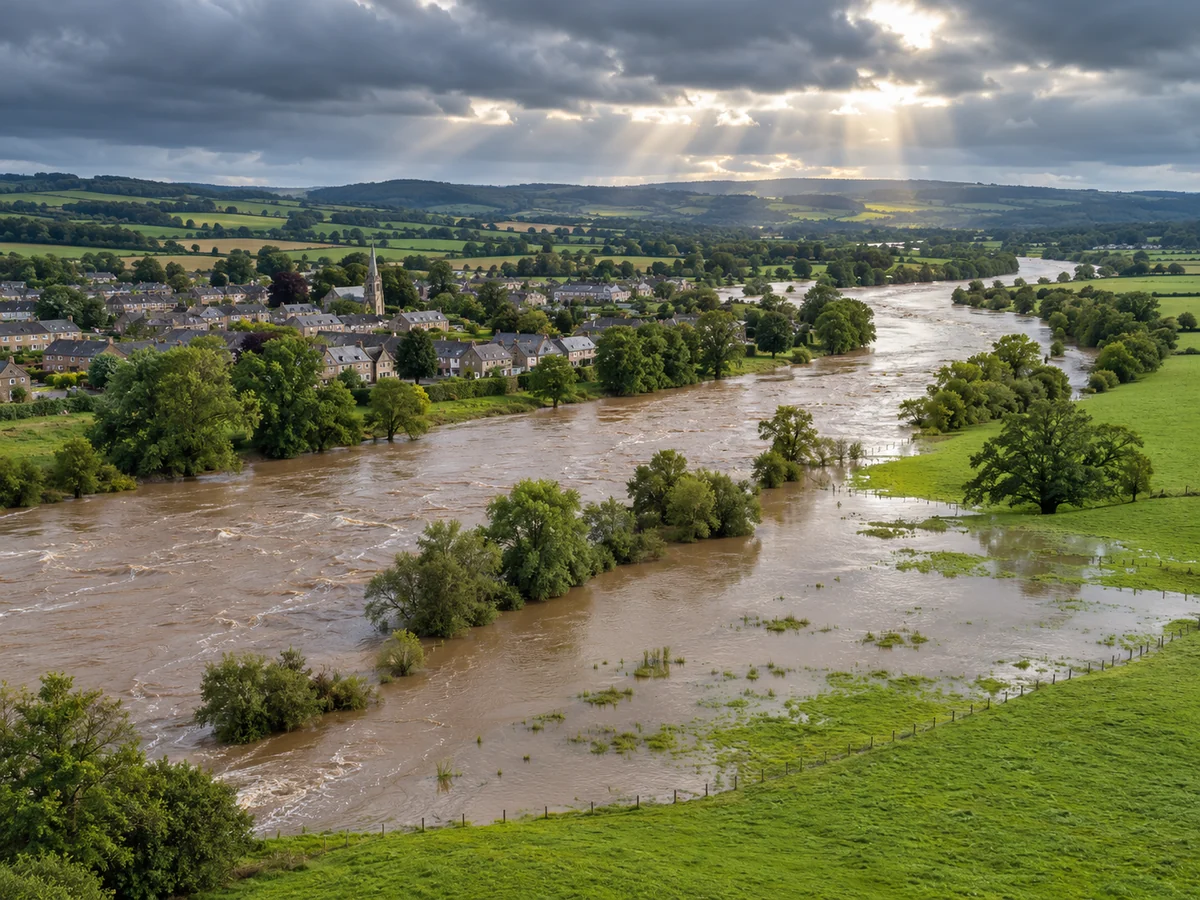
Floods affect more people than any other type of natural disaster, destroying homes, crops and infrastructure and causing many deaths each year. Climate change is making heavy rainfall more frequent and intense in many regions. Early warnings can save lives by giving people time to move to safety, protect belongings and livestock, and allow governments and aid agencies to prepare. Yet many communities receive little or no warning.
The missing data problem
Traditional flood forecasting relies on stream gauges, instruments that measure the water level or flow in rivers, combined with physical models of how water moves through landscapes. Only a small share of the world's rivers have gauges, and they are especially scarce in lower-income countries in Africa, South Asia and Latin America, which are often the places most vulnerable to floods. This creates a large warning gap.
How the AI learns
Researchers at Google trained machine learning models on historical data from thousands of gauged rivers around the world, together with weather forecasts, satellite images and information about terrain and soil. The models learned general patterns of how rainfall turns into river flow. Because they learned from many different rivers, they could make predictions for rivers where no gauge data exist, known as ungauged basins.
A study in Nature
In March 2024, the team published their results in the scientific journal Nature. They showed that their AI model could predict extreme river floods in ungauged basins up to five days ahead with reliability similar to or better than leading existing systems achieved for same-day forecasts. An improved model later achieved the same accuracy seven days ahead as the earlier model did at five days.
Flood Hub
Google shares its forecasts free of charge through a website called Flood Hub, which shows maps of river flood risk and predicted water levels. It also sends alerts through Google Search, Google Maps and Android phone notifications in many countries. The service grew from a pilot in India in 2018 to 80 countries in 2023, then more than 100 countries, and later to areas in more than 150 countries covering about two billion people.
Flash floods in cities
River floods usually build up over days, but flash floods in cities can strike within hours after intense rain, overwhelming drains and streets. These are harder to forecast, partly because there are few direct measurements. Google later added urban flash flood forecasts to Flood Hub, giving up to 24 hours of advance notice in some cities, using AI trained on a combination of weather and other data.
Cash before the flood
Forecasts are most useful when linked to action. Aid organisations have used AI flood forecasts to give anticipatory cash payments to families before floods arrive, so they can buy food, protect assets or move to safety. The charity GiveDirectly, working with Google, delivered cash to communities in Nigeria several days before flood peaks in 2024, and piloted village-level payments in Bangladesh.
Limits and cautions
AI forecasts are not perfect. They can miss floods or give false alarms, and accuracy varies between regions. Forecasts of river levels do not always reveal exactly which streets or fields will flood. Most importantly, warnings save lives only if they reach people in time, in a language they understand, and if people have somewhere safe to go. Experts stress that AI should support national weather and hydrological services, not replace them.
Relevance to the Gulf
Although the Gulf is mostly desert, it is not immune to flooding. In April 2024, the UAE experienced its heaviest rainfall since records began in 1949, causing severe flooding in Dubai and other areas and disrupting the airport and roads. Such events, which may become more common with climate change, have increased interest in better forecasting and drainage, and in using AI to predict and manage extreme weather.
Why it matters
AI flood forecasting shows how machine learning can help protect people who have historically been left out of early warning systems. The United Nations has called for everyone on Earth to be covered by early warning systems. By making forecasts free and available in places without expensive monitoring networks, AI can contribute to that goal and help communities prepare for a more extreme climate.
Sources & further reading
- Google Research · Flood forecasting ↗
- Google Research · An improved flood forecasting AI model, trained and evaluated globally ↗
- Google · Advanced Flood Hub features for aid organizations and governments ↗
Coverage figures are as reported by Google. Photograph: original AI-generated illustration (Adobe Firefly). Reference organisations do not endorse this website.