What antibodies do
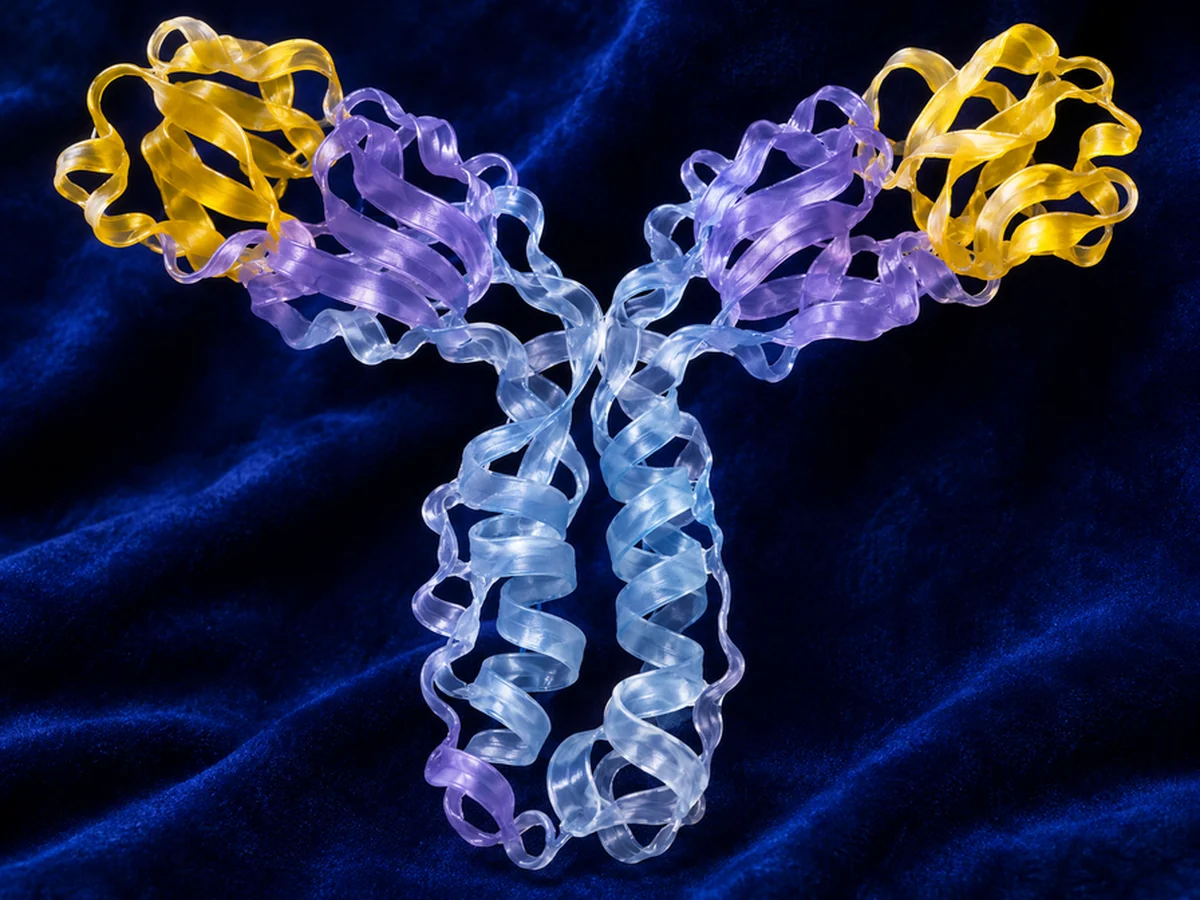
Antibodies are Y-shaped proteins the immune system makes to recognise specific molecules. Medicine has borrowed them: antibody drugs now treat cancers, autoimmune conditions, asthma, migraine and infections, and they are among the best-selling medicines in the world. Their appeal is precision: an antibody can be made to bind one target and largely ignore everything else, which usually means fewer side effects than a small-molecule drug.
The old way to find them
Traditionally, making a therapeutic antibody meant immunising animals such as mice with the target molecule and harvesting the antibodies their immune systems produced, or screening enormous libraries of antibody sequences for ones that happened to bind. Both work, but both are slow, expensive and limited to what nature or chance provides. Optimising the result then takes further rounds of laboratory engineering, each adding months to the timetable.
Designing instead
The alternative is to design an antibody from first principles: decide exactly which patch of the target molecule, called an epitope, to bind, then compute a protein shape and sequence that will fit it. This has been a goal of computational biology for decades, and it became plausible only after deep learning transformed protein structure prediction and then protein design, giving researchers models that could propose shapes likely to fold and bind as intended.
The Nature result
In November 2025, the Baker Lab at the University of Washington published a study in Nature reporting the first computational design of functional, full-length antibody variable regions, containing both the heavy and light chains used in most antibody drugs. The tool, RFantibody, was tested against difficult targets including bacterial toxins and viral proteins, and the team released the software free for academic and commercial use.
Companies move fast
Commercial groups are pursuing the same goal. The company Absci described a platform called Origin-1 that designs antibodies against so-called zero-prior epitopes, target sites with no previously solved structures of any binder, and reported finding specific, developable antibodies for several human targets in fewer than a hundred design attempts each. It has said it aims to take a designed antibody into regulatory filings for trials within about two years, which would be the first such candidate from a fully generative platform.
Early clinical signals
Generate:Biomedicines, based in Massachusetts, presented data in late 2025 from patients with asthma treated with an antibody developed with AI assistance, reporting encouraging results. Several other AI-optimised antibodies are now in early-stage trials for conditions including cancer and inflammatory disease. Importantly, most of these were designed with AI help rather than entirely from scratch, so the fully computational designs are a step behind in the pipeline.
Why speed matters
Absci has claimed its approach could cut discovery timelines from as much as six years to around 18 to 24 months. Even if such figures prove optimistic, shortening the earliest stage matters: it lets companies attempt targets that would otherwise be uneconomic, including those relevant to rare diseases, and allows faster responses to new pathogens.
Still the hard part ahead
Designing a molecule that binds is not the same as having a medicine. The antibody must be stable, manufacturable at scale, not provoke an immune reaction against itself, reach the right tissue, and actually improve patients' outcomes. Most drug candidates fail for these reasons, and no antibody designed entirely by computer has yet been approved for use.
Open tools, shared caution
Because tools such as RFantibody are released openly, laboratories worldwide can use them, which accelerates research and lowers costs for smaller institutions. The same openness raises biosecurity questions, and researchers in the field have discussed screening measures and responsible-use norms, since the ability to design binding proteins is powerful in more than one direction.
Why it matters
Antibody drugs are expensive partly because finding them is slow and uncertain. Moving from discovery by trial and error to design on a computer would change the economics of a large part of modern medicine. The 2025 results suggest the shift has begun, with the usual caveat that biology decides the outcome, not the model, and that a design which looks perfect on screen can still fail in a patient.
Sources & further reading
- Institute for Protein Design · Teaching AI to build antibodies from scratch (2025) ↗
- Singularity Hub · AI-designed antibodies are racing toward clinical trials (2026) ↗
- GEN · Absci eyes IND for platform's first de novo antibody within two years ↗
Not medical advice. These are experimental candidates, not approved medicines. Photograph: original AI-generated illustration (Adobe Firefly). Reference organisations do not endorse this website.