A vital partnership
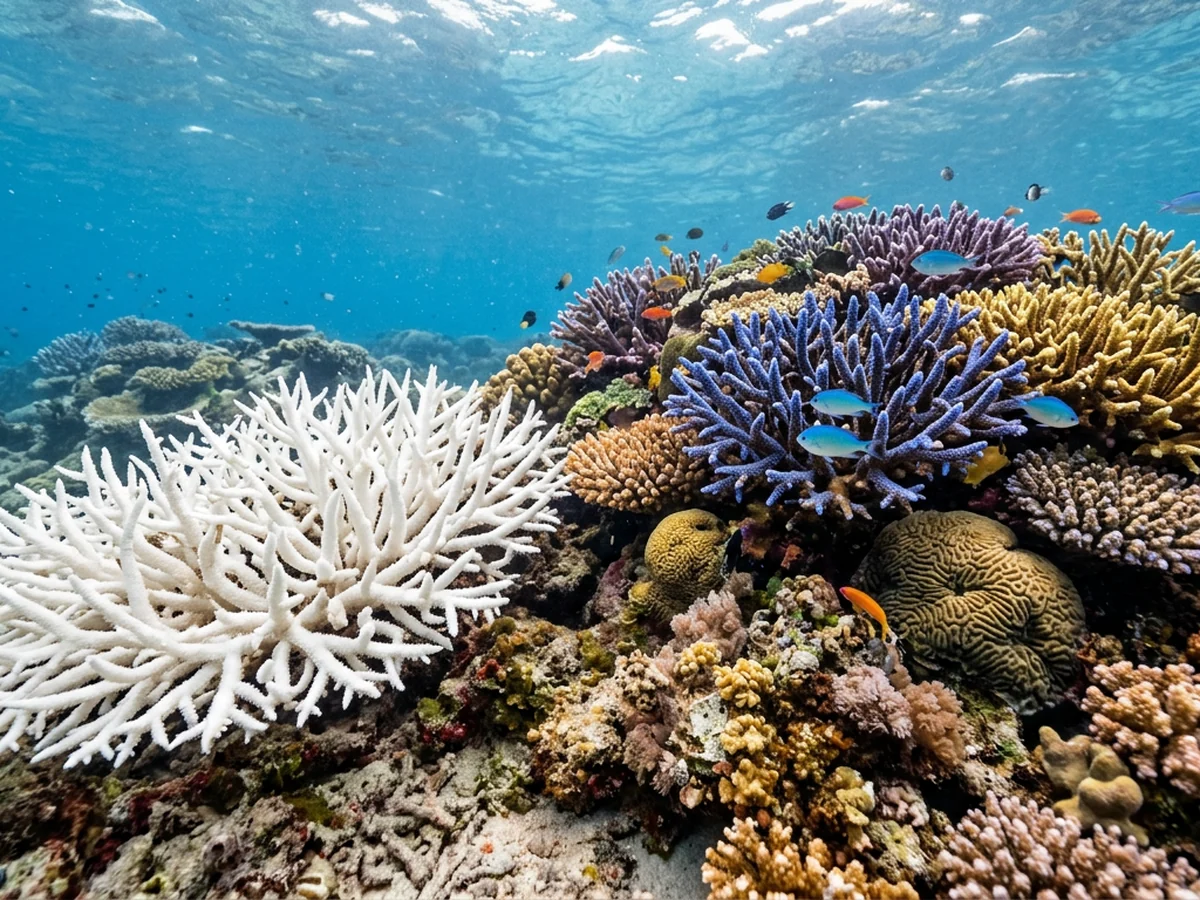
Reef-building corals host microscopic algae called zooxanthellae. The algae photosynthesise and supply most of the coral's food; in return they get shelter and nutrients.
Why heat causes bleaching
When water stays too warm, the algae's photosynthesis goes wrong and produces harmful chemicals. Corals expel the algae, revealing their white limestone skeletons beneath clear tissue.
Global events
Mass bleaching events, often linked to marine heatwaves and El Niño, have struck reefs worldwide in 1998, 2010, 2014–17 and from 2023 onwards. NOAA reported the fourth global bleaching event in 2024.
Hope and help
Corals can recover if heat stress is brief. Reducing pollution and overfishing helps reefs bounce back, and scientists are studying heat-tolerant corals from places like the Gulf, where summer water can exceed 34 °C.
Sources & further reading
General explainer. Photograph: original AI-generated illustration (Adobe Firefly). Reference organisations do not endorse this website.