Why it turns red
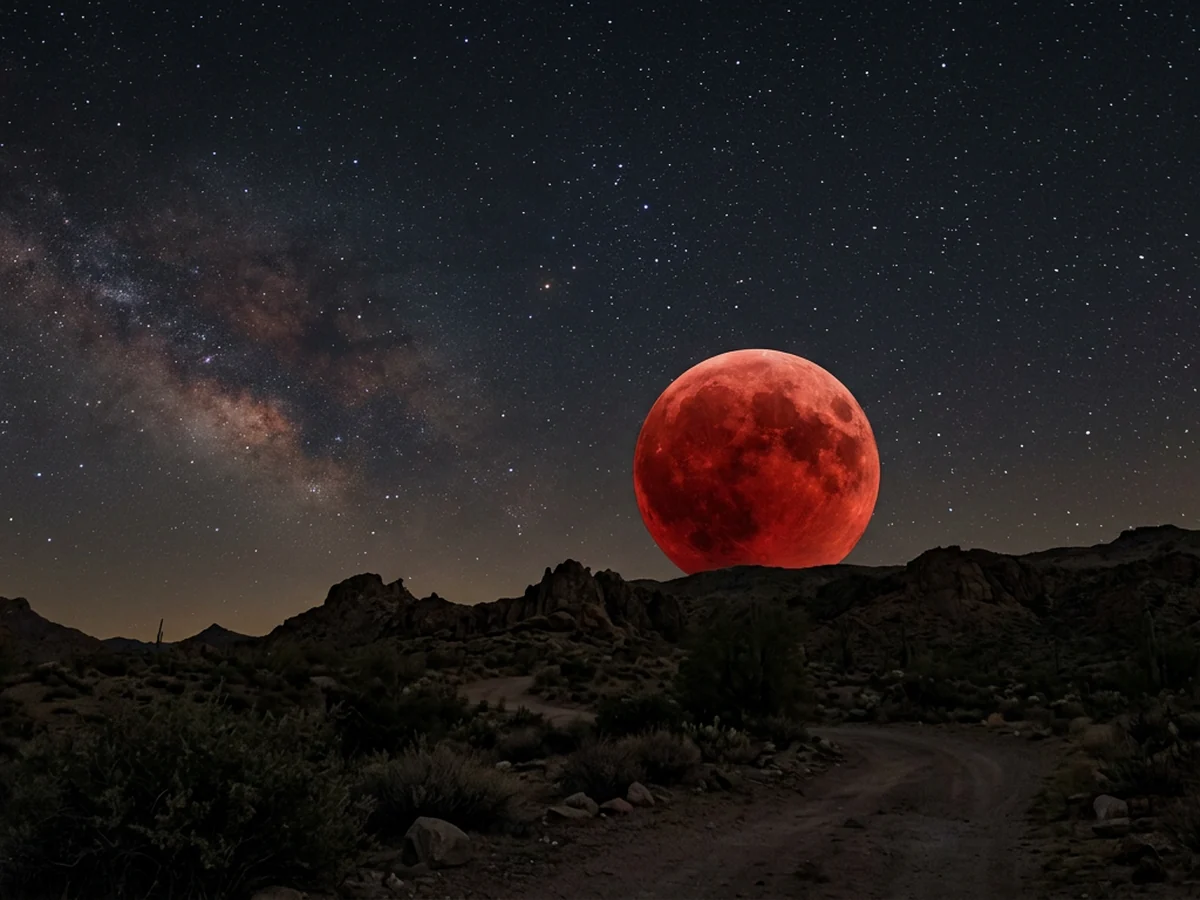
During totality the Moon is in Earth's umbra, the darkest part of its shadow. Earth's atmosphere bends some sunlight into the shadow, and scatters blue light away, leaving reds and oranges, much like a sunset.
When it happens
Lunar eclipses only happen at full moon when the Moon passes through Earth's shadow. Because the Moon's orbit is tilted, this does not happen every month; there are usually two to four lunar eclipses of some kind a year.
Who can see it
A lunar eclipse is visible from the entire night side of Earth, so far more people can see it than a total solar eclipse.
Other moon names
'Blood moon', 'supermoon' and 'blue moon' are popular, not scientific, terms. They can coincide, producing headlines such as 'super blue blood moon'.
Sources & further reading
Durations vary by eclipse. Photograph: original AI-generated illustration (Adobe Firefly). Reference organisations do not endorse this website.