How dams are measured
Dam heights are normally measured from the lowest point of the foundation to the crest, following the practice of the International Commission on Large Dams. This differs from the depth of water behind the dam, which is always less. The table ranks completed dams; Tajikistan’s Rogun Dam, designed to reach about 335 metres, would be the tallest of all but remained under construction in the mid-2020s, operating at a lower height. Heights here are rounded. The tallest dams are rarely the largest by volume or power output: China’s Three Gorges Dam, the world’s largest hydroelectric plant, is only about 181 metres high and does not appear in the list.
Three designs
Tall dams fall into three main types. Gravity dams, such as Switzerland’s Grande Dixence, resist the water by their sheer weight of concrete; it was the world’s tallest dam when completed in 1961 and remains the tallest of its type. Arch dams, such as Jinping-I and Xiaowan, are curved upstream so that the water’s pressure is carried sideways into the canyon walls, allowing thin, elegant walls in narrow gorges. Embankment dams, built of compacted earth or rockfill around a watertight core, include Nurek and Shuangjiangkou. They suit wider valleys and softer foundations, and are often the cheapest way to reach great height.
China’s dam-building era
Six of the ten dams in the table are in China, all built since 2010 on the steep rivers of the south-west, which descend from the Tibetan Plateau. Jinping-I, about 305 metres, is the tallest arch dam in the world. Baihetan and Xiluodu on the Jinsha River, the upper Yangtze, are among the most powerful hydroelectric plants anywhere, with Baihetan second only to Three Gorges. Shuangjiangkou, on the Dadu River in Sichuan, is about 10 metres taller than Jinping-I and began storing water in 2025. These dams supply electricity to cities in eastern China, but they have also displaced communities and altered river ecosystems.
Central Asia’s giants
Tajikistan’s Nurek Dam, about 300 metres high, was completed in 1980 on the Vakhsh River and held the title of world’s tallest dam for more than three decades. Built in the Soviet era, it still supplies a large share of Tajikistan’s electricity. Upstream, the Rogun Dam is designed to be about 20 metres taller than Shuangjiangkou when finished. Its turbines began producing power in 2018 while the dam continues to rise. The Vakhsh flows into the Amu Darya, which once fed the Aral Sea, so downstream countries such as Uzbekistan have watched Rogun closely, concerned about how its reservoir will affect water available for irrigation.
Lessons from Vajont
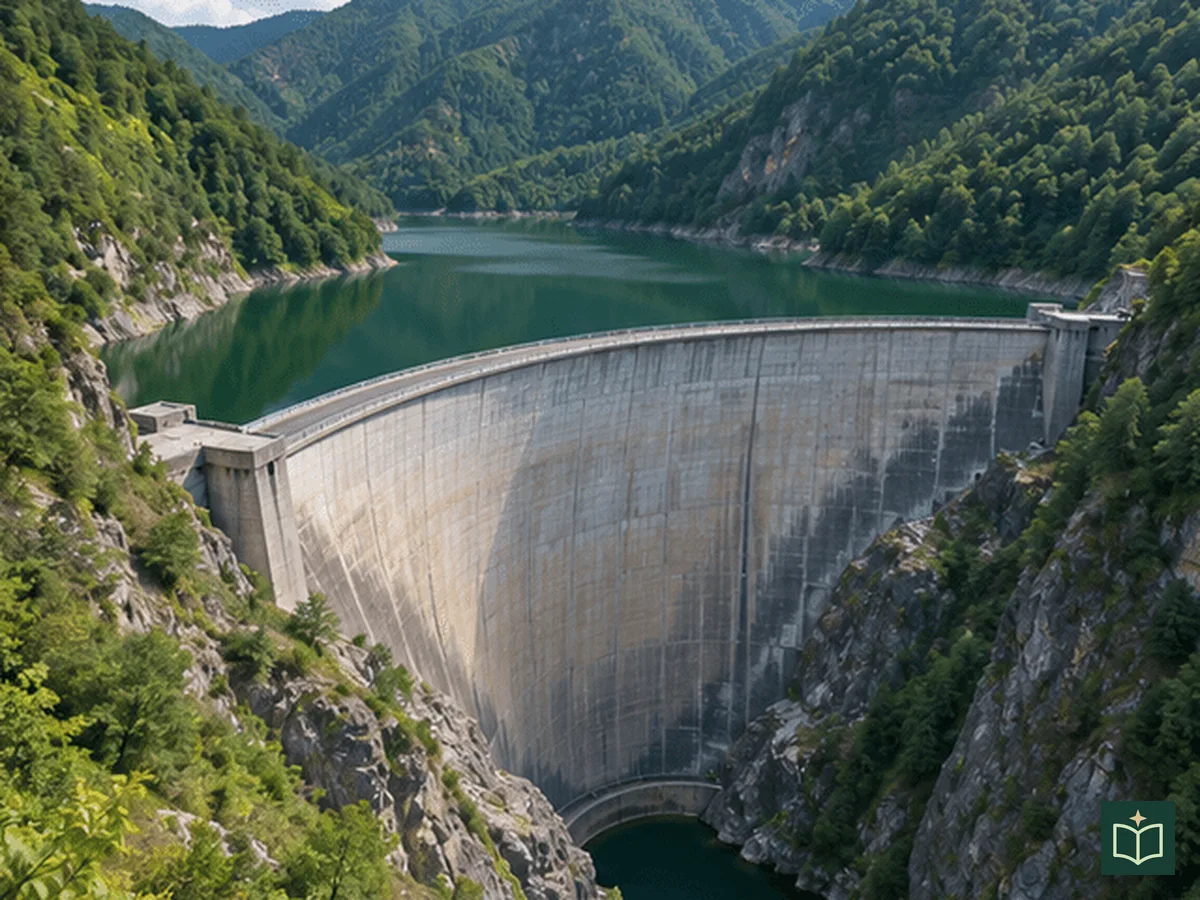
The Vajont Dam in the Italian Alps, about 262 metres high, carries a grim lesson. In October 1963, shortly after its reservoir was filled, a huge landslide fell from the slopes of Monte Toc into the lake. The wave it created overtopped the dam and swept through the valley below, killing around 2,000 people. The dam itself survived almost undamaged, a testament to its design, but the reservoir was never used again. The disaster showed that the geology of the surrounding slopes matters as much as the strength of the wall, and it transformed how engineers assess landslide and seismic risks around reservoirs.
Why so tall
Height lets a dam store more water and drive turbines with greater pressure, generating more electricity from each cubic metre. That is why the tallest dams are found in deep gorges on fast mountain rivers in China, Central Asia, the Caucasus and the Alps. The Gulf has no rivers of this kind, and its dams are much smaller: most capture rare flash floods in wadis, slowing the water so it can soak into the ground and recharge aquifers, as in the Hajar Mountains of the UAE and Oman. Across the world, very tall dams remain controversial, weighed between clean power and water storage on one side and their human and environmental costs on the other.
Sources & further reading
Figures are rounded and widely published; check the linked organisations for the latest editions. These organisations do not endorse this website.