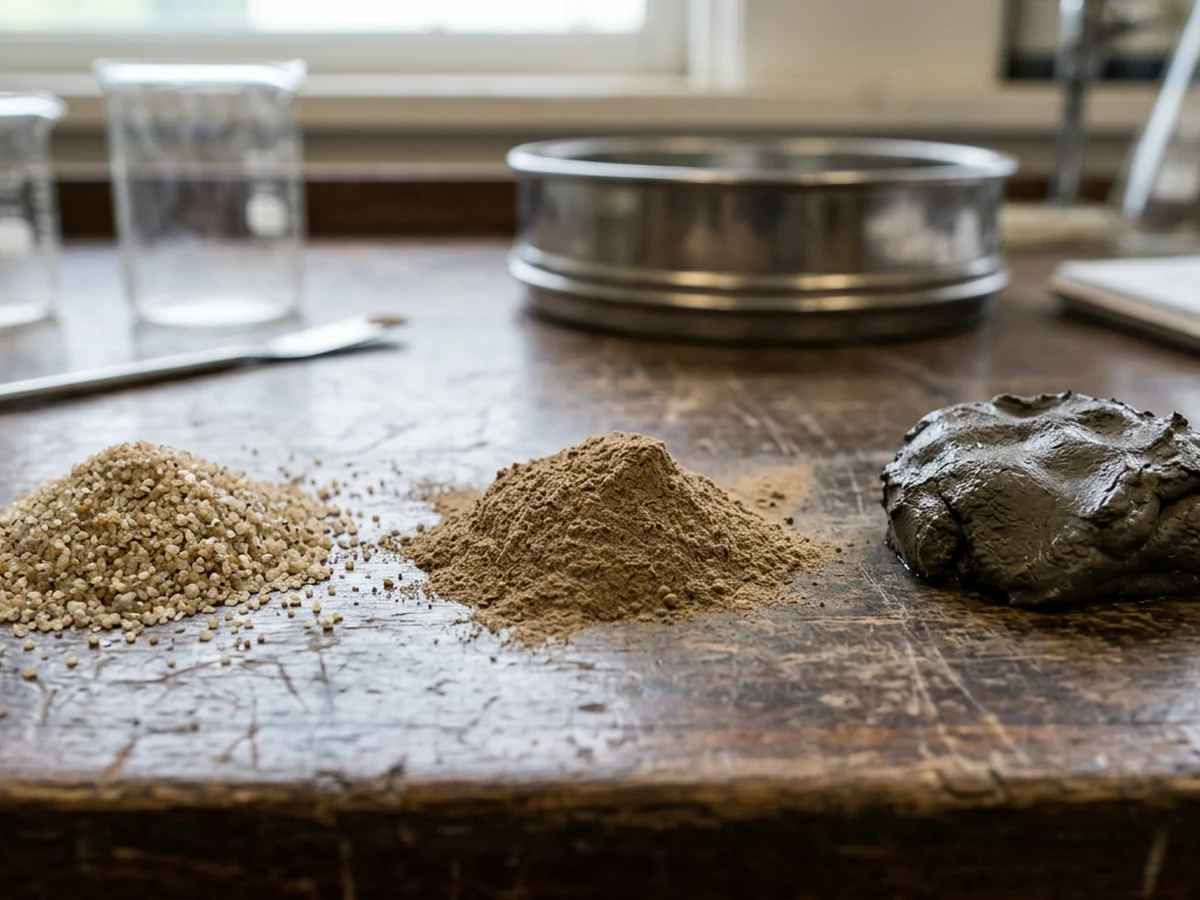
Feeling the difference
Rub moist soil between your fingers: sand feels gritty, silt feels silky or floury, and clay feels sticky and can be rolled into a ribbon. Soil scientists use this 'texture by feel' test in the field.
Drainage and water
Sandy soils have large gaps between grains, so water drains quickly and they dry out fast. Clay soils have tiny pores that hold water tightly and can become waterlogged. Silty soils sit in between.
Nutrients
Clay particles carry negative electrical charges that attract and hold nutrients such as potassium and calcium. Sandy soils hold few nutrients, so fertilisers wash through them.
Loam and soil texture
Soil texture is shown on a triangle diagram with sand, silt and clay percentages on each side. Loams, with moderate amounts of each, combine good drainage with good water and nutrient holding.
Sources & further reading
Size limits follow the USDA system. Photograph: original AI-generated illustration (Adobe Firefly). Reference organisations do not endorse this website.