What remittances are
Remittances are money that migrants send to family or others in their home countries. They are usually small, regular transfers, perhaps a few hundred or a few thousand dirhams a month, but together they form one of the largest financial flows in the world. The World Bank estimates that remittances to low- and middle-income countries exceed US$600 billion a year, more than official development aid and, outside China, more than foreign direct investment into those countries. The Gulf states play an outsized role. Their economies rely heavily on foreign workers, who in the UAE, Qatar and Kuwait make up a large majority of the population, and much of their pay is sent home.
Why the Gulf sends so much
Several features make the Gulf a major source. The share of migrant workers in the labour force is among the highest in the world. Many are temporary residents whose families remain at home, so remitting is central to why they migrated. There is no personal income tax, and the region's currencies are pegged to the US dollar, which provides stability. Saudi Arabia and the UAE are regularly listed by the World Bank among the largest sources of remittances worldwide, behind the United States. Kuwait, Qatar, Oman and Bahrain are also significant relative to their size. Flows tend to rise with oil revenues and construction activity, and fall when they slow.
Where the money goes
Most Gulf remittances flow to South Asia, Southeast Asia, other Arab countries and parts of Africa. India is the world's largest recipient of remittances and in 2022 became the first country to receive more than US$100 billion in a year, with the Gulf a major source. Pakistan, Bangladesh, Nepal, Sri Lanka, the Philippines and Egypt also receive large sums from Gulf workers. Kerala in southern India has been shaped by Gulf migration since the oil boom of the 1970s. For some countries the flows are vast relative to their economies: in Nepal, remittances have been equivalent to around a fifth or more of GDP in recent years.
How the money moves
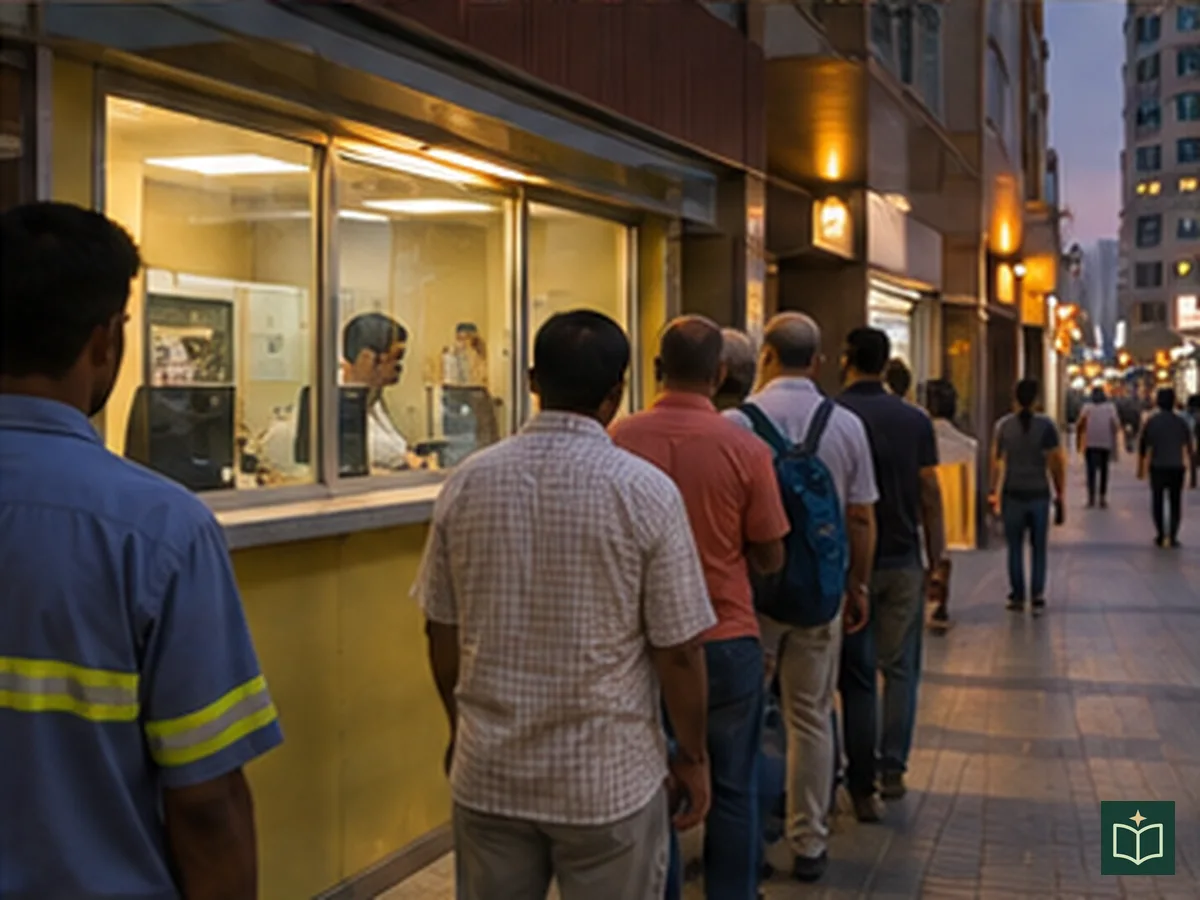
In the Gulf, the main channels are licensed exchange houses, banks and, increasingly, mobile apps and digital wallets. Exchange houses are especially popular with lower-paid workers, offering long opening hours, branches near residential areas and services in several languages. Many salaries are paid through the UAE's Wage Protection System, which helps formalise income and makes it easier to send through regulated channels. Informal systems such as hawala still exist, though the UAE now requires hawala providers to register. Costs vary by corridor, but transfers from the Gulf to South Asia are among the cheapest in the world, often well below the global average cost of about 6%, partly because of strong competition on high-volume routes.
Effects at home
Remittances directly raise household incomes and are often spent on essentials: food, school fees, medical care and housing. Research by the World Bank and others links them to reduced poverty, higher school enrolment and better access to health care in recipient households. They also tend to be steadier than other financial flows, sometimes rising when home countries face disasters or crises, as migrants send more to help. At the national level, they provide foreign currency that can support exchange rates and pay for imports. There are drawbacks too: heavy reliance can leave economies exposed to downturns in the Gulf, and some research finds that remittances can reduce the incentive for local employment.
Why it matters
Remittances connect the Gulf's economies to the livelihoods of hundreds of millions of people elsewhere. Policymakers in sending and receiving countries watch them closely: falling oil prices or job losses in the Gulf can quickly reduce flows to villages thousands of kilometres away. International efforts focus on cutting costs, since every percentage point saved leaves more money with families, and on ensuring transfers go through regulated channels that guard against money laundering. Digital payments and closer cooperation between central banks are reshaping the industry. This article is general education rather than financial advice. Behind the global statistics lies a simple act repeated millions of times each month: a worker sending wages home.
Sources & further reading
Figures are rounded and widely published; check the linked organisations for the latest editions. These organisations do not endorse this website.