Pollination
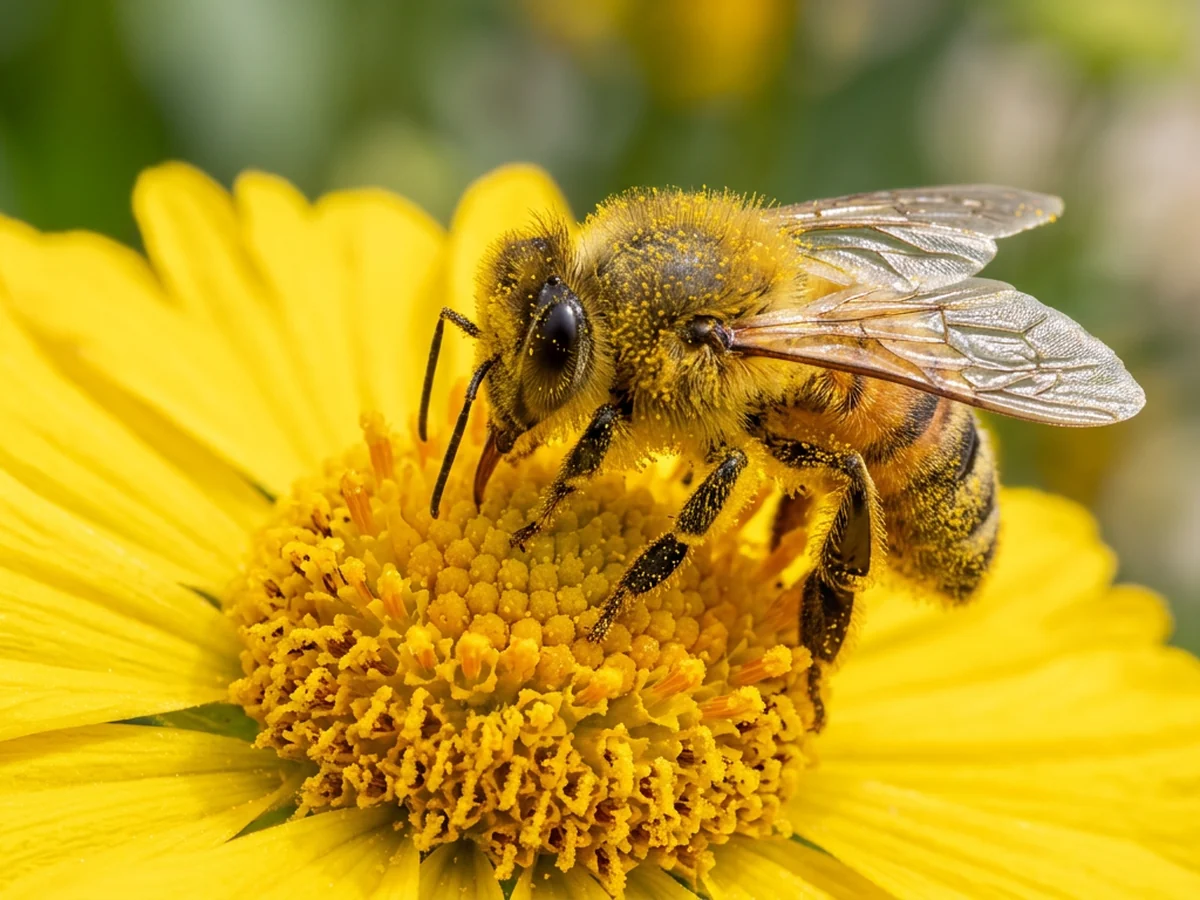
Pollen can be carried by wind, as in grasses and many trees, or by animals such as bees, butterflies, birds and bats. Some plants pollinate themselves.
Fertilisation
After landing, a pollen grain grows a tube through the style to an ovule. Flowering plants undergo double fertilisation: one sperm fertilises the egg and another forms the seed's food store.
From flower to fruit
After fertilisation, the ovule develops into a seed and the ovary swells into a fruit, which helps disperse the seeds.
Why it matters
Declines in bees and other pollinators threaten crops such as almonds, apples and coffee. Date palms, important in the Gulf, are traditionally pollinated by hand.
Sources & further reading
Simplified explanation. Photograph: original AI-generated illustration (Adobe Firefly). Reference organisations do not endorse this website.