Why distance matters
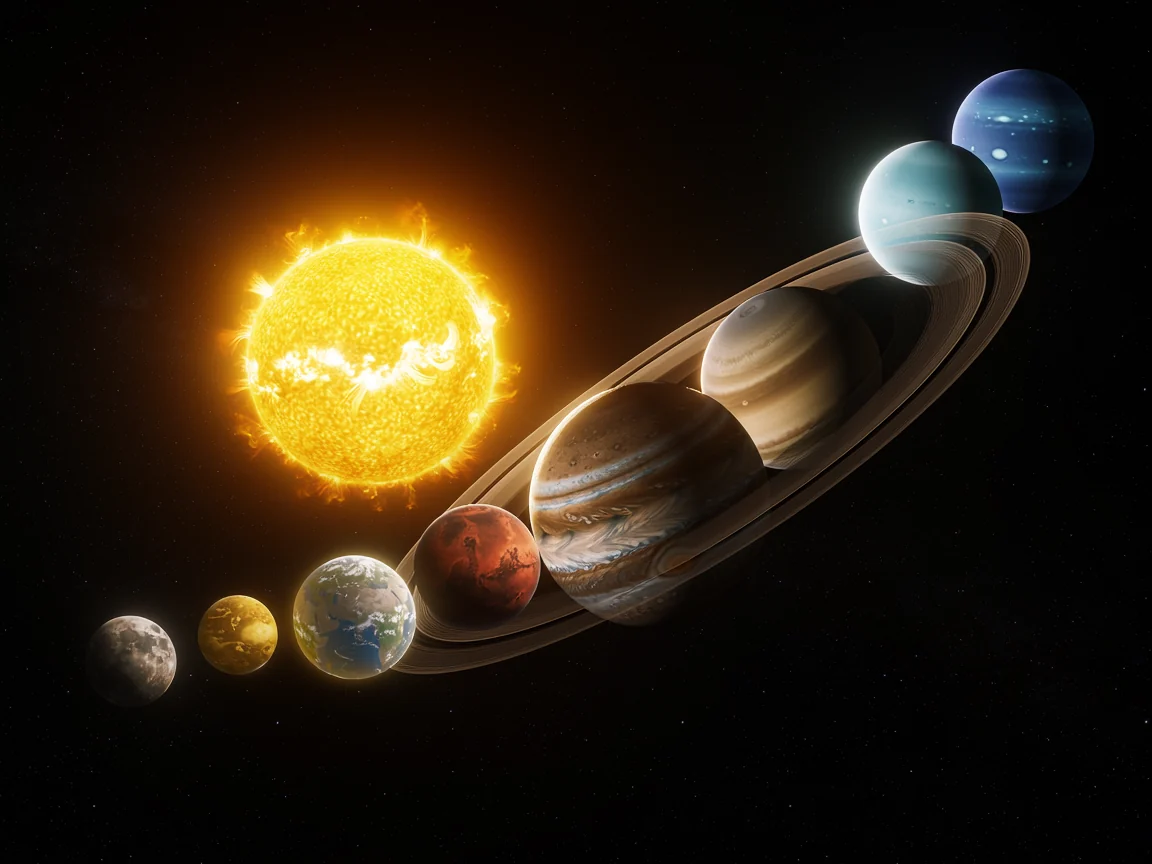
Planets closer to the Sun feel stronger gravity and must move faster to stay in orbit. They also travel shorter paths. Both effects mean inner planets have short years and outer planets very long ones.
Kepler's law
In the early 1600s Johannes Kepler found that the square of a planet's orbital period is proportional to the cube of its average distance from the Sun. This simple rule later helped Isaac Newton develop his theory of gravity.
Strange calendars
Mercury's year of 88 days is shorter than its solar day of about 176 Earth days, so a Mercury year passes before the Sun rises and sets once. On Venus, a day is also longer than its 225-day year.
Slow outer giants
Uranus takes 84 years to orbit, so each of its poles experiences about 42 years of continuous sunlight followed by 42 years of darkness. Neptune completed its first full orbit since discovery in 2011.
Sources & further reading
Figures from NASA's planetary fact sheet, rounded. Photograph: original AI-generated illustration (Adobe Firefly). Reference organisations do not endorse this website.