Reading starlight
Astronomers measure the Sun's composition by splitting its light into a spectrum. Each element absorbs light at particular wavelengths, leaving dark lines. Their strength reveals how much of each element is present.
Hydrogen as fuel
In the Sun's core, at about 15 million °C, hydrogen nuclei fuse into helium, releasing the energy that powers sunlight. The Sun converts about 600 million tonnes of hydrogen every second.
Helium's discovery
In 1868 astronomers observing a solar eclipse saw an unknown yellow spectral line. Norman Lockyer named the new element helium after the Greek word for the Sun. It was found on Earth in 1895.
Heavier traces
Elements heavier than helium were made in earlier stars and supernovae and were present in the cloud that formed the solar system. Though only about 2% of the Sun's mass, they are the building blocks of rocky planets and life.
Sources & further reading
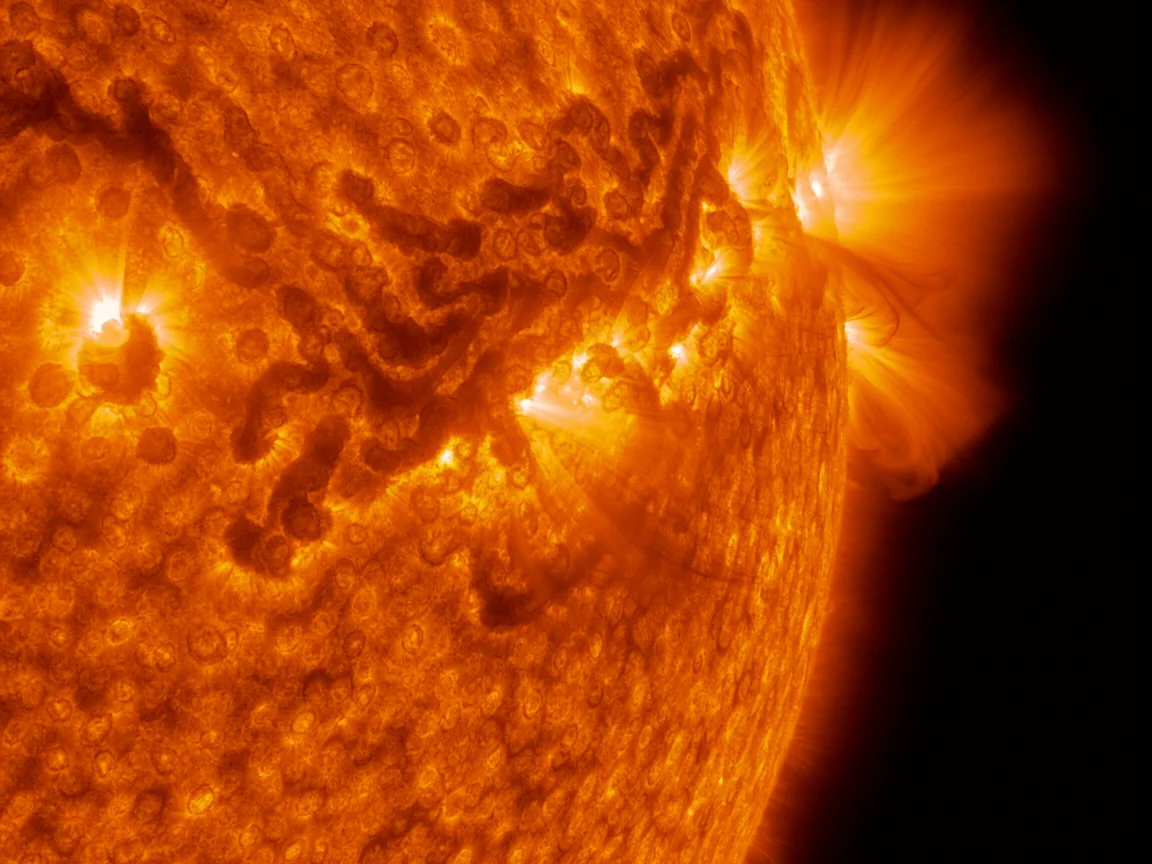
Abundances are approximate. Photograph: original AI-generated illustration (Adobe Firefly). Reference organisations do not endorse this website.