Money is fungible, people are not
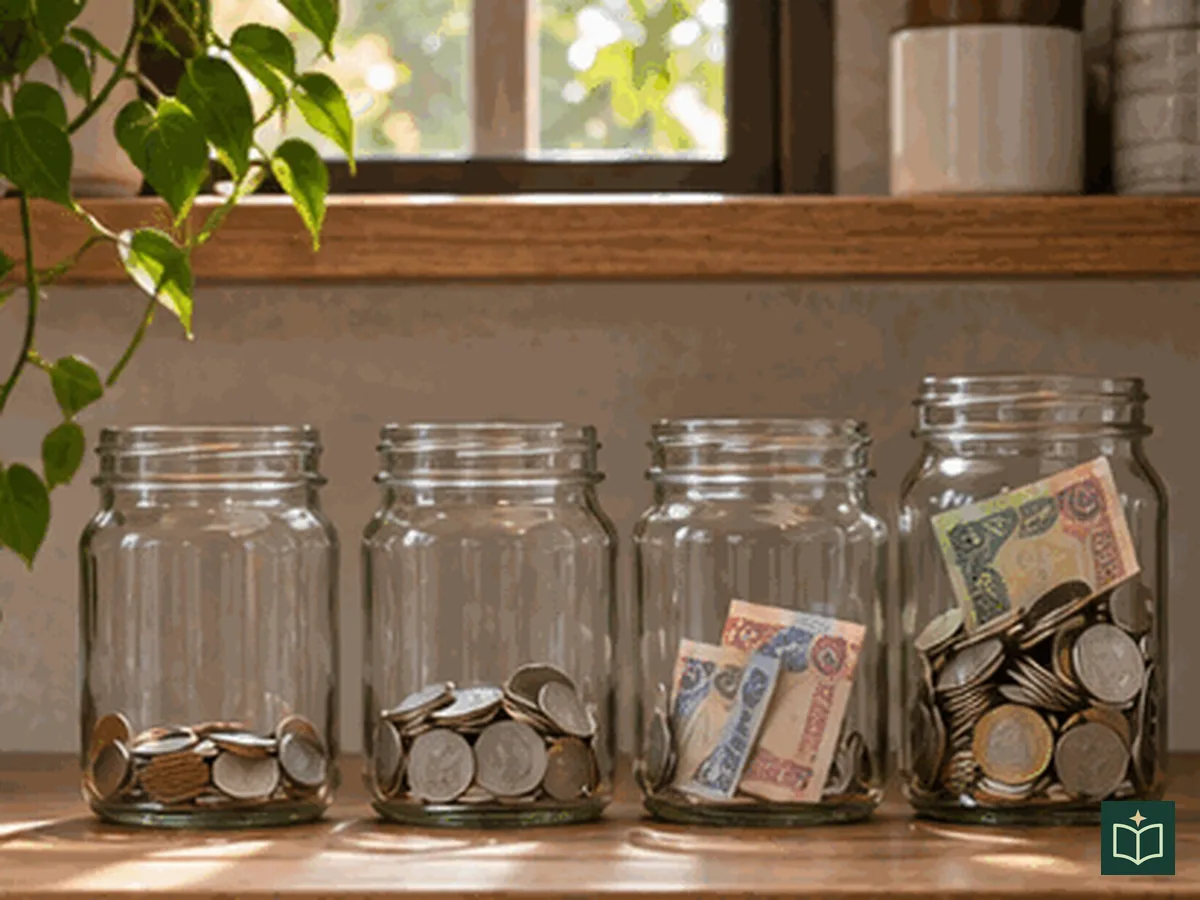
Economists describe money as fungible: one dirham can be swapped for any other, so it should not matter whether it came from wages, a gift or a lucky win. Yet people rarely behave that way in practice. They keep mental jars for rent, holidays and treats, spend a windfall more freely than a salary, and feel differently about money depending on how it arrived. The economist Richard Thaler named this pattern mental accounting in work published from the 1980s onwards. His research on this and related behaviour contributed to the Nobel memorial prize in economic sciences that he received in 2017.
How the jars work
Mental accounts are defined by source, by purpose and by time. Money labelled as a bonus or a gift often feels like extra and is spent on luxuries. Money labelled as salary feels earned and is guarded more carefully. Spending is tracked within each account, so a person might refuse a modest taxi fare from the weekly transport budget while happily paying a large bill on holiday, where a different mental account applies. A classic experiment by Daniel Kahneman and Amos Tversky found that people who lost a theatre ticket were much less willing to buy another than people who lost the same amount in cash.
The costly version
Mental accounting can lead to choices that make little sense when the household's finances are viewed as a whole. A common example is keeping savings untouched while carrying expensive debt. Imagine a household with AED 10,000 in a savings account earning 1% a year and a credit-card balance of AED 10,000 charging 36%. The savings earn about AED 100 a year, while the debt costs about AED 3,600, a net loss of roughly AED 3,500. Using the savings to clear the card would save most of that. The money feels sacred in one jar and invisible in the other. The figures are illustrative.
Windfalls and refunds
Unexpected money is especially likely to be spent rather than saved. Bonuses, tax refunds, gifts and investment gains are often treated as house money, a term borrowed from gambling for winnings that feel less real than one's own stake. Investors may take bigger risks with profits than with their original capital, although a dirham of gain is worth exactly the same. Governments have studied this effect when designing stimulus payments, because whether money arrives as a lump sum or as a small increase in each pay packet can change how much of it is spent, and research on past rebates has found that the two designs produce noticeably different results.
When jars help
Mental accounting is not always a mistake. Dividing money into labelled pots can be a useful self-control device. Separate accounts for emergencies, school fees or a home deposit make it harder to dip into money with an important purpose, and many banking apps now offer such pots or spaces deliberately. Budget methods that assign every dirham a job draw on the same instinct. The trick is to use the jars for discipline while occasionally stepping back to look at the whole picture, asking whether money sitting in one jar would be better used in another, such as paying off expensive debt.
Using the idea well
A few habits help counter the costly side of mental accounting. Treating every inflow, however it arrives, as part of one household balance sheet can reveal mismatches such as idle savings alongside costly debt. Deciding in advance what share of any windfall will be saved removes the temptation to treat it as free money. Looking at total spending across categories, rather than staying within each budget line, can expose areas where small purchases add up. None of this requires giving up the comfort of labelled jars. This article is general education about behaviour and is not personal financial advice of any kind.
Sources & further reading
Figures are rounded and widely published; check the linked organisations for the latest editions. These organisations do not endorse this website.